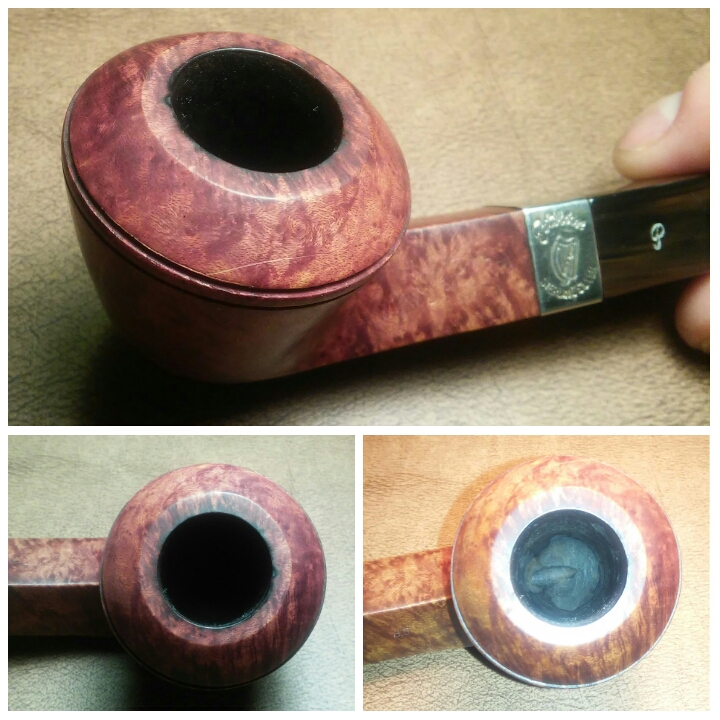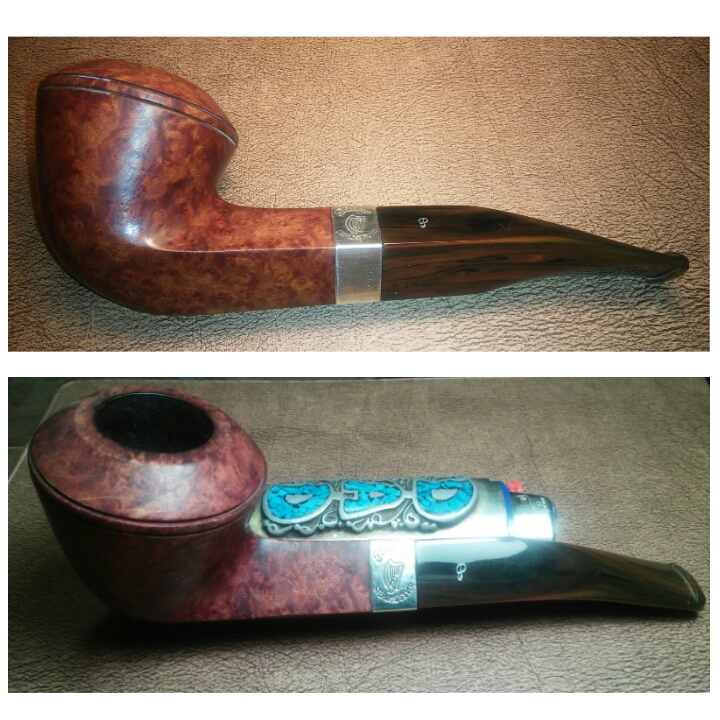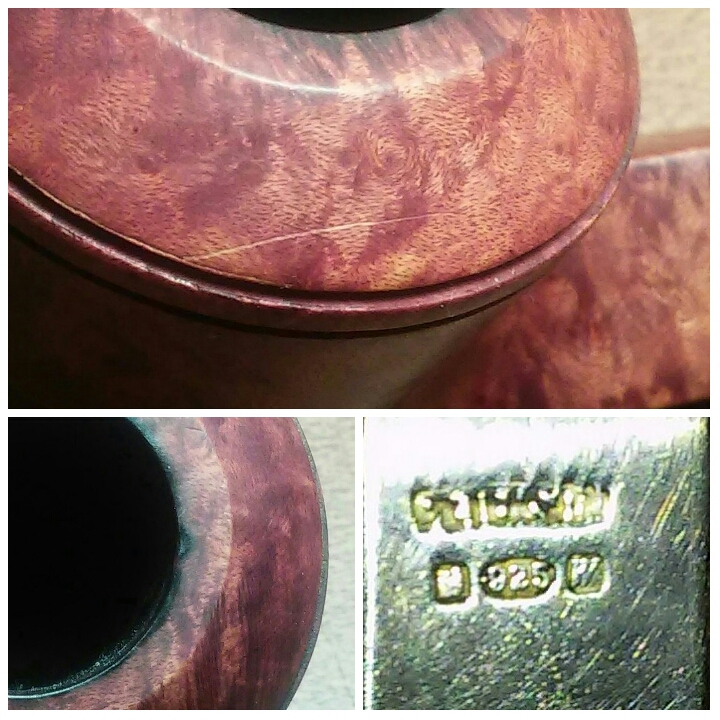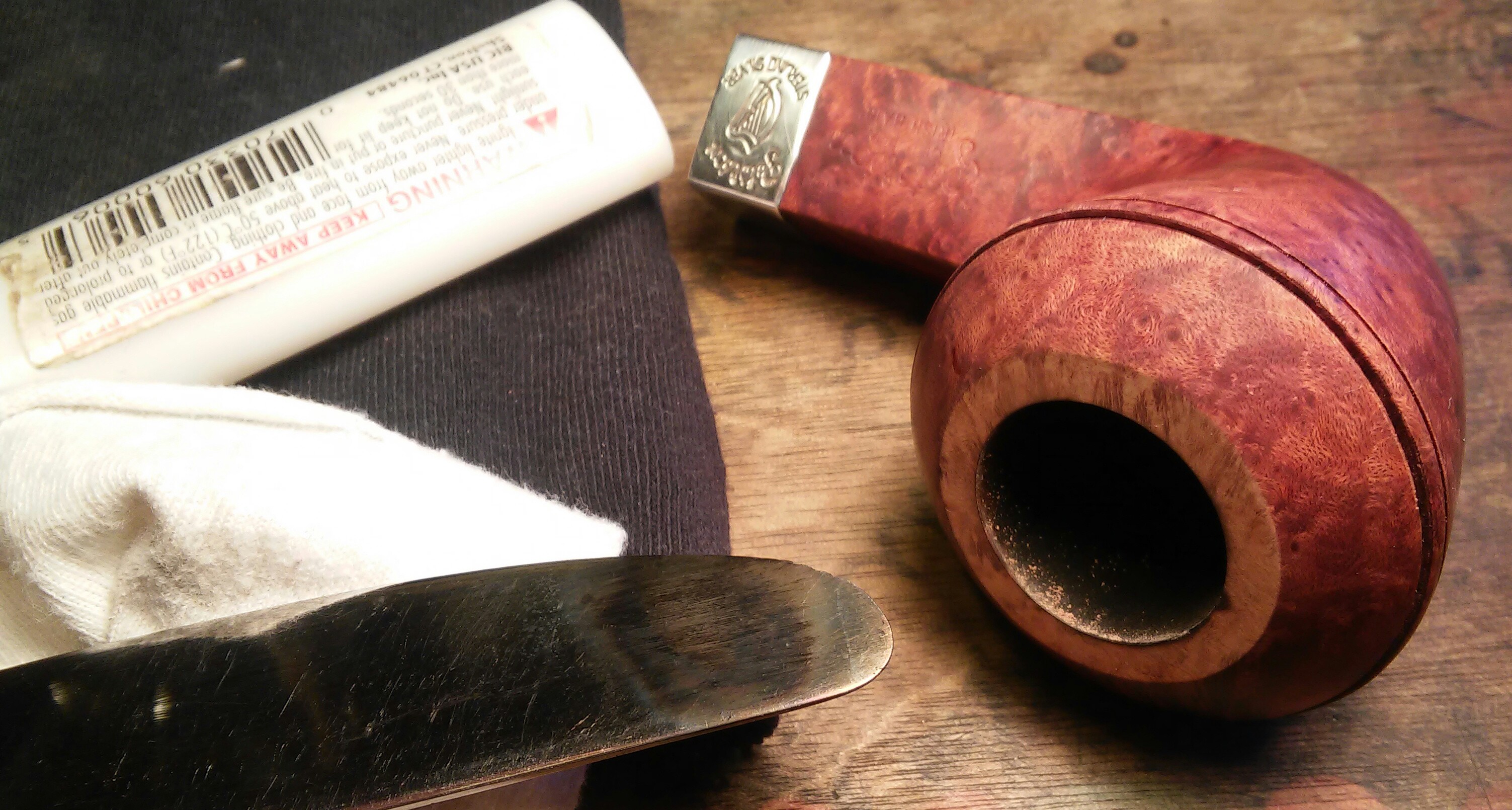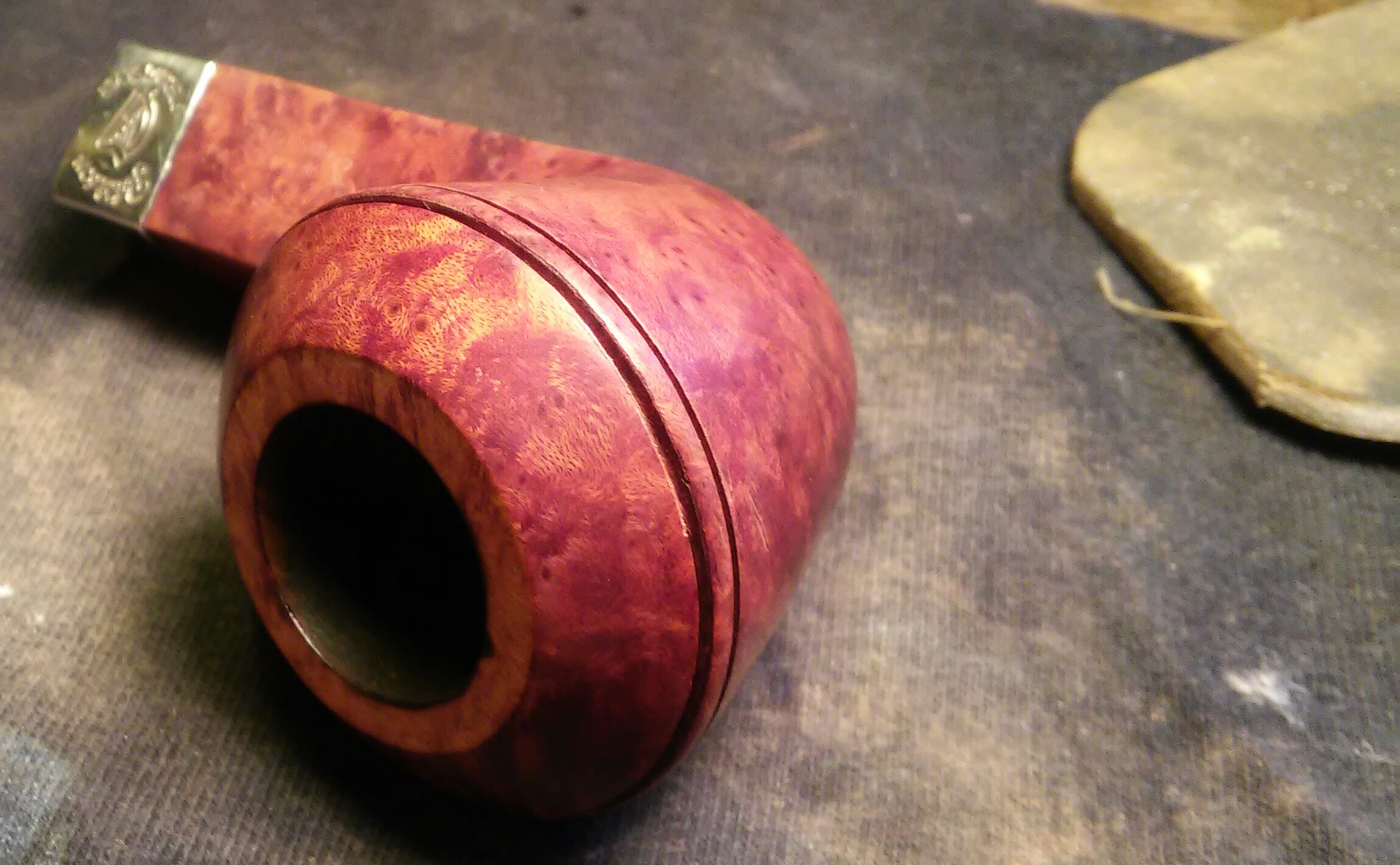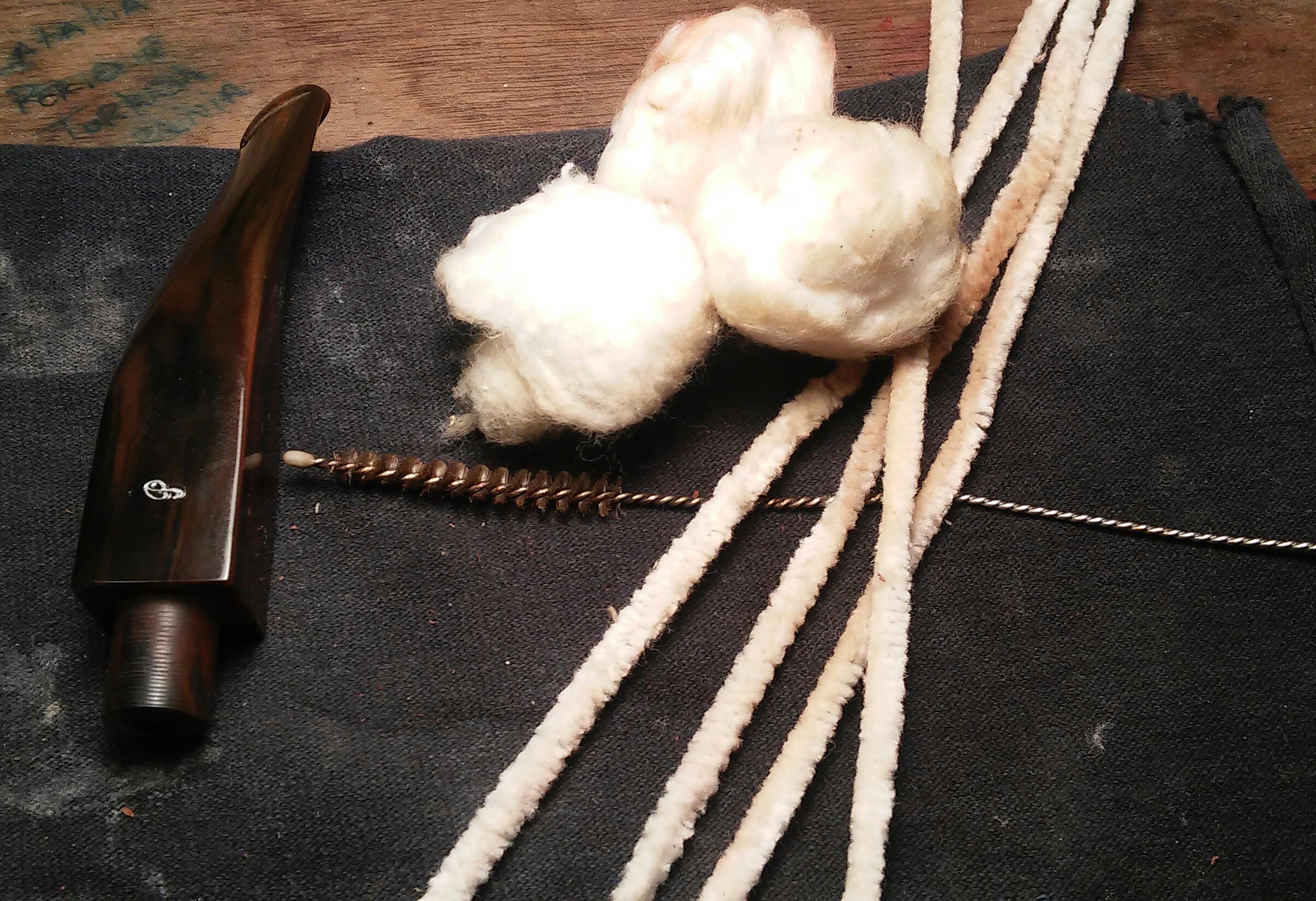
Tag Archives: tobacco pipe refurbishing

Custombilt Bent Billiard (Rich Era)

The scoundrel Pipes

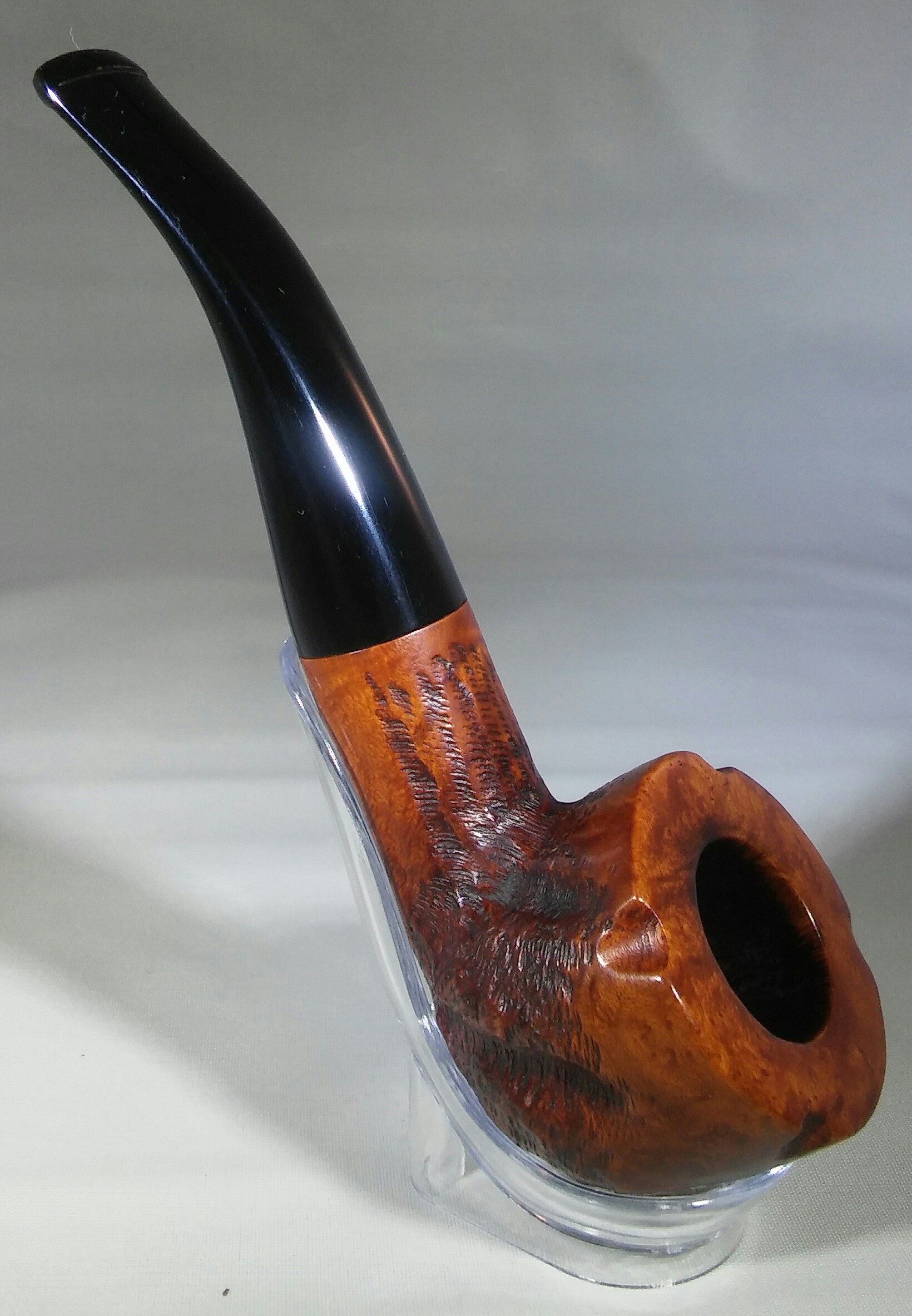
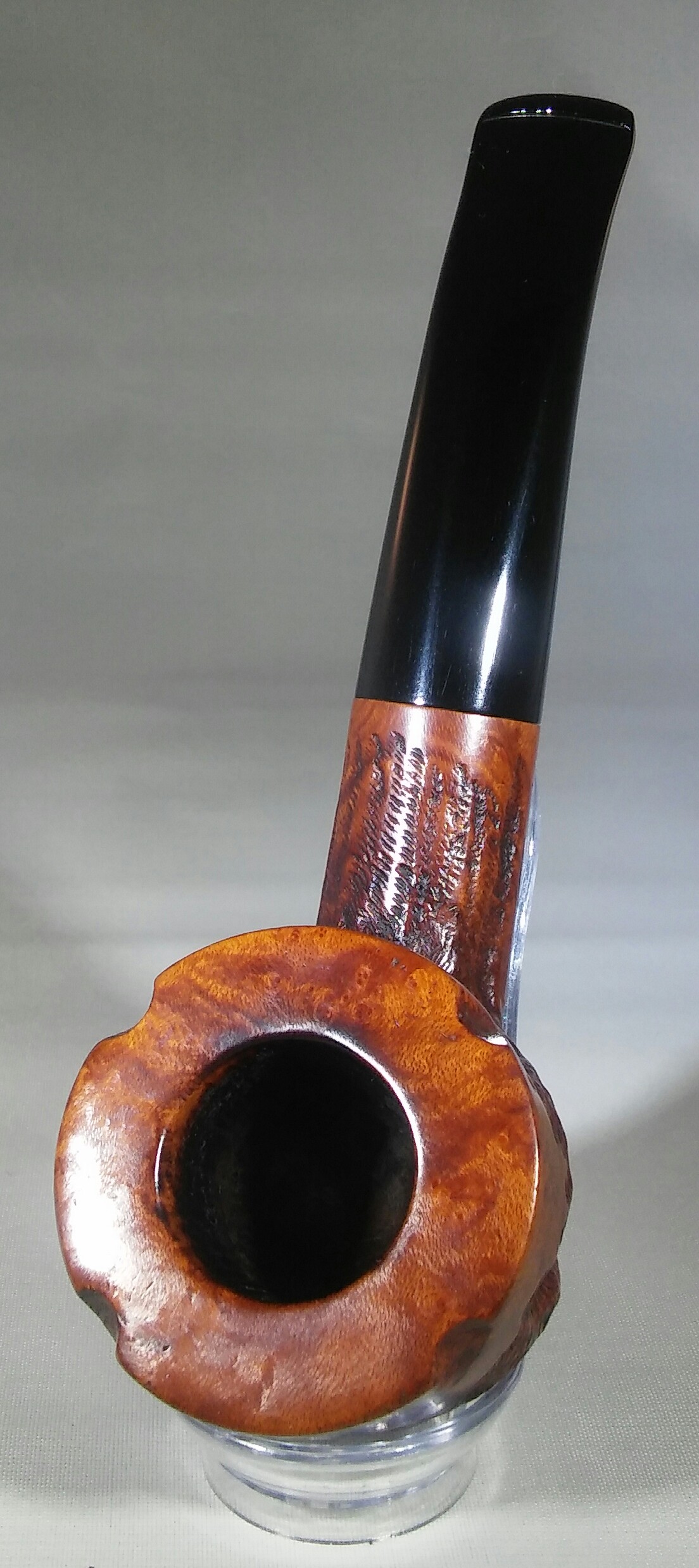
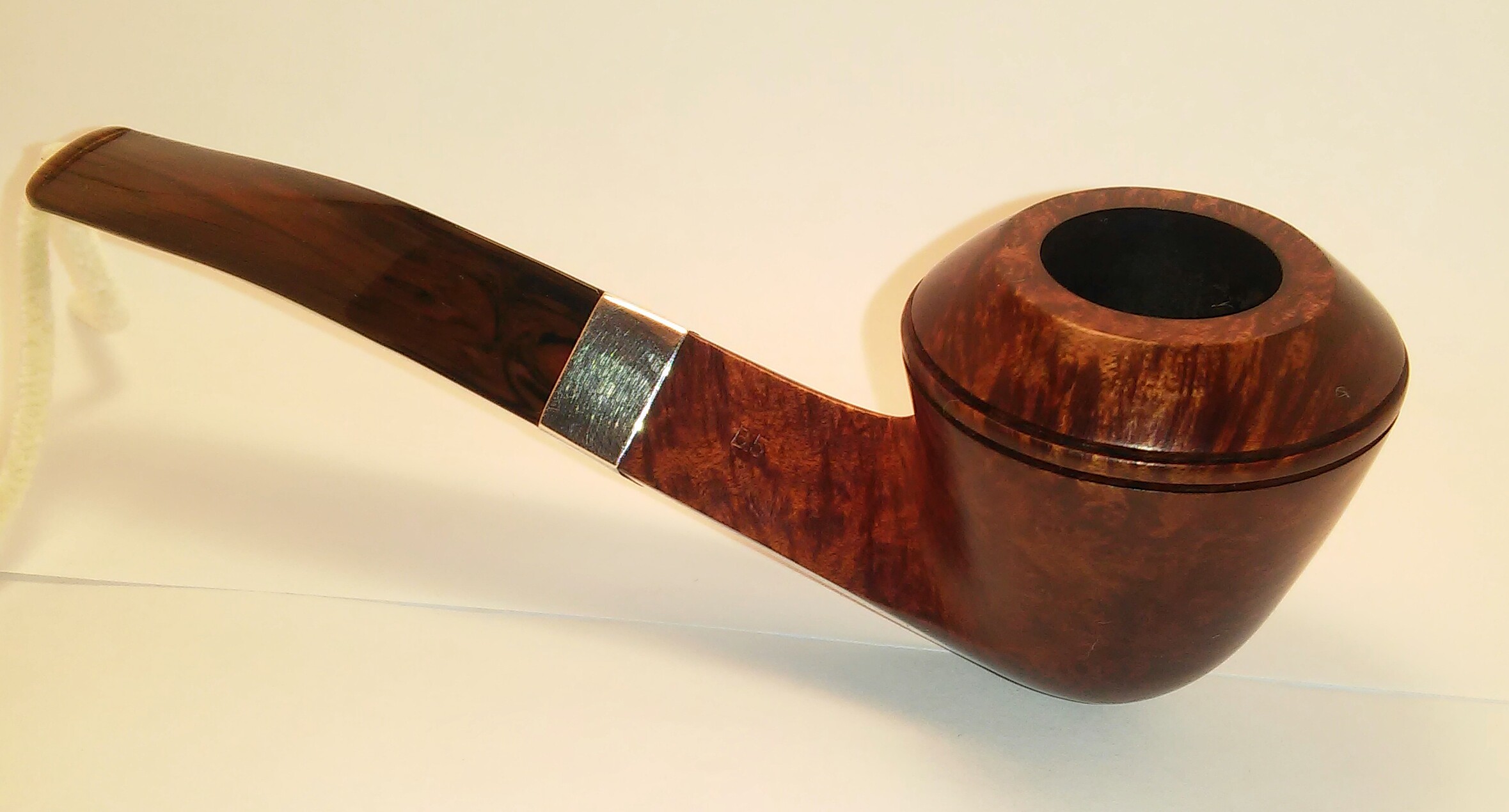
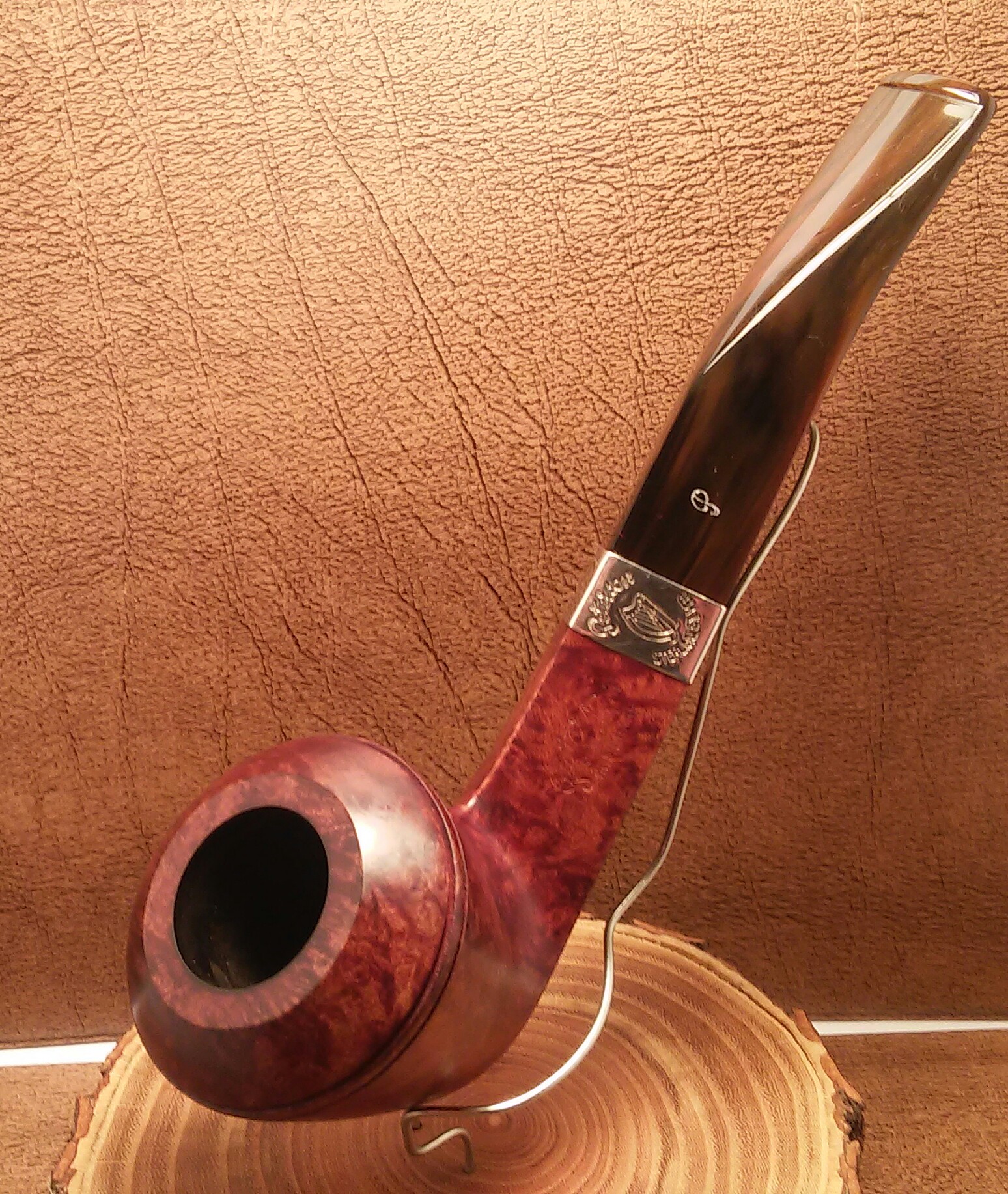
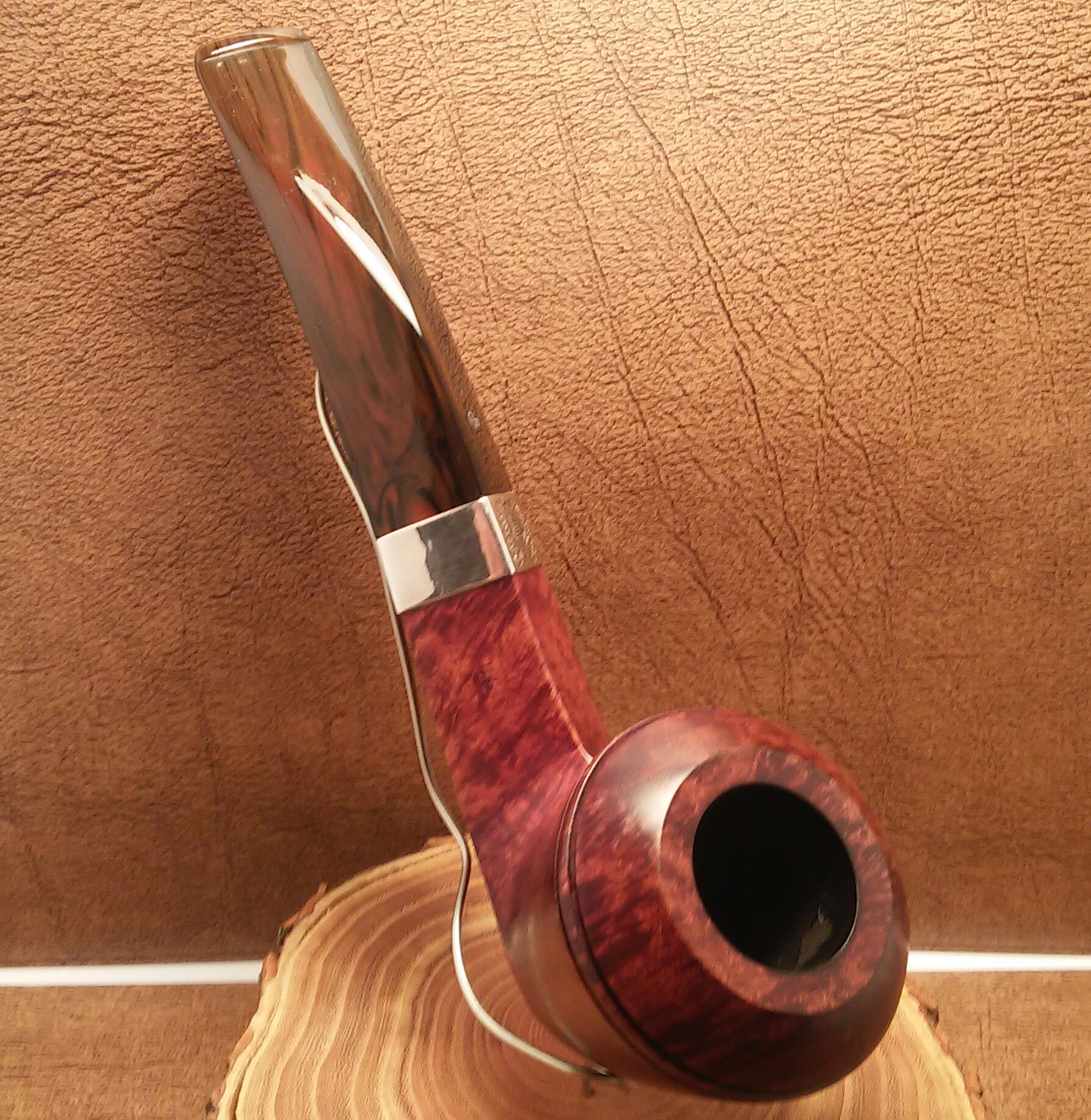
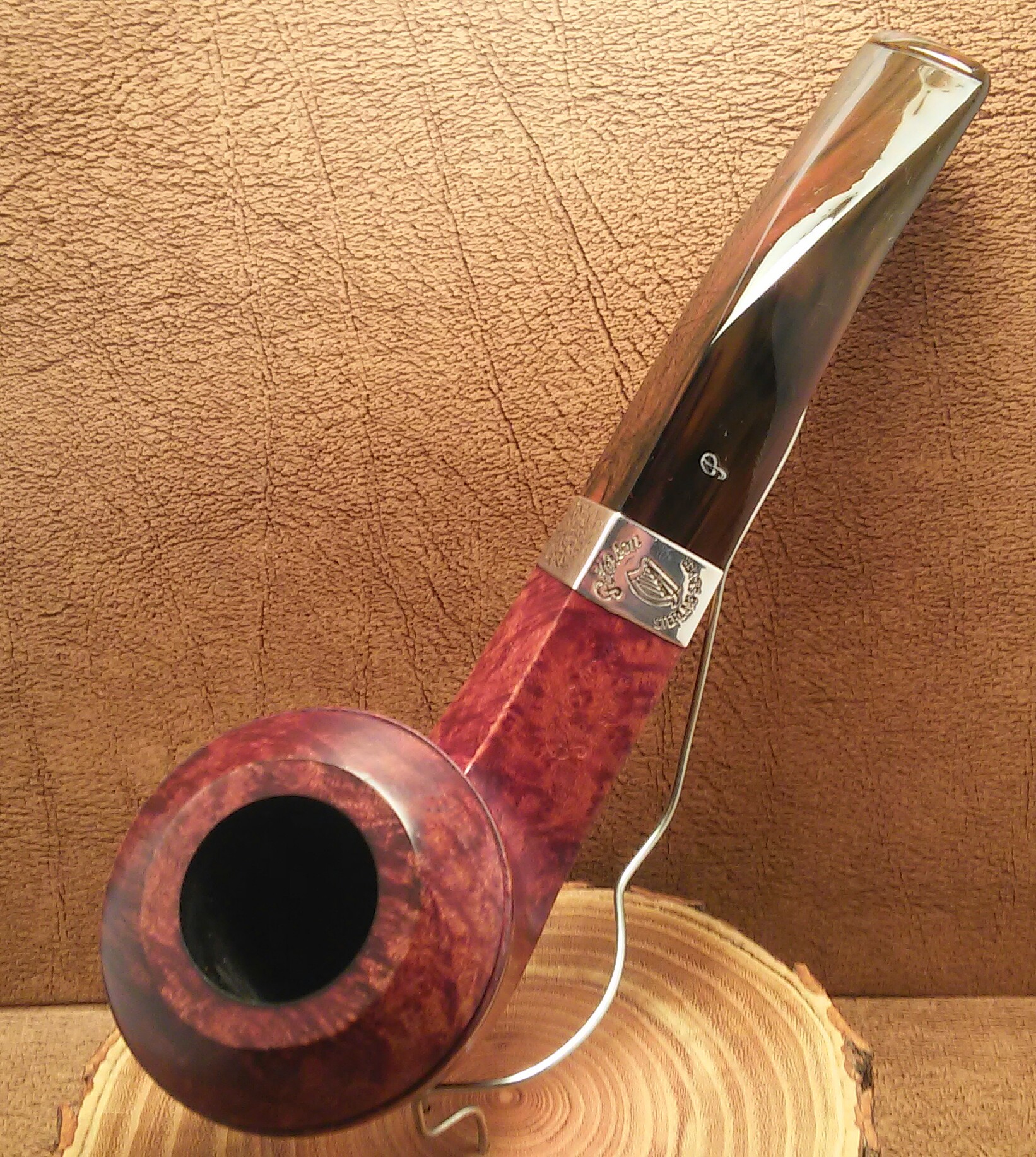
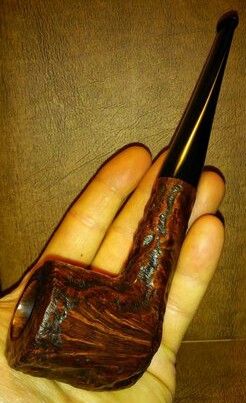
The pipes I received from fellow blogger Clint of Pipe Scoundrel are complete. They have a new home and are ready to be enjoyed once again. This trio of Bilts has been an eye opener, I believe there will be many more Rich era Custombilts in my future.

The last pipe as received

20160104_222830~2

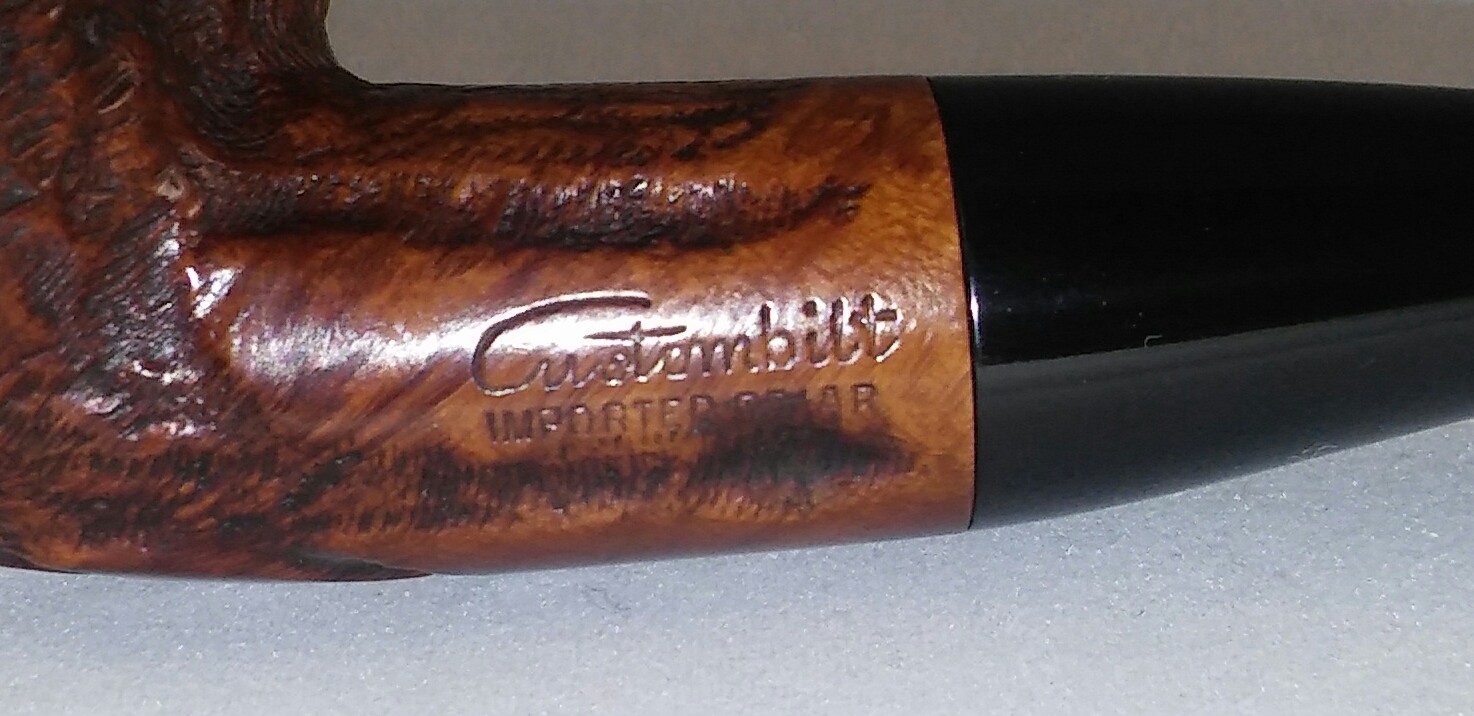
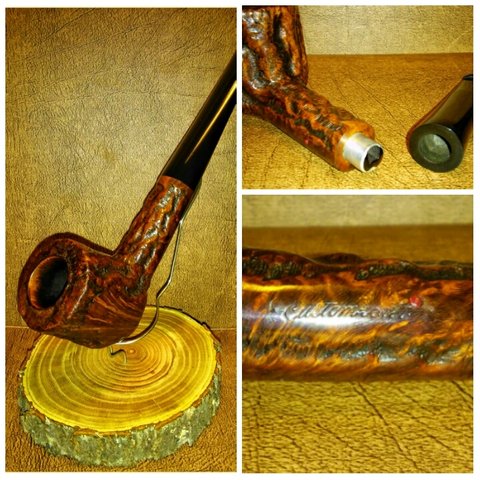
The nomenclature was stamped unevenly but I could still make out the tell tail (S) of Eugene Rich era Bilts.

PhotoGrid_1451965163069PhotoGrid_1451965201323PhotoGrid_145196517494120160104_222954~2

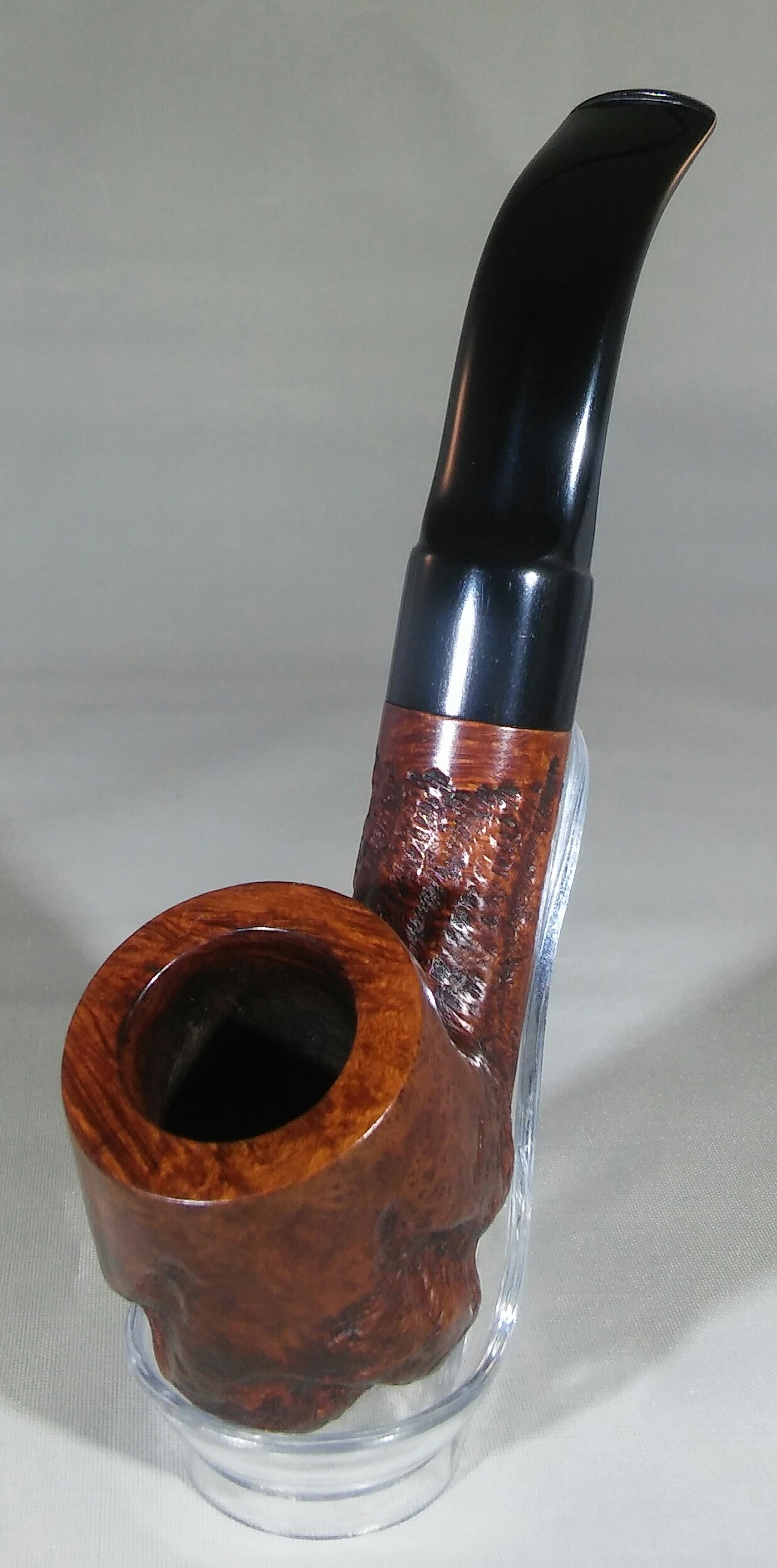
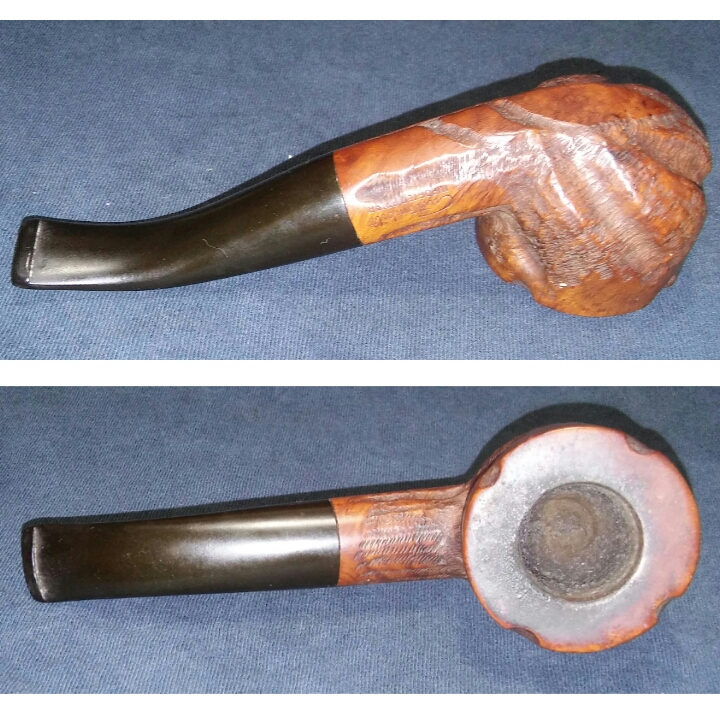
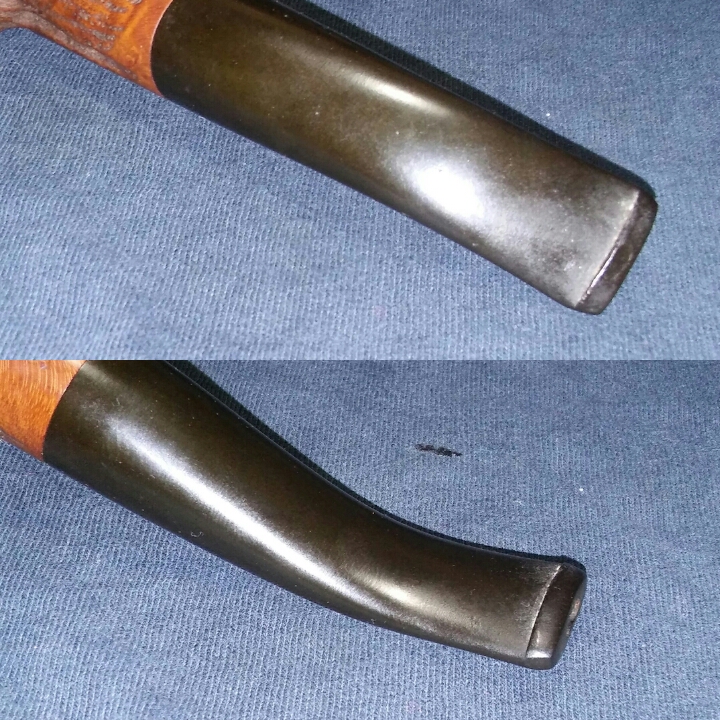
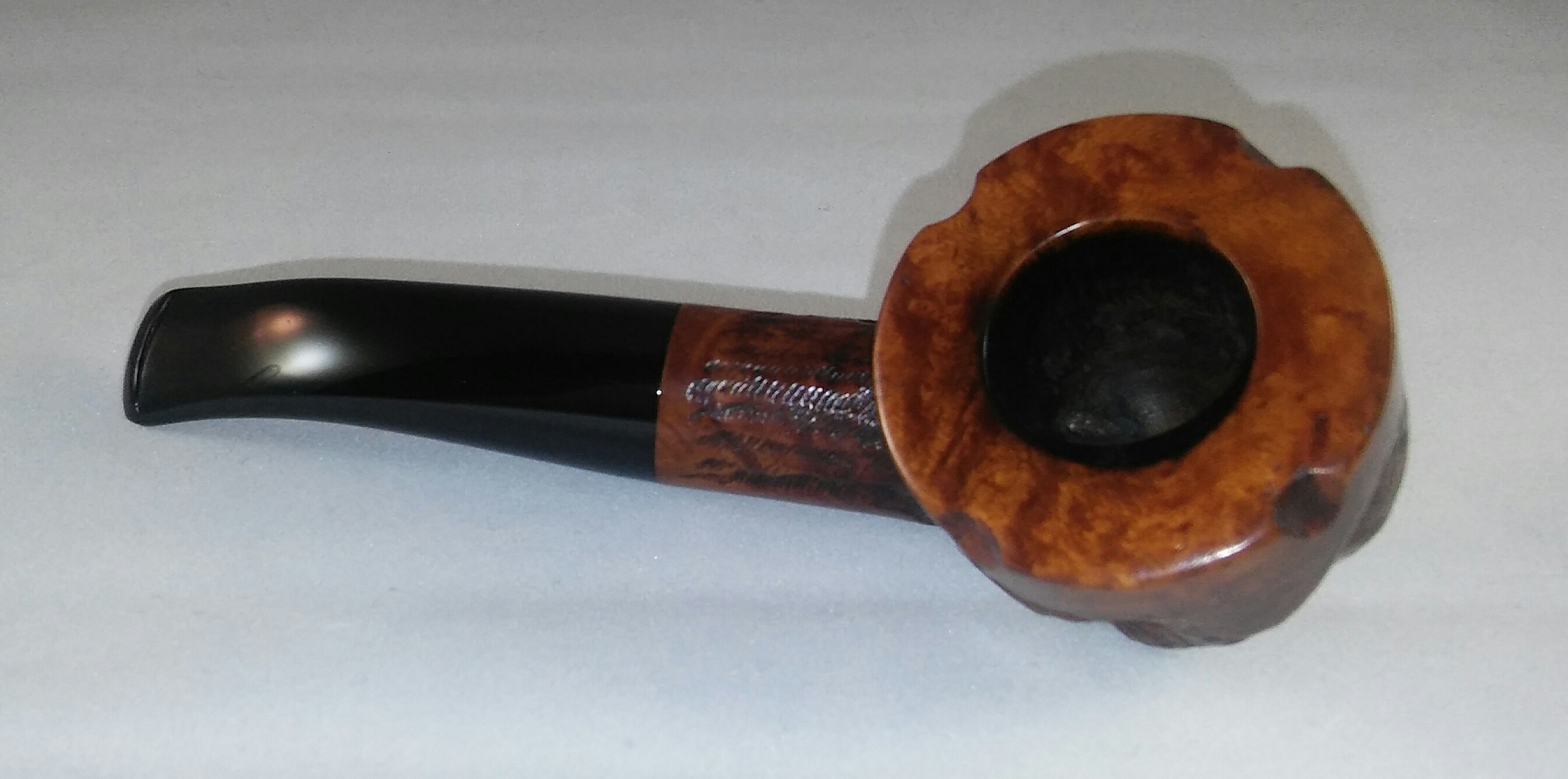
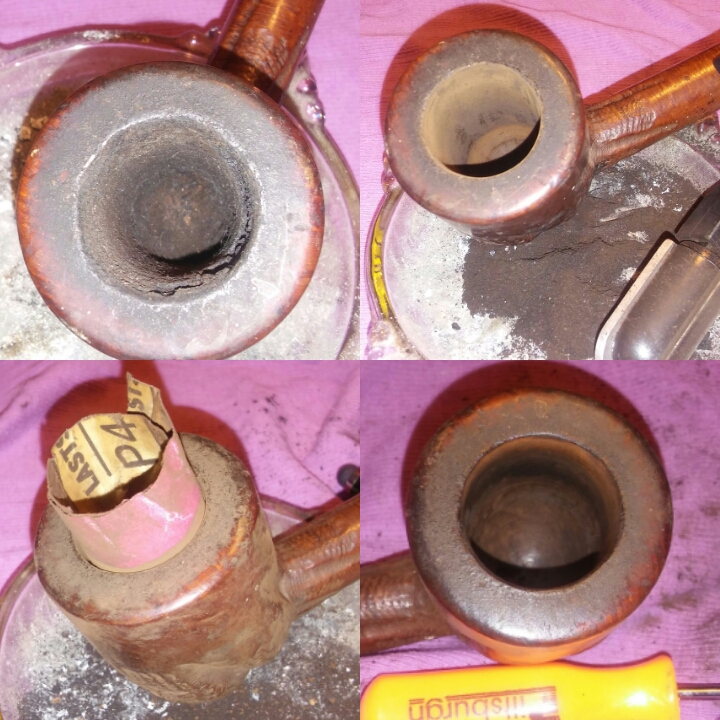
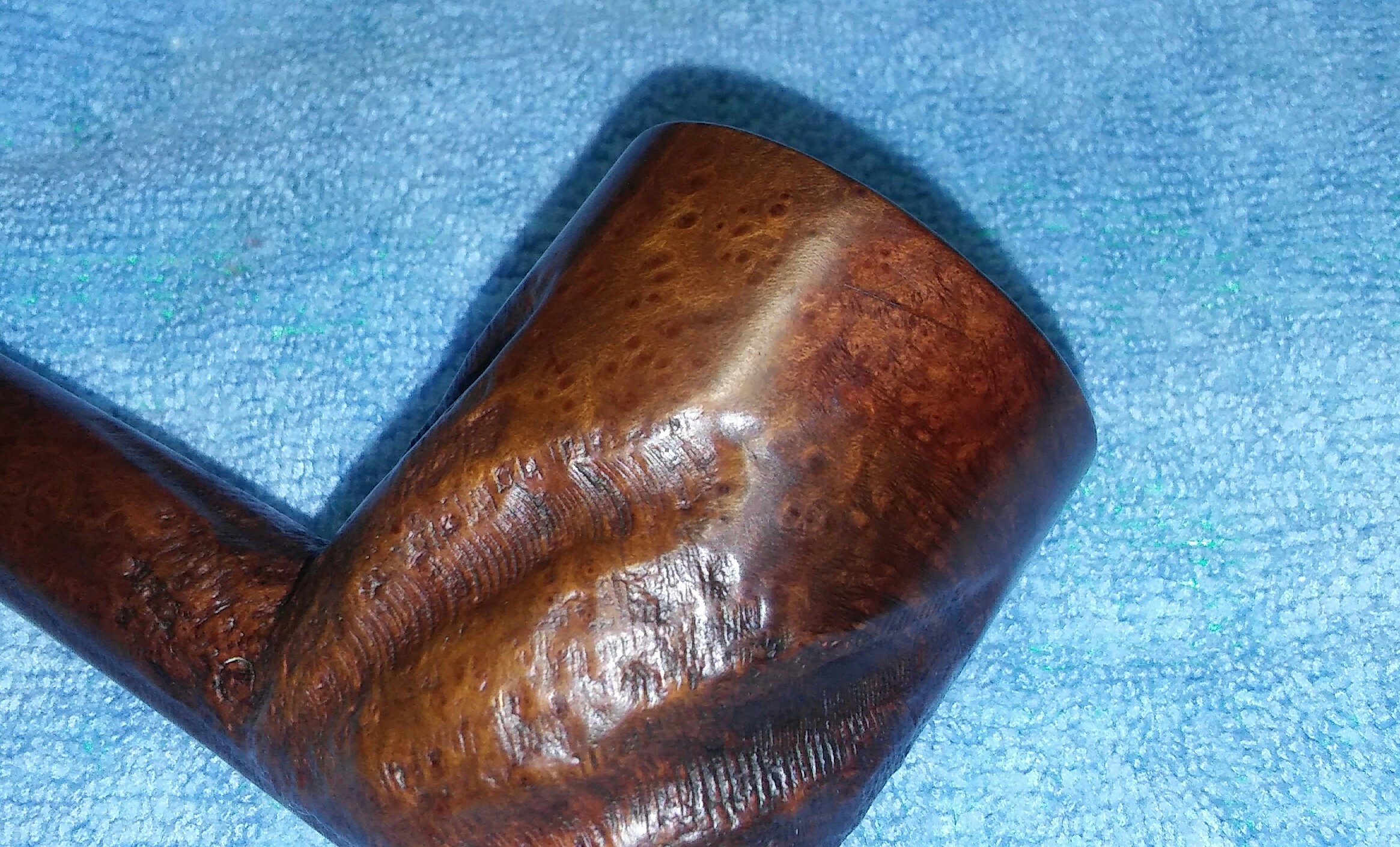
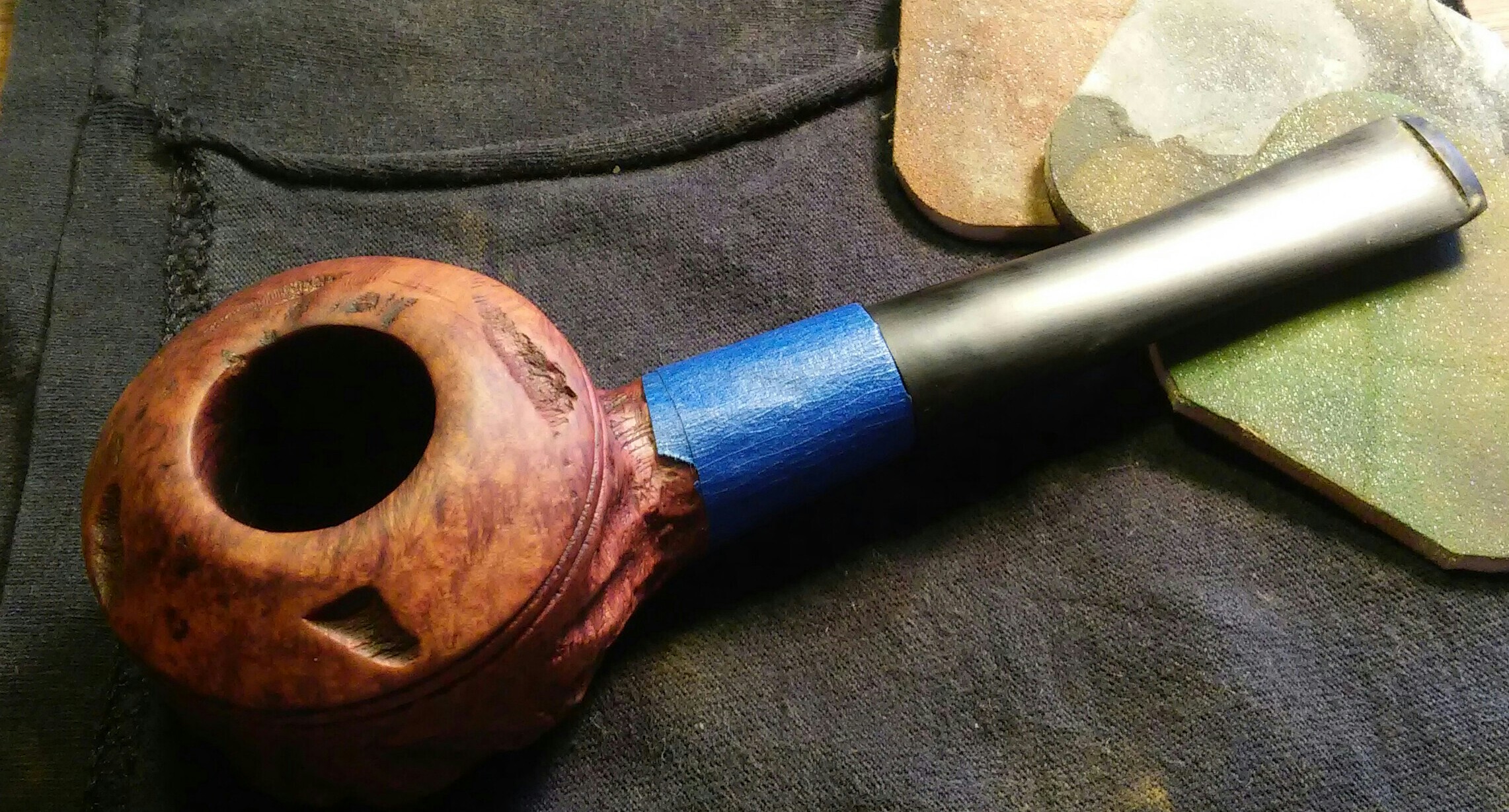
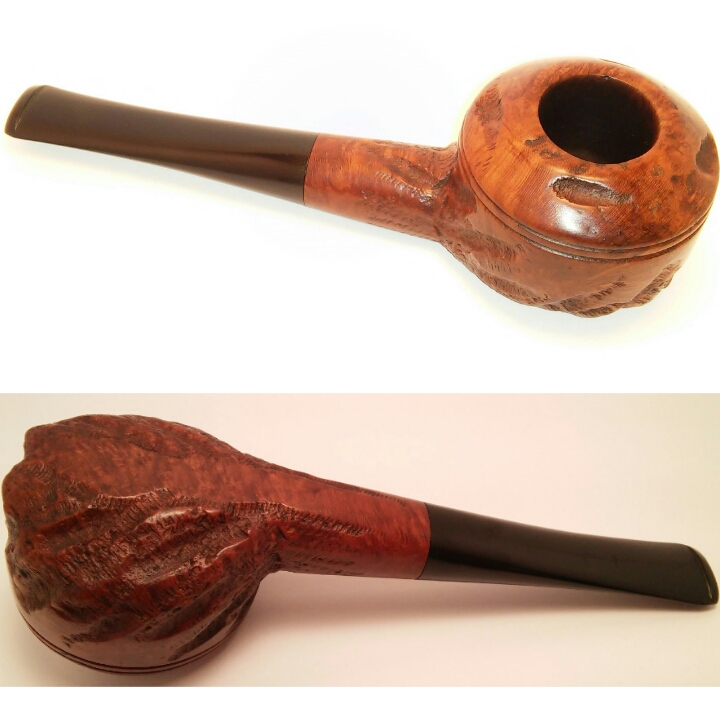
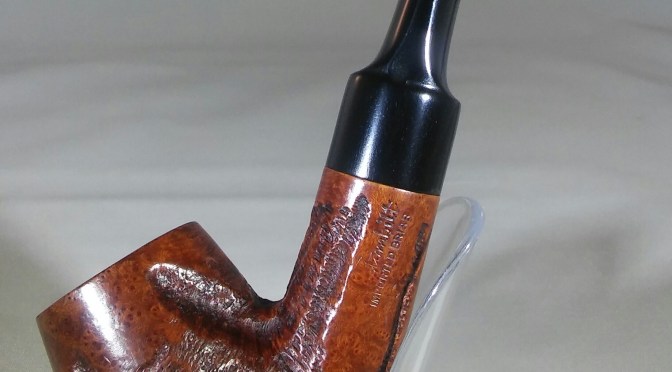
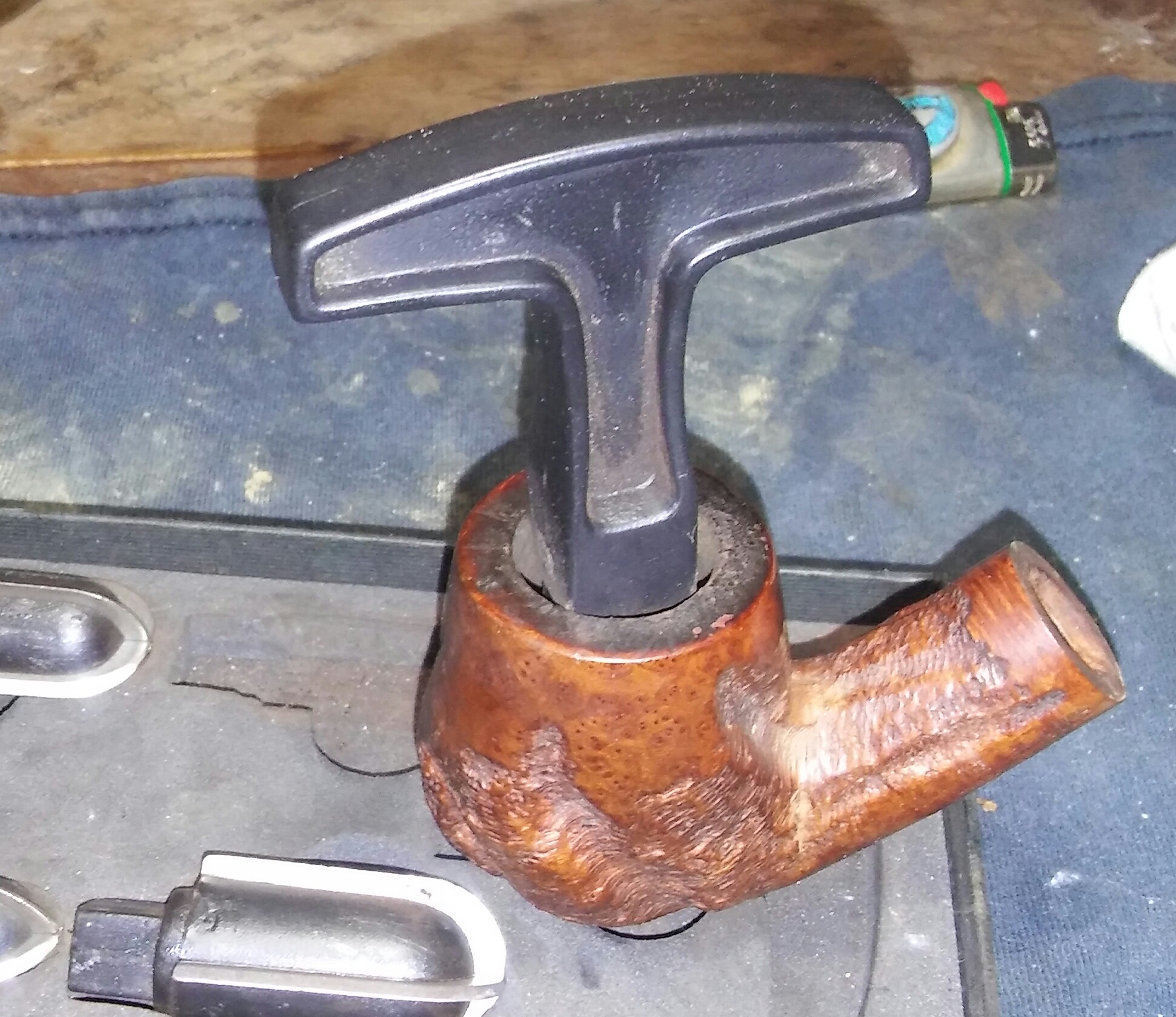
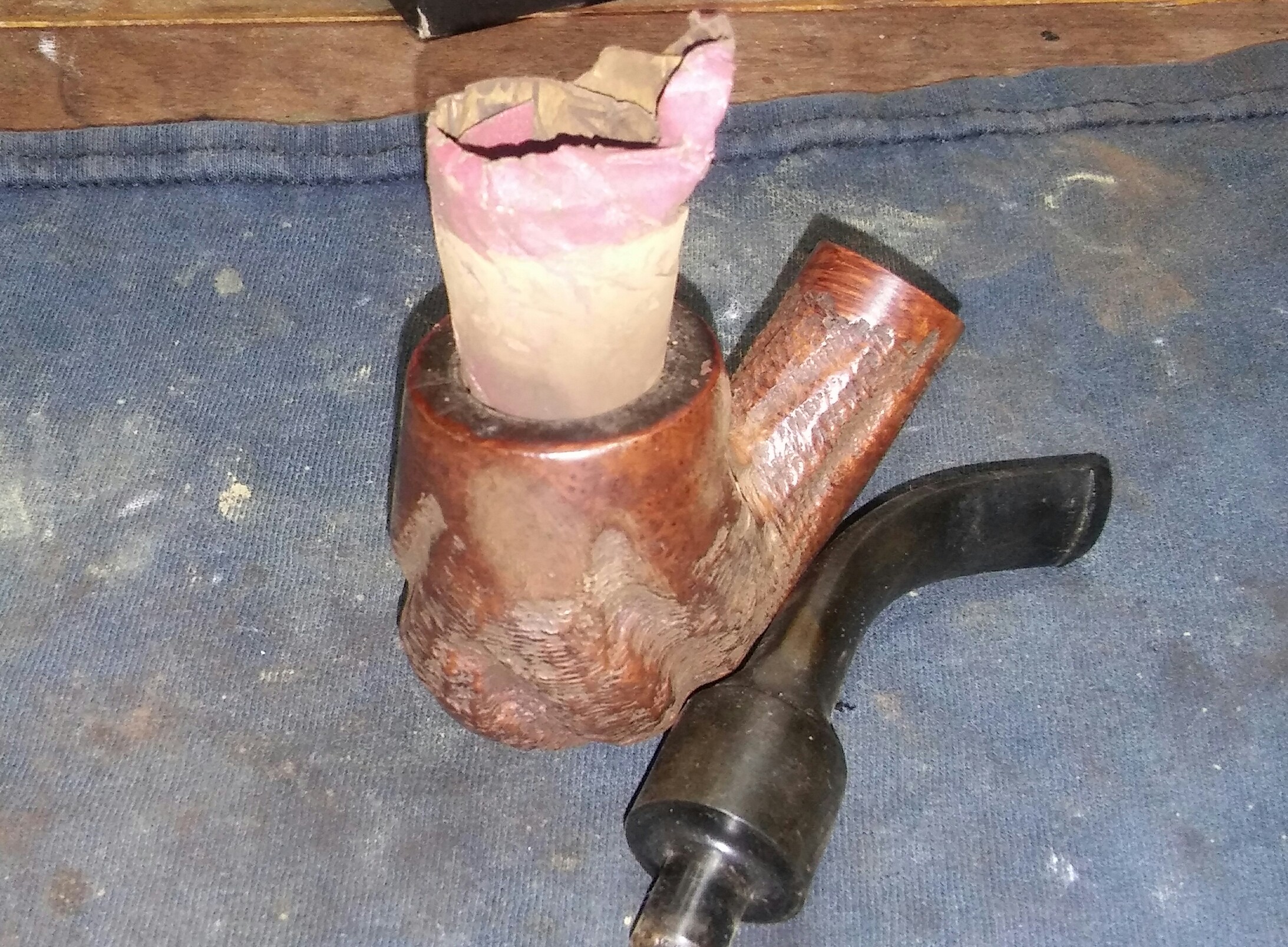
The last of the trio a large bent billiard. Much like the last shes in pretty descent shape. The cake is a little thicker, the tennon would need tightening, rim tar&char, there is a little filler present and light chatter.
20160105_080059~220160105_111226~2

I started off with the smallest attachment of my Castleford reamer and moving on to the largest that the chamber would except in this case it was one up from the first. I finished up with 400 grit sandpaper. The chamber was free of pitting or the start of a burn out.

PhotoGrid_1452021326533

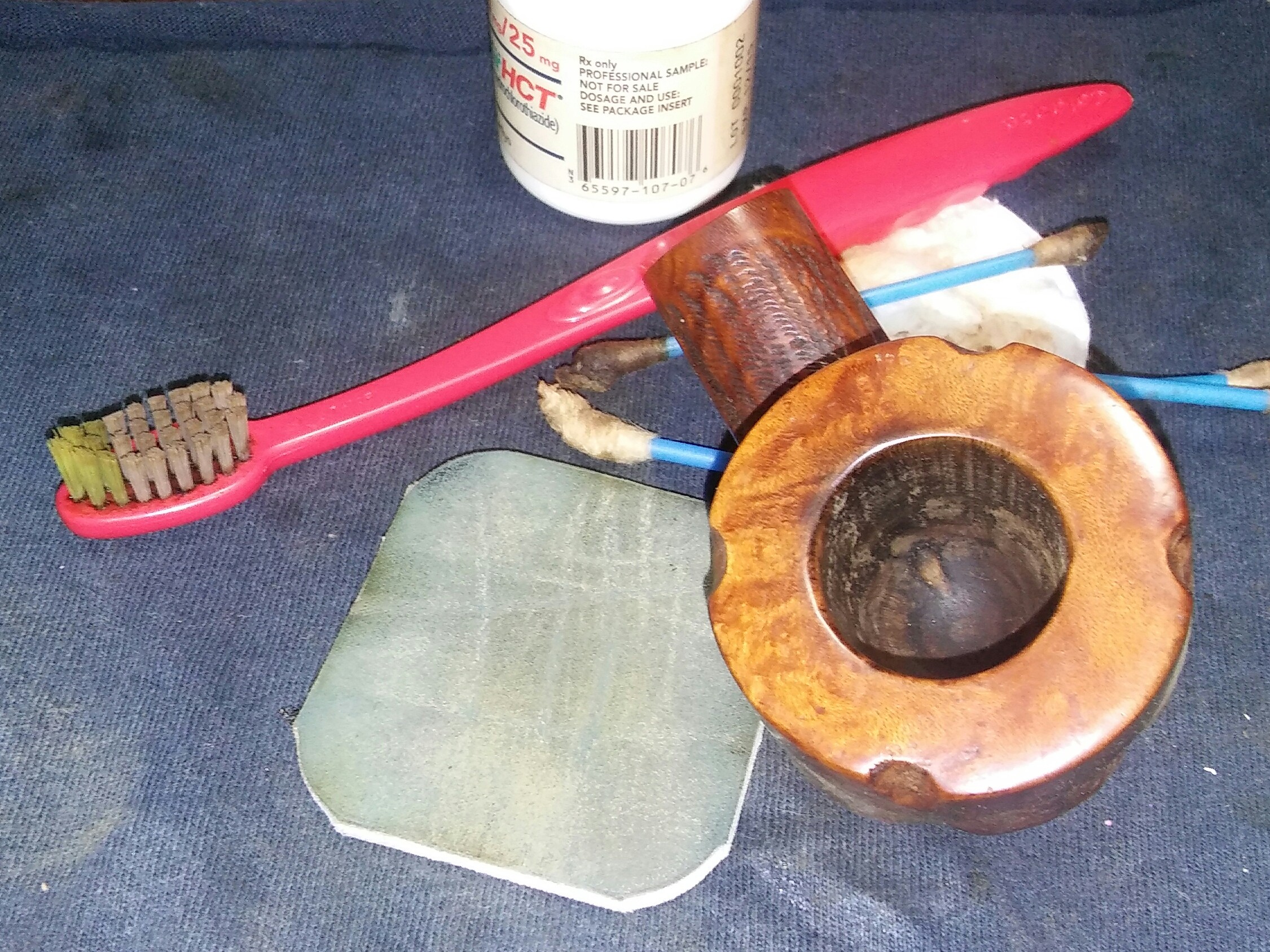
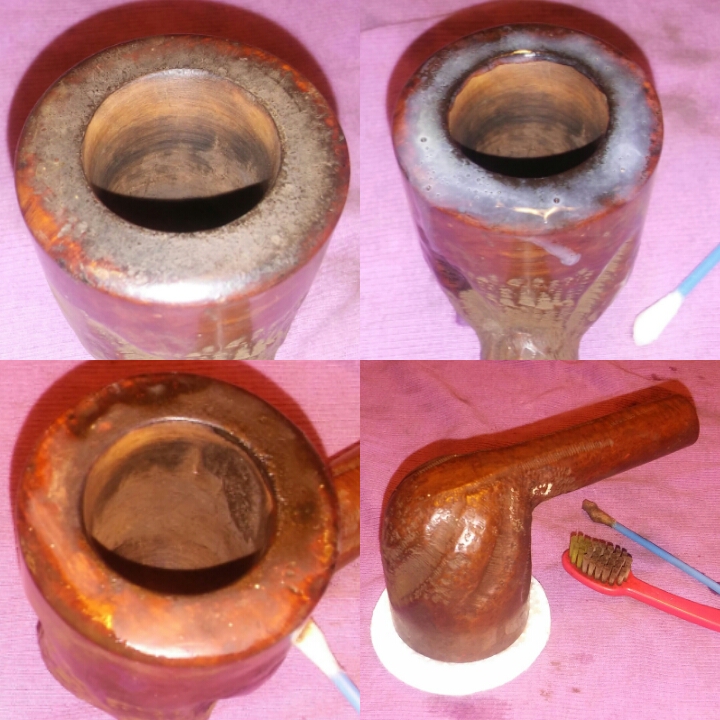
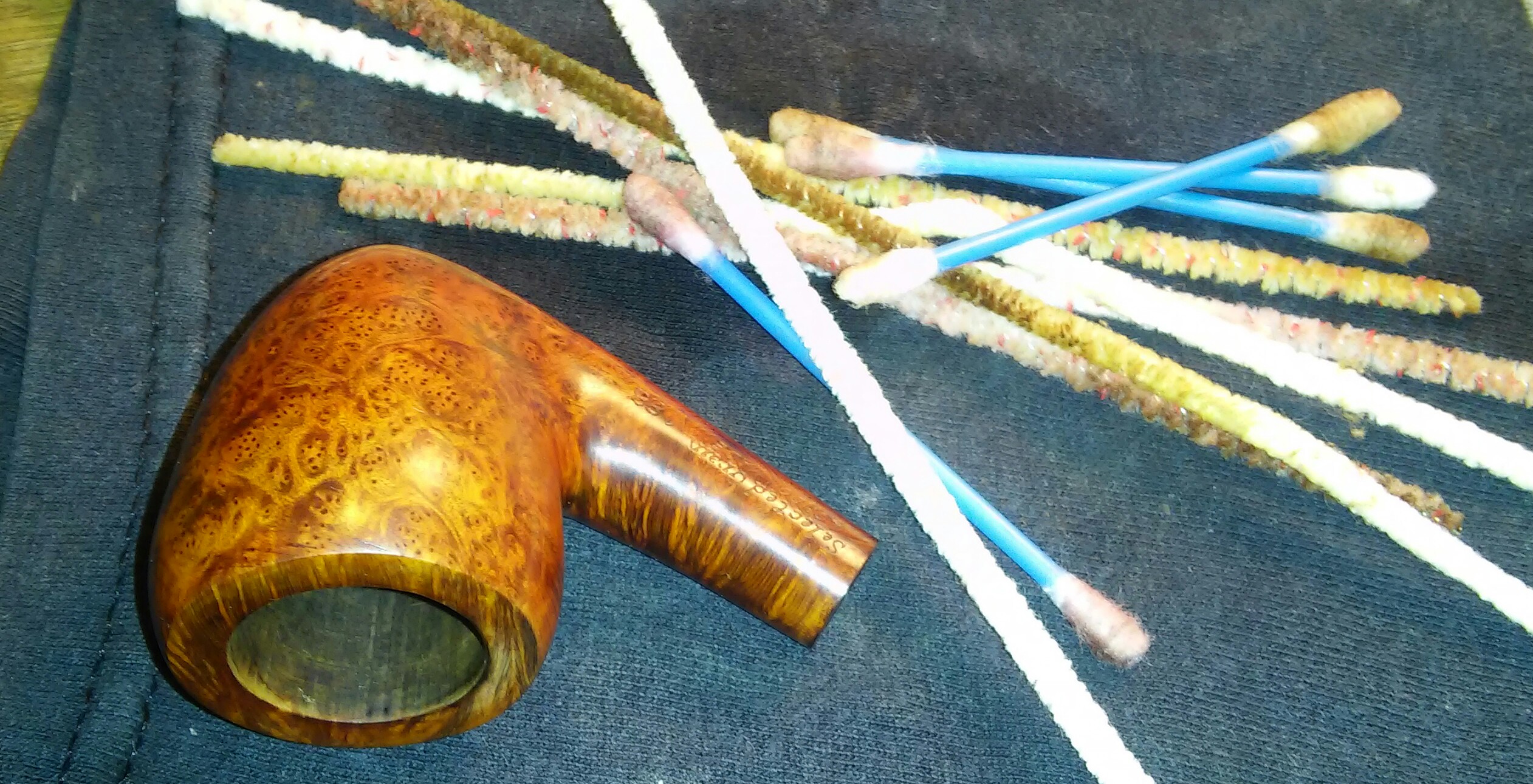
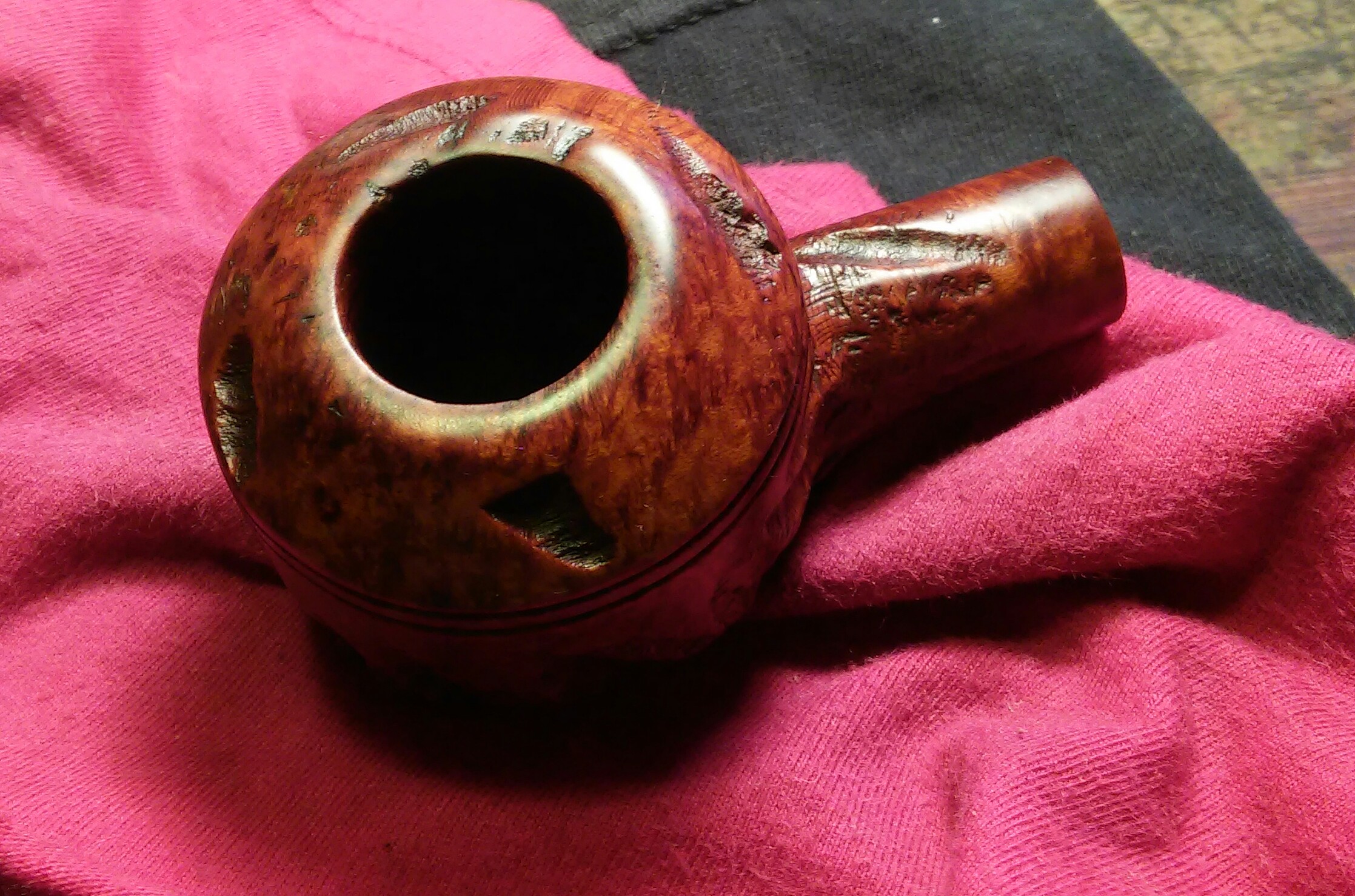
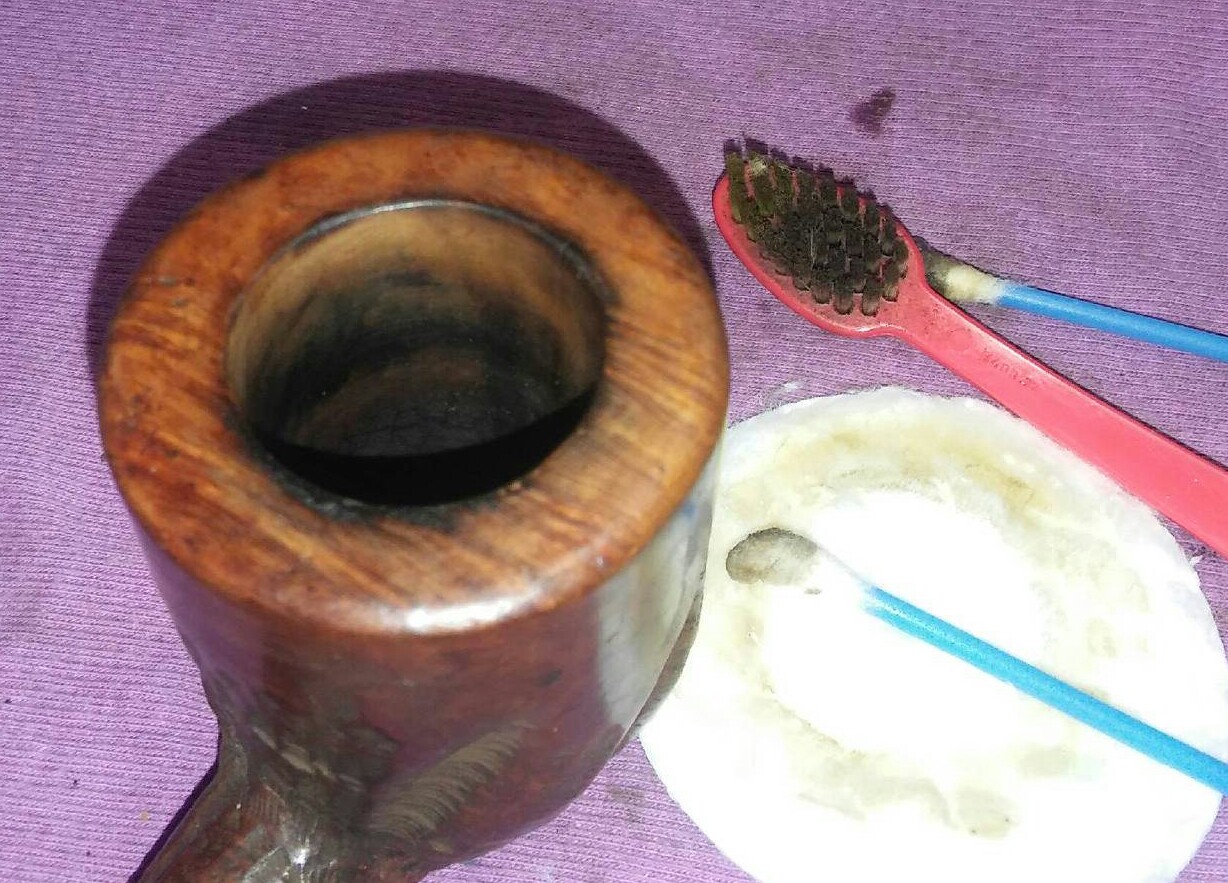
Now for the rim, it was thick with tars and build up. I applied a generous amount of Method Good For Wood Polish to a makeup pad and left the stummel upside down so the polish could soften the build up. I would have to repeat this process a couple of times to remove all the debris, using a children’s toothbrush and Q-tips. I have also uncovered a couple of dents on the rim that I will address later on.
PhotoGrid_1452021270770

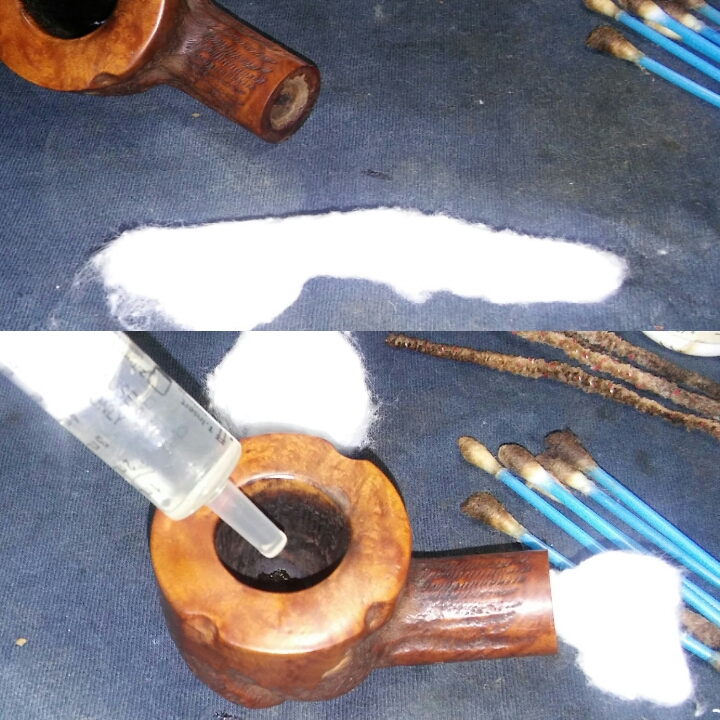
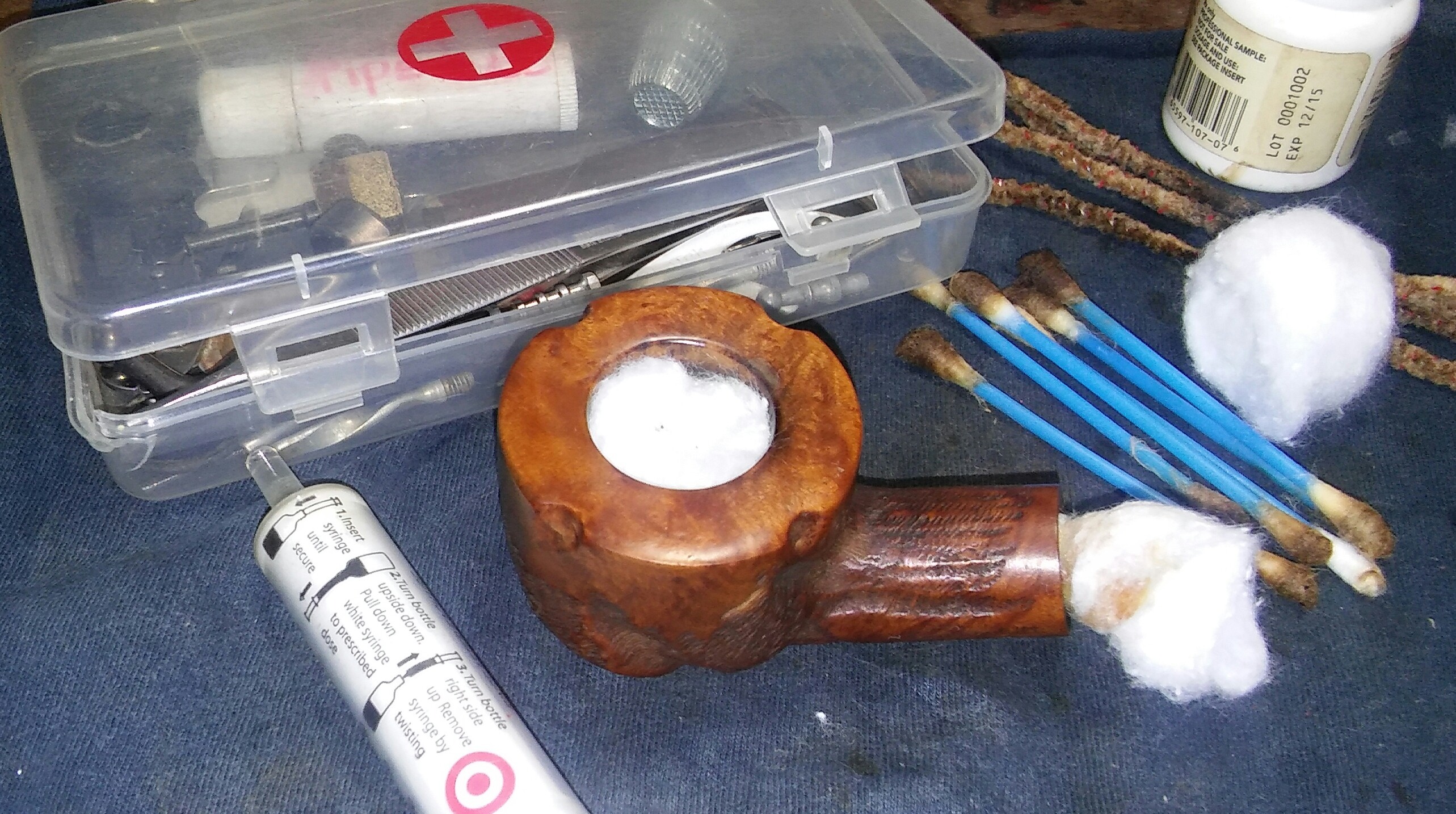
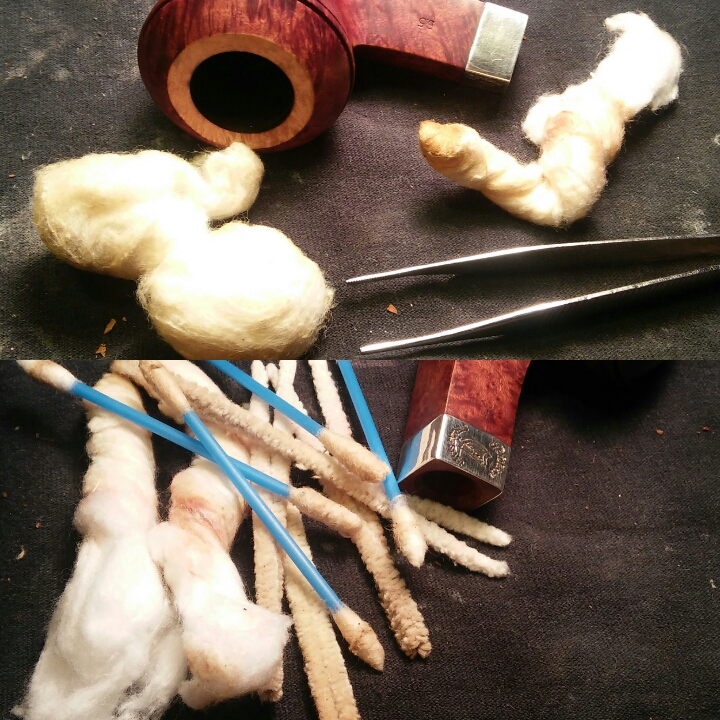
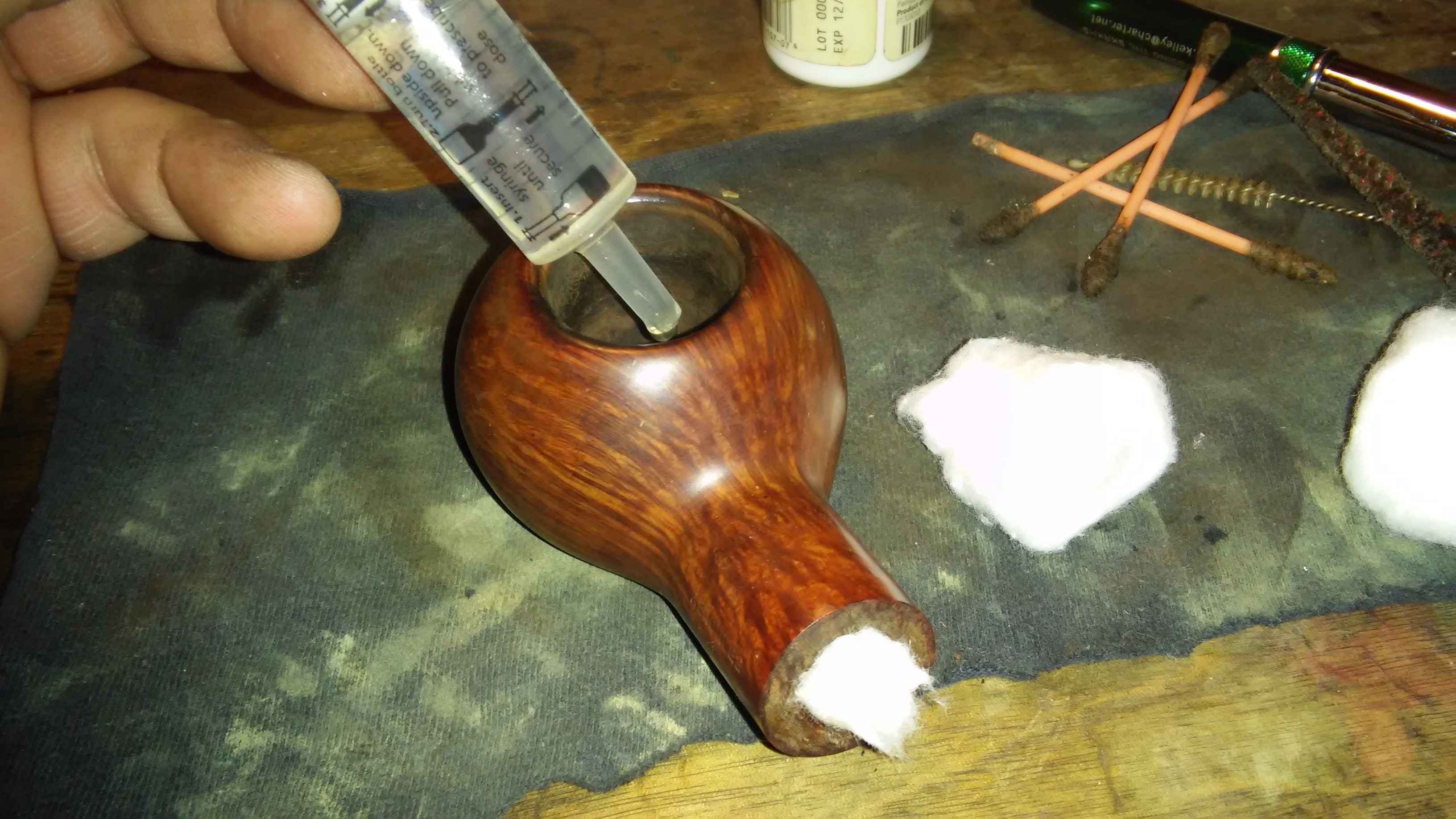
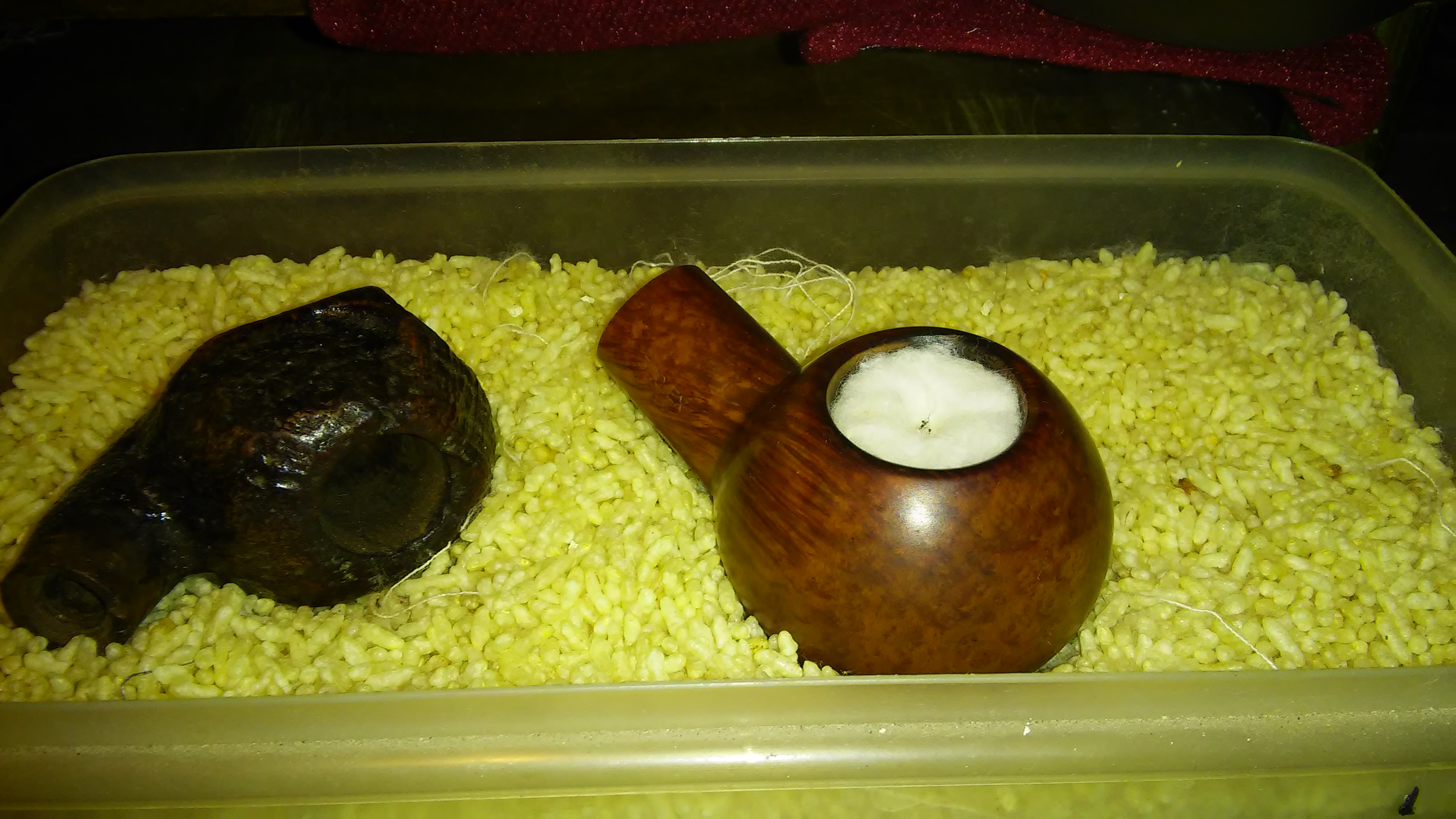
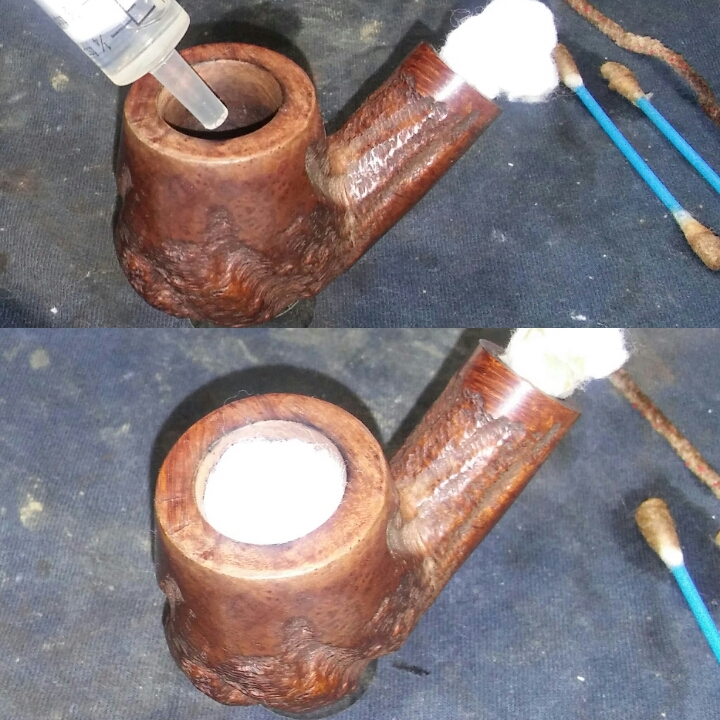
With the rim clean I moved to the chamber and mortise. I did a quick clean of the internals with EverClear and Qtips to remove the loose debris. Now the soak, I unrolled a cotton ball and formed a long swab, using the swab I twisted it into the mortise tightly. I now filled the chamber a quarter of the way with EverClear and allowed the swab to absorb the alcohol. Once the alcohol is absorbed I filled the chamber with two cotton balls and added EverClear to the cotton balls untill saturated. I now set the stummel aside while I worked on the stem.

PhotoGrid_1452021196393

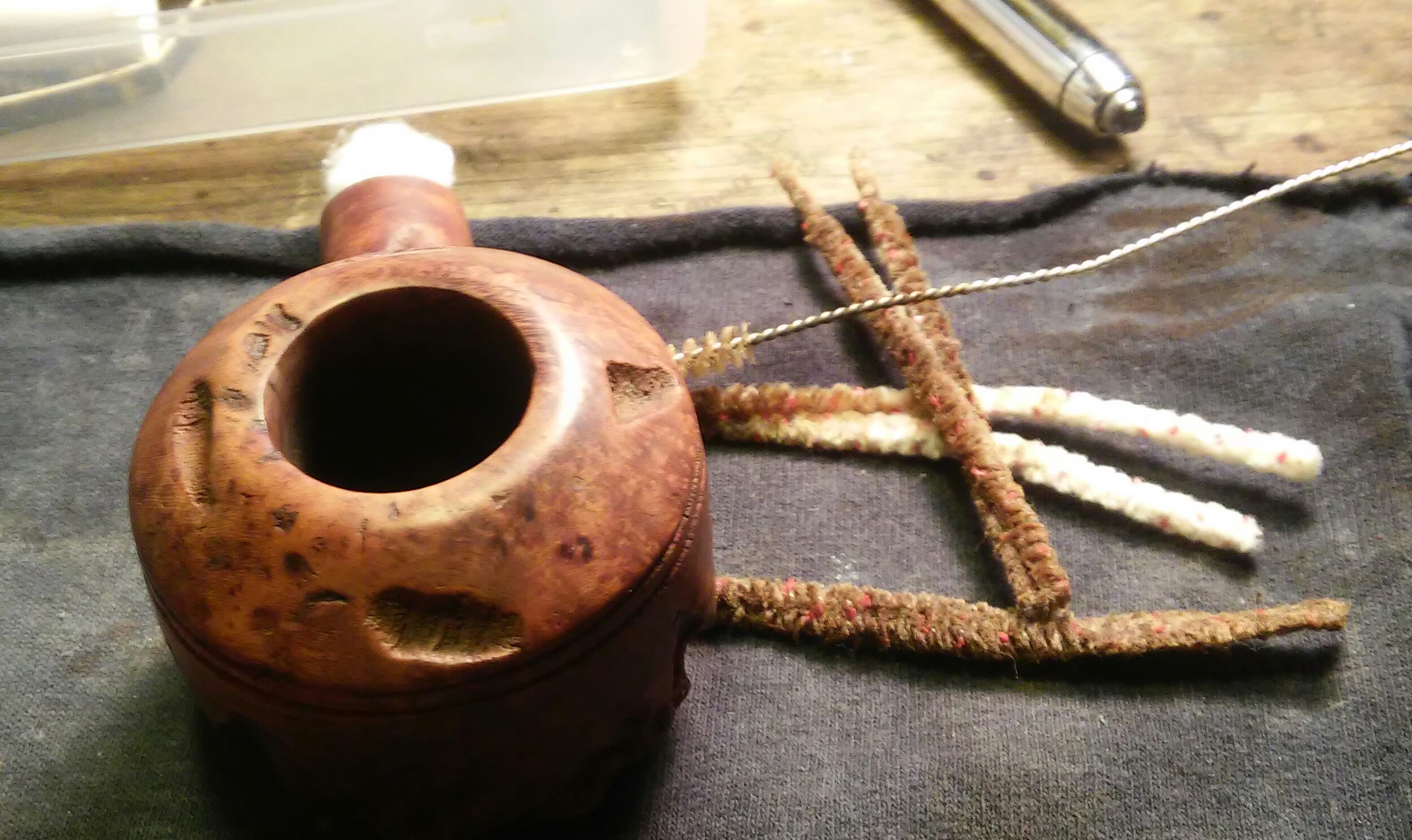
I started the stem by cleaning the exterior first with EverClear and a makeup pad, then the internals with EverClear and stiff/soft pipe cleaners, cleaning until the pipe cleaner came out as it went in.

20160105_143453~2

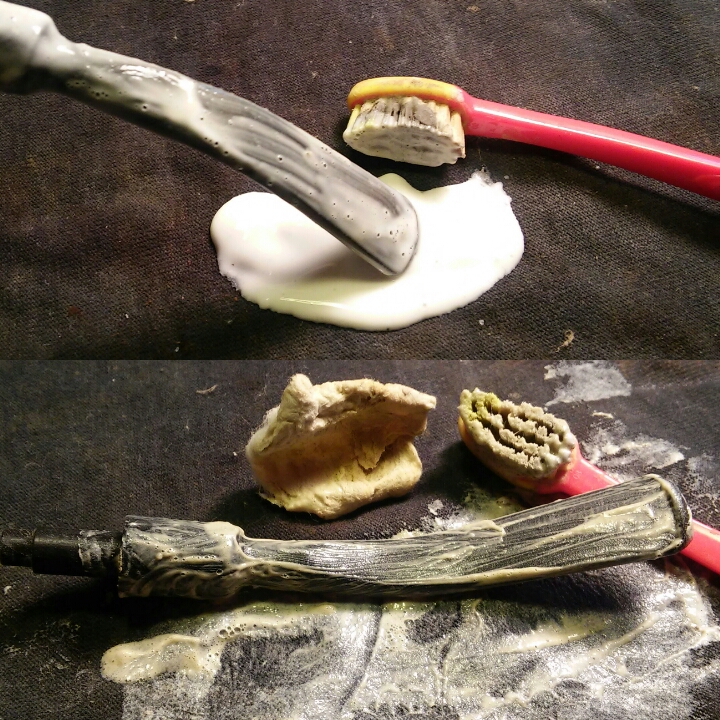
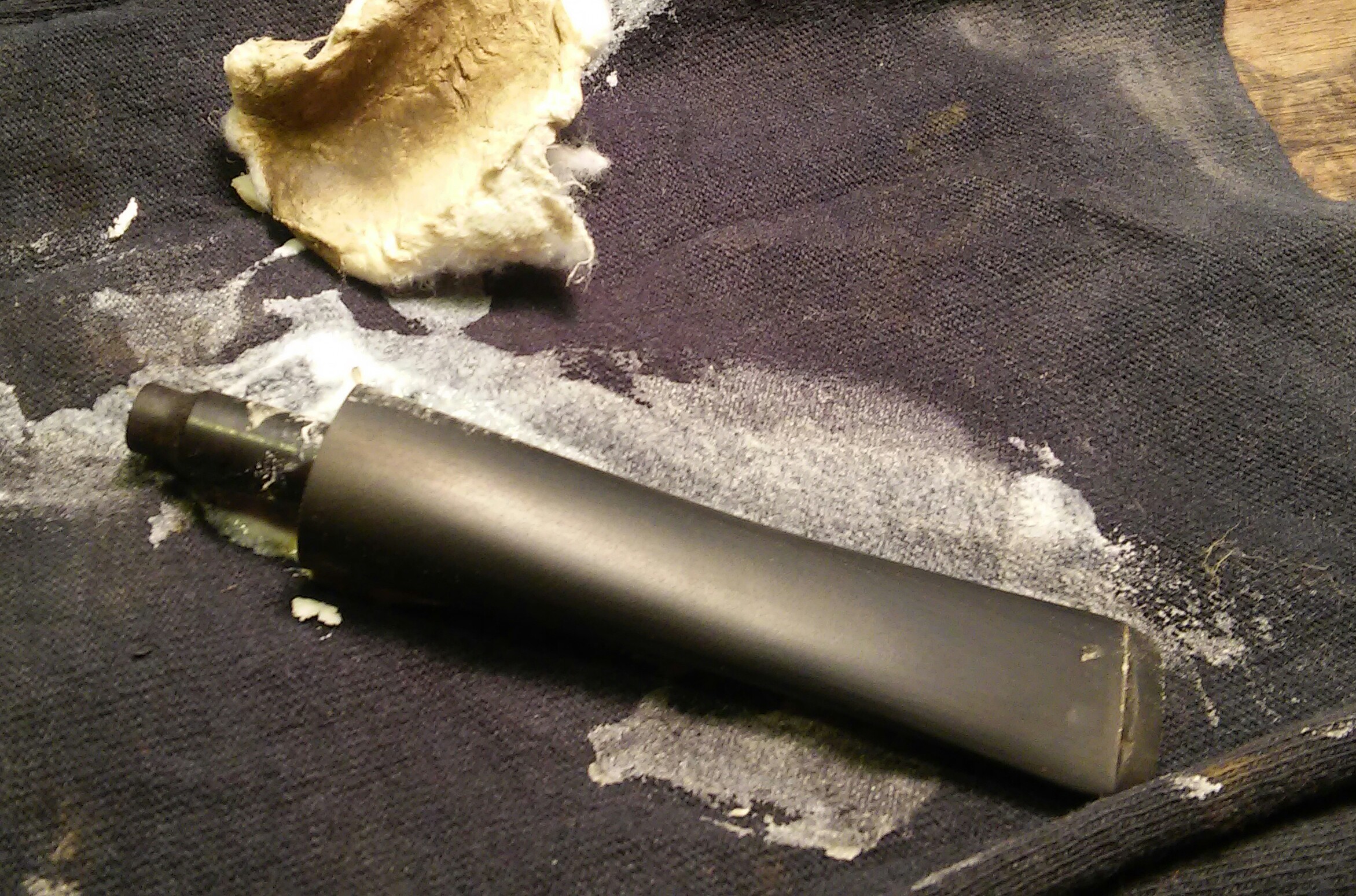
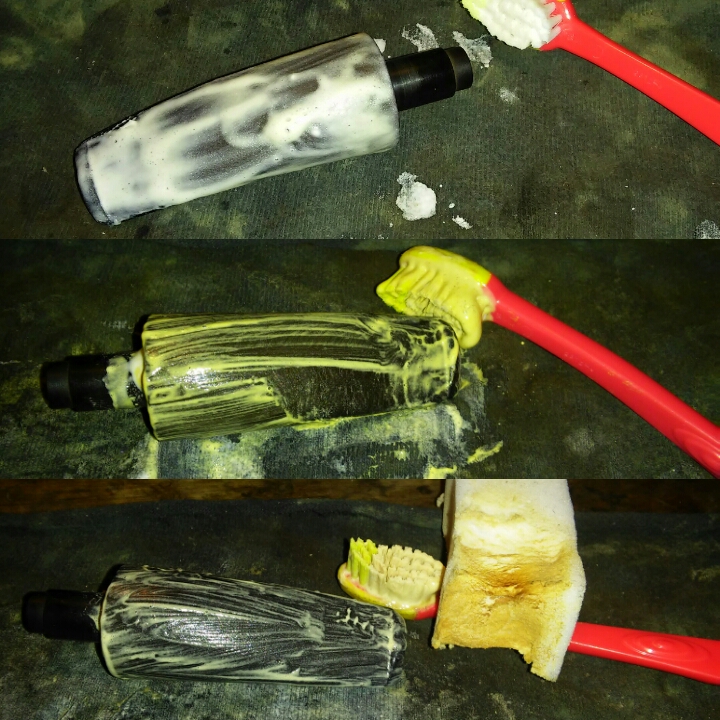
Now the oxidized stem I applied non-bleach Soft Scrub with a children’s toothbrush and left aside until the Soft Scrub turns from white to a brownish color.

20160105_145753~2

Now the elbow grease, I  now scrubbed the stem vigorously with Soft Scrub and a rag to remove the oxidation
20160105_150600~2

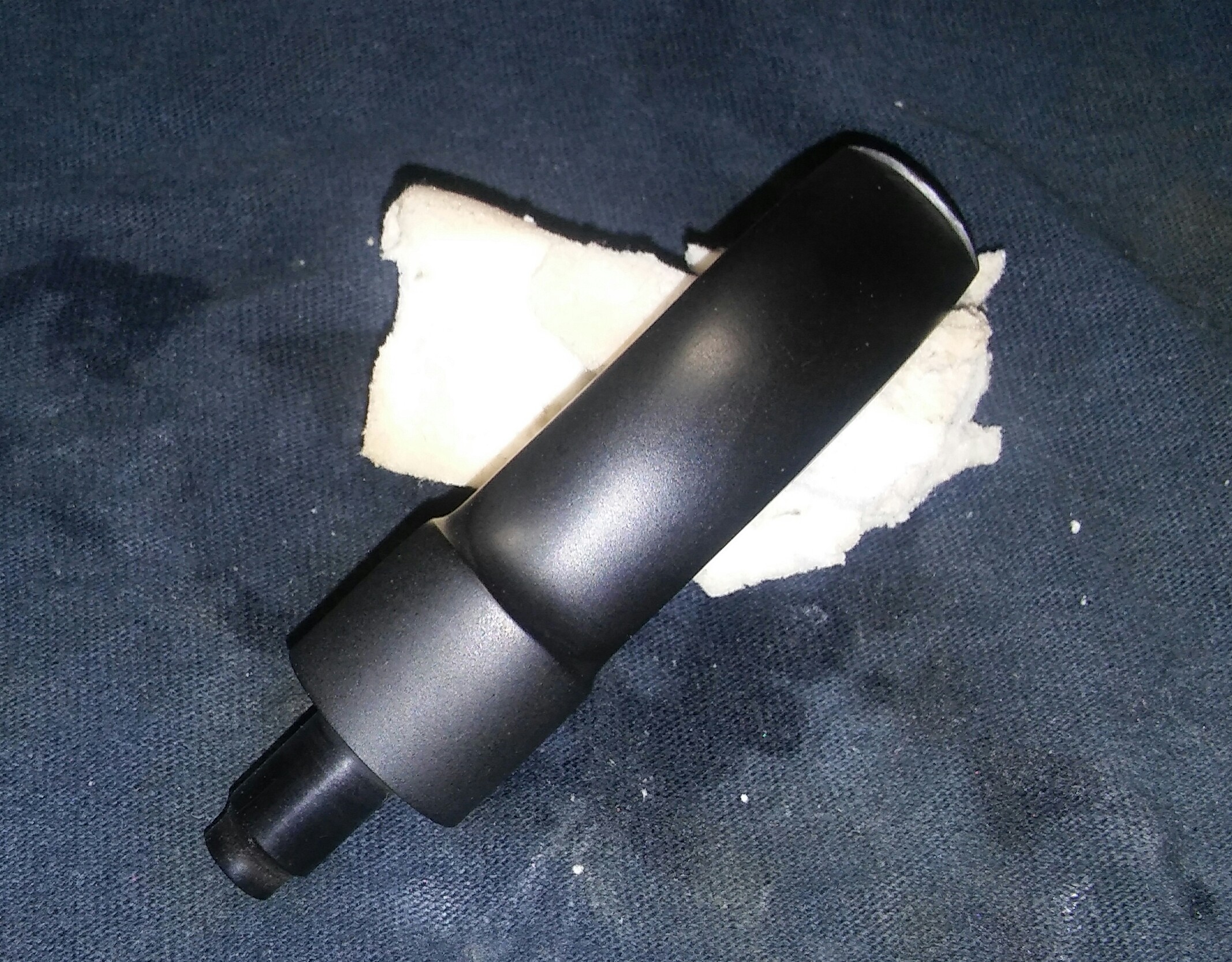
Finishing with a damp Magic Eraser to remove the leftover oxidation. The surface still has a rough texture and would need to be sanded.

PhotoGrid_1452024653610

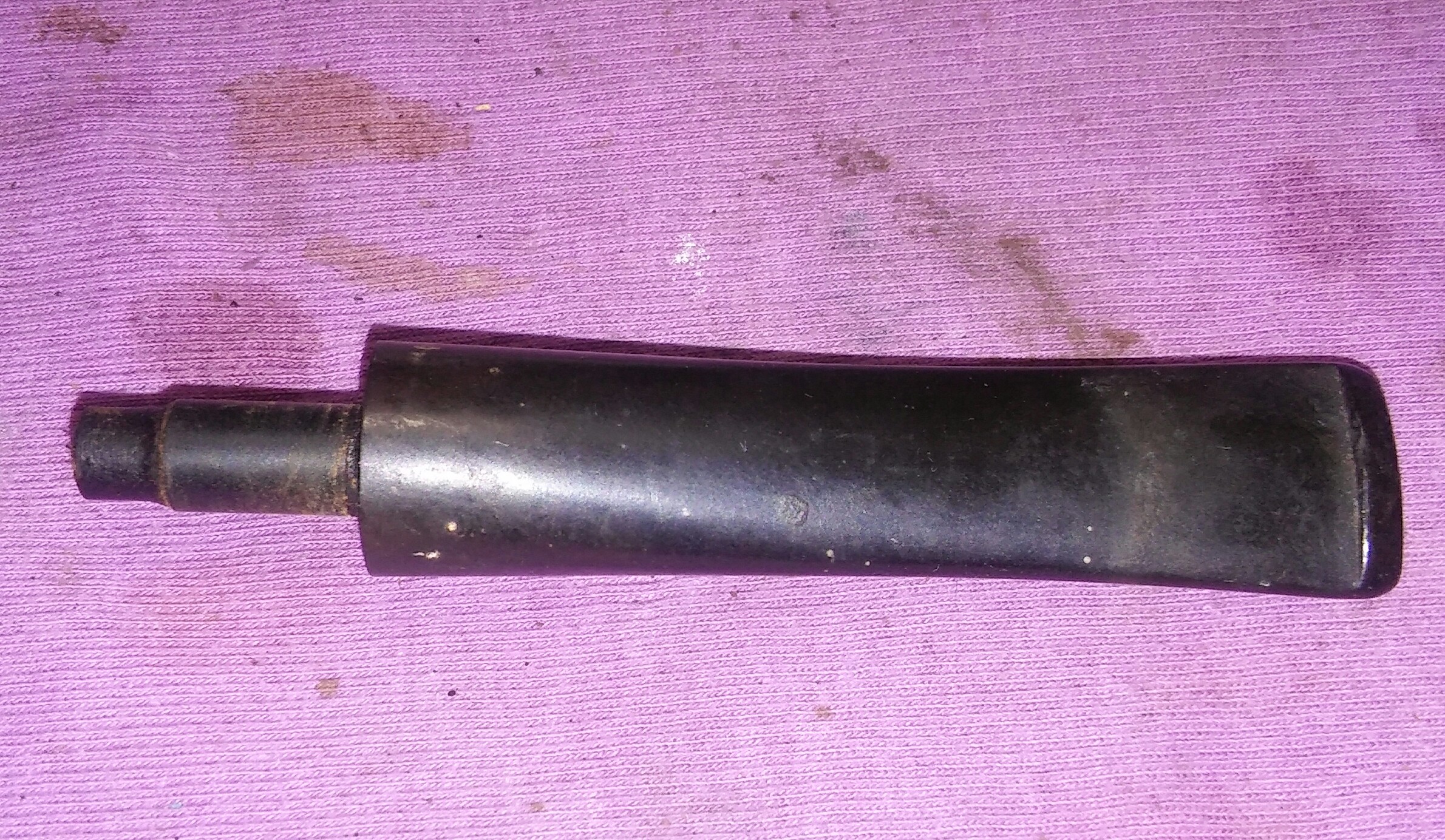
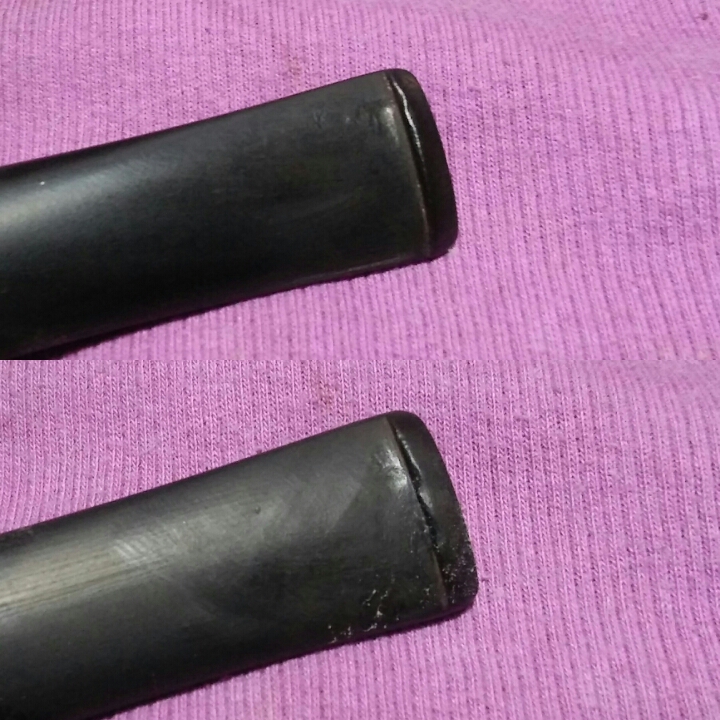
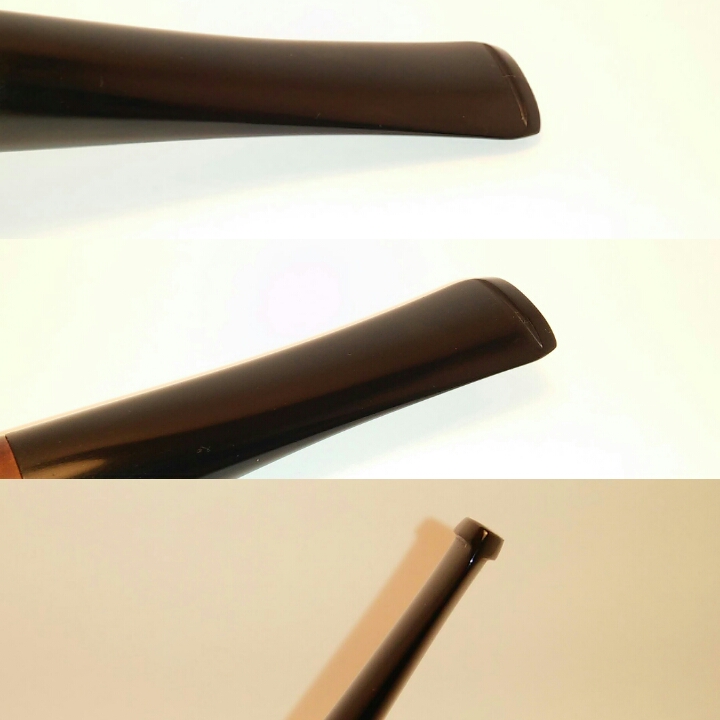
The stem had a couple of tooth impressions, using a Bic lighter I heated the area of the impressions (moving the flame at all times never leaving it in one spot too long). I was able to raise a few but one was stubborn and would need filling.

PhotoGrid_1452116628613

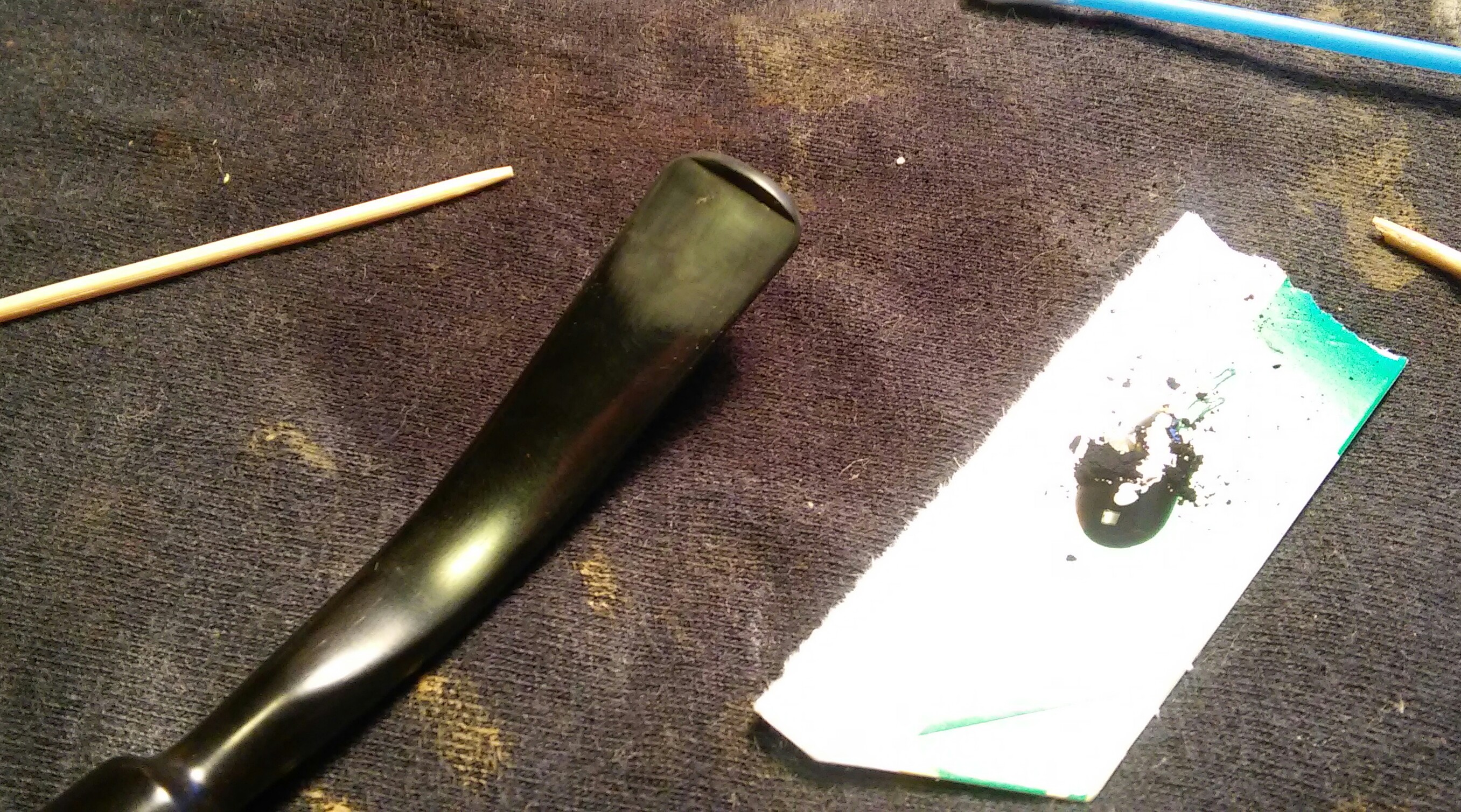
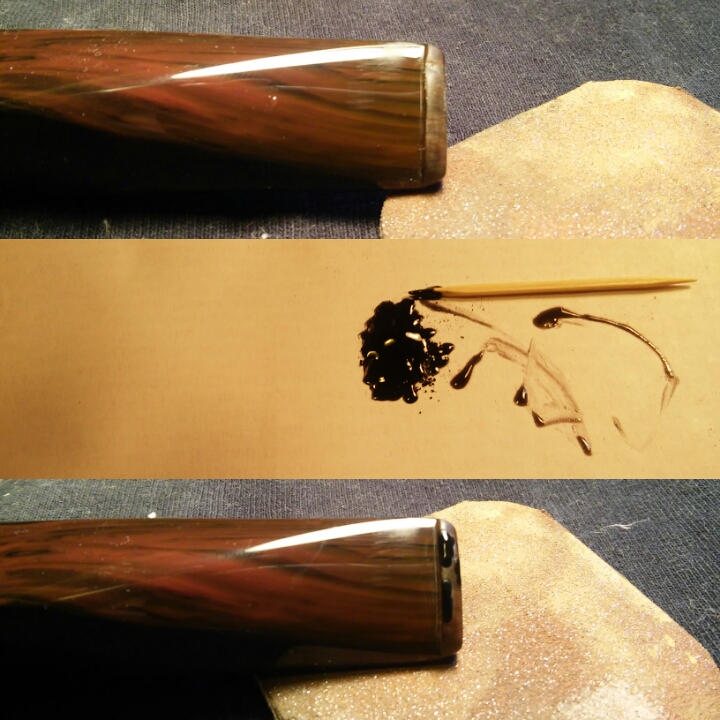
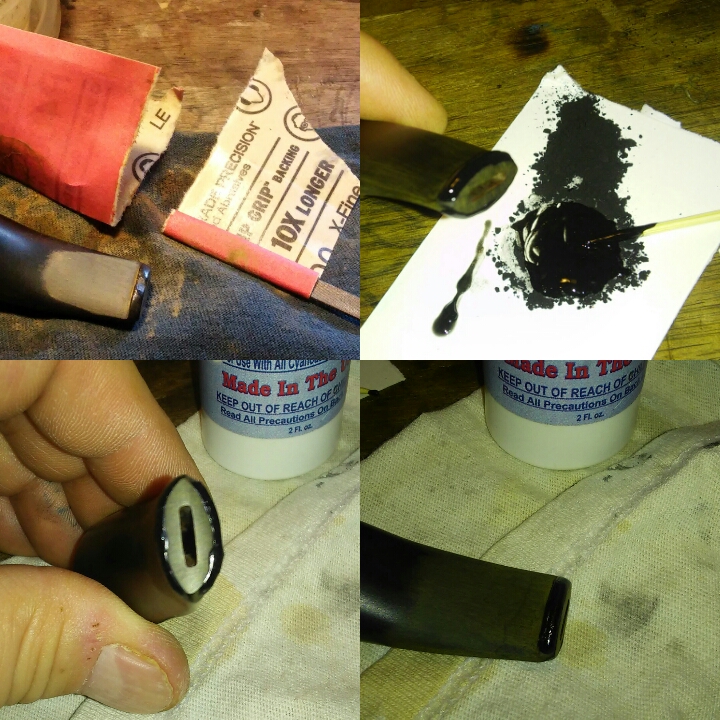
I roughed up the area to be repaired with 400 grit sandpaper, then wiped the area with an alcohol dampened rag. I made a paste using thick black CA glue and activated charcoal power and applied it to the impression with a toothpick, hitting it with accelerator to set the patch.

20160106_095533~2

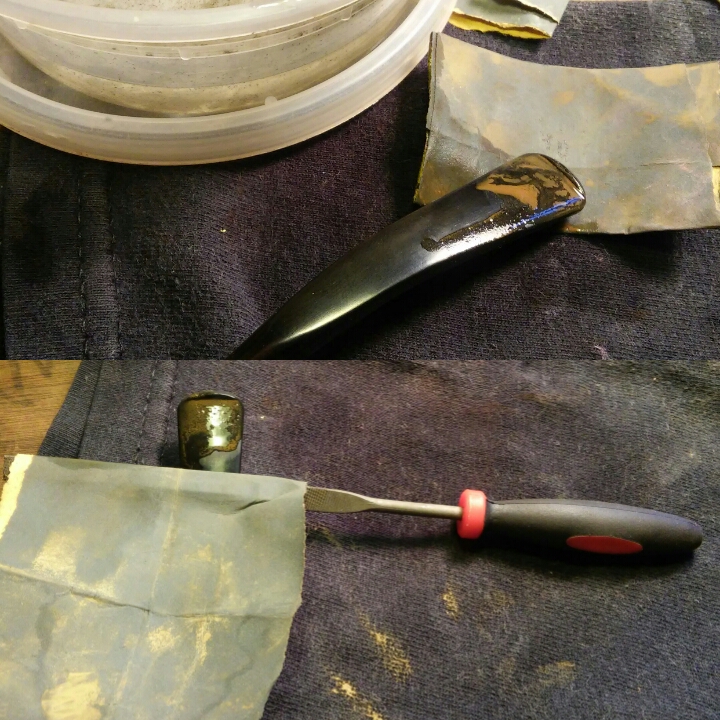
After allowing time for the paste to cure I removed the excess using a needle file. I smoothed out the repaired area with 400 grit sandpaper .

20160106_141755~2

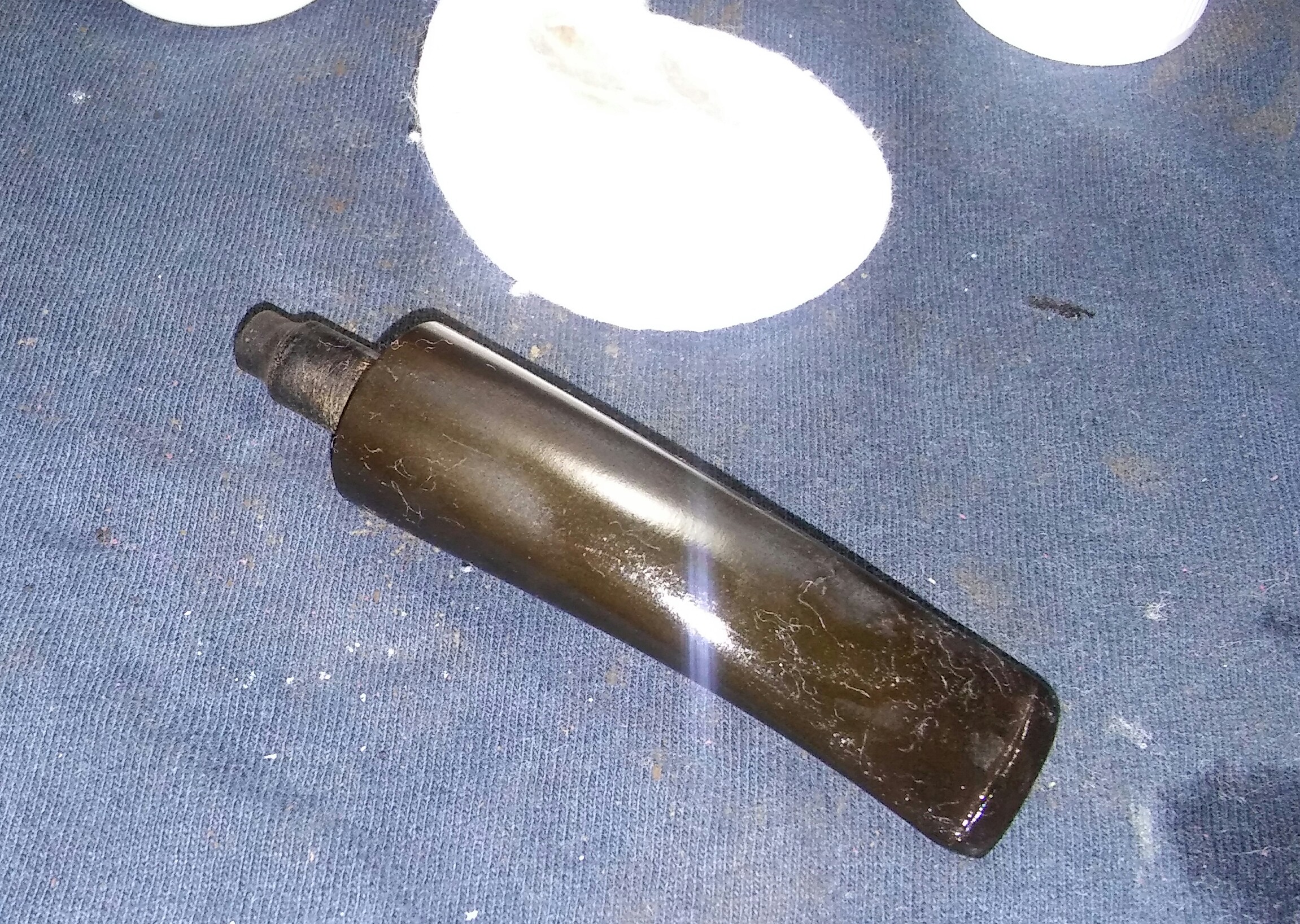
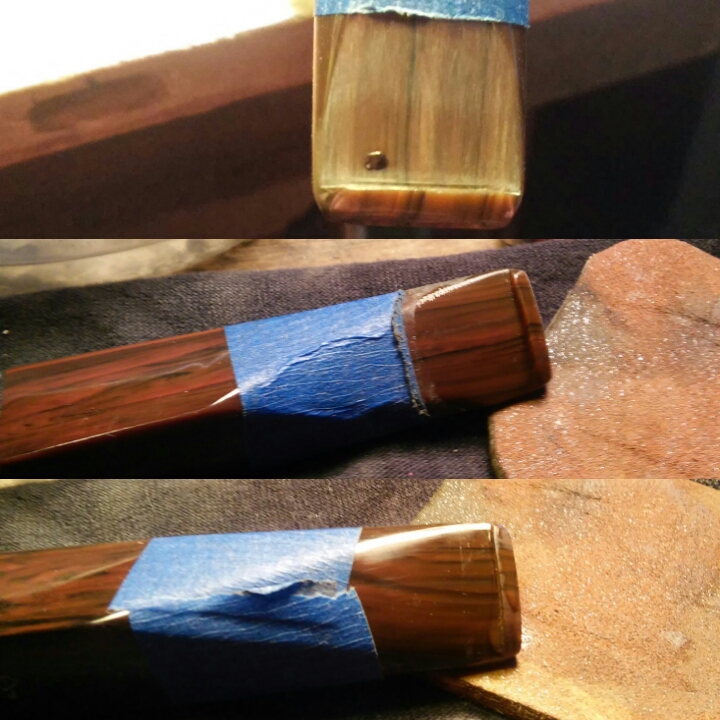
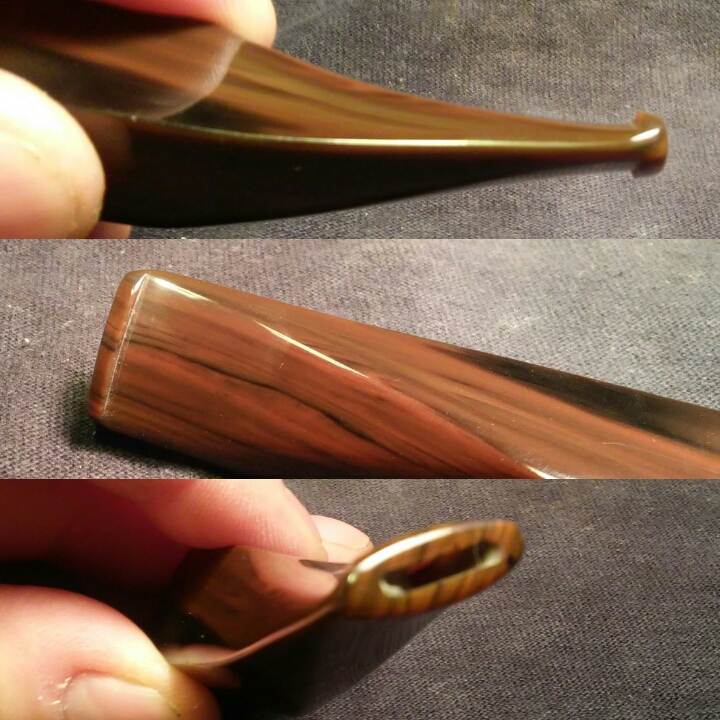
I now ran the stem though the various grits of sandpaper and micro-mesh 1000-2400 wet and 3200-12000 dry.

PhotoGrid_1452116681213

The tennon was loose upon receiving the pipe. I used jewelers pliers and a Bic Lighter to expand the tennon from the inside out, by heating the tennon with the lighter and inserting the tip of the pliers into the tennon gradually untill a snug fit between mortise and tennon was achieved.

20160105_163400~2~2

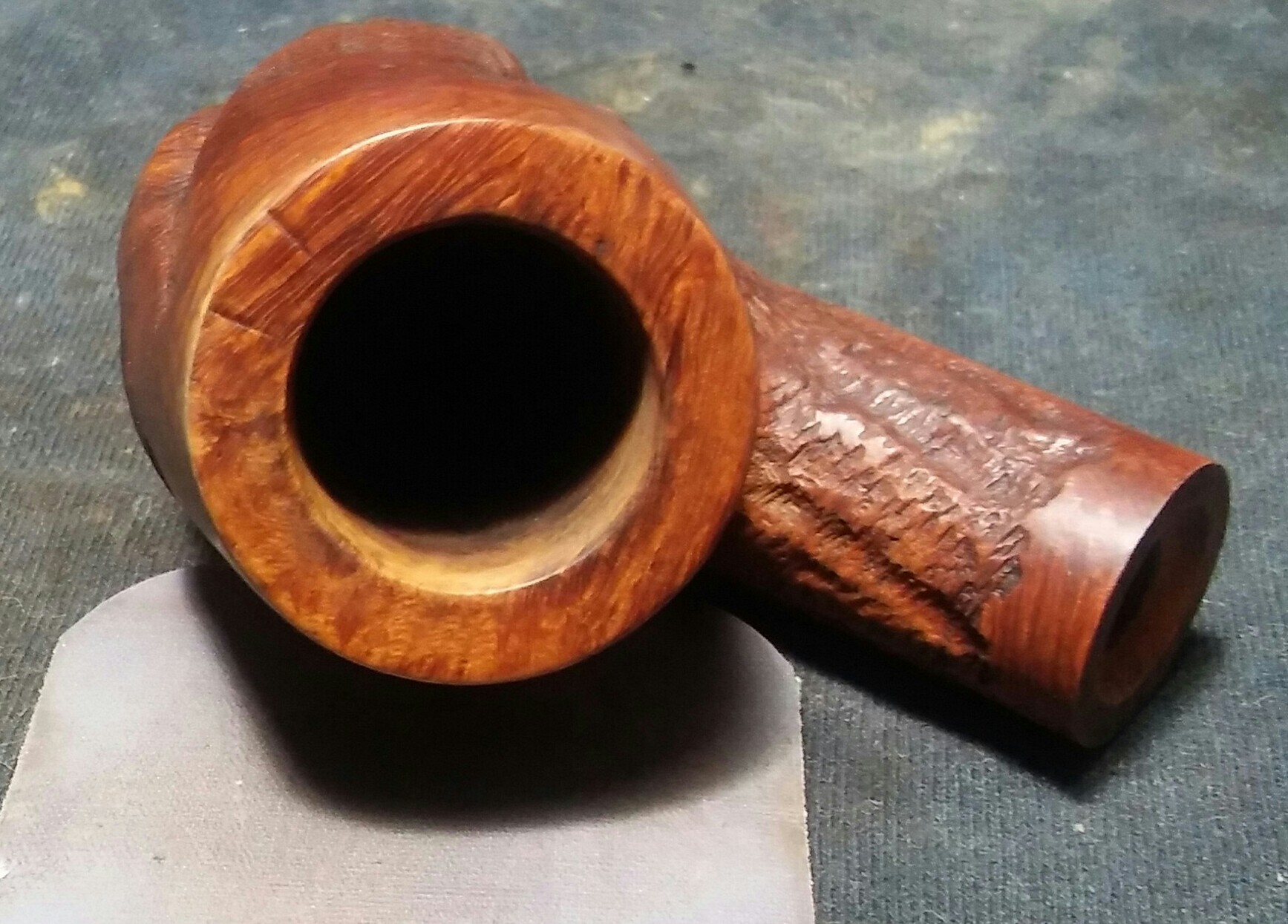
With the stem complete I moved on to the stummel. After sitting for an hours or so the cotton balls had time to absorb some of the tars. The chamber was clean but I would have to repeat the process on the mortise a few more times. Then finishing up the mortise and draught with  EverClear, Q-tips and stiff/soft pipe cleaners until the pipe cleaners came out clean.
20160105_164435~2~2

Now to address the rim dents and darkening.

20160105_192609~2

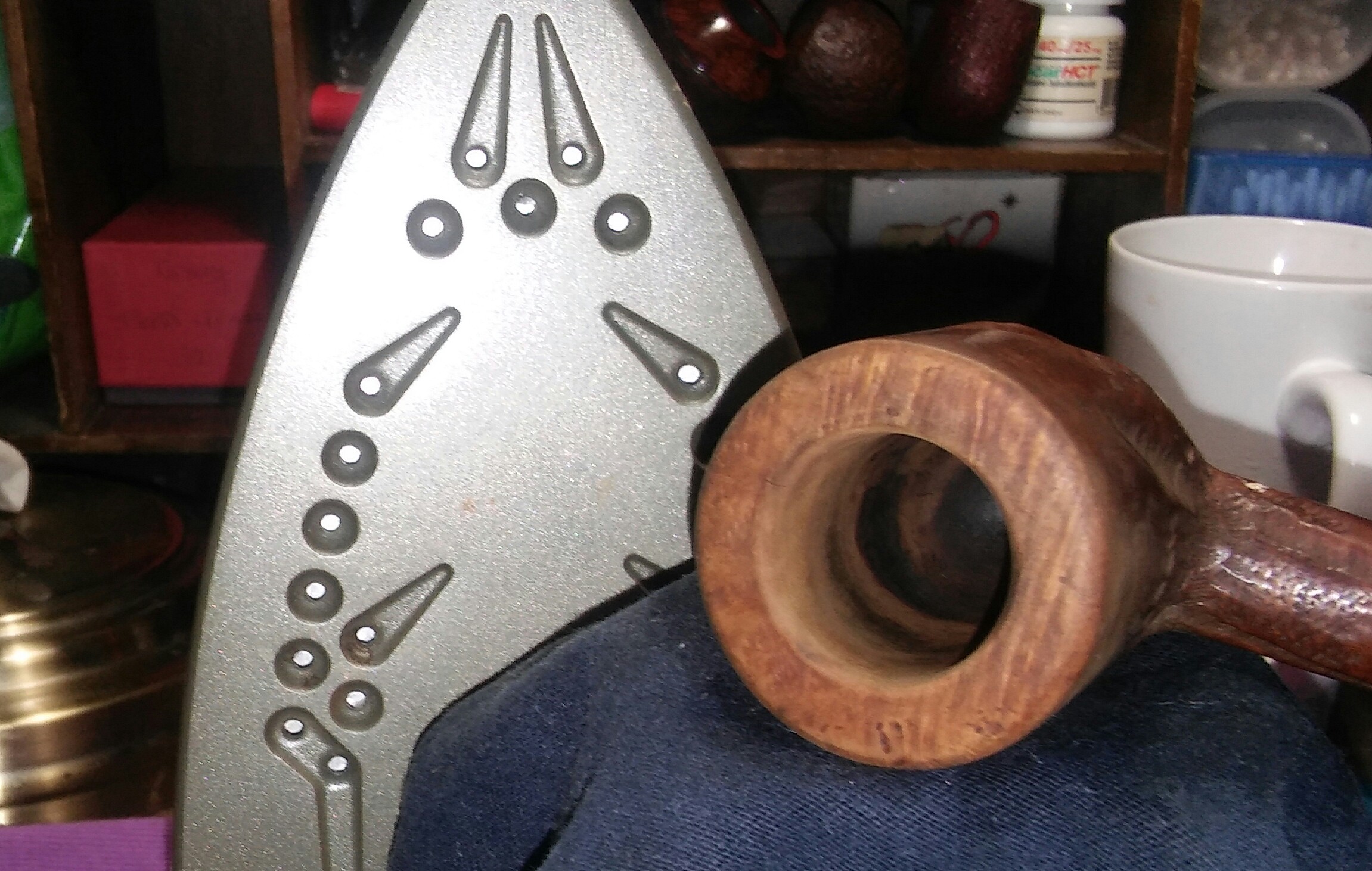
Using a hot iron and a damp rag I steamed the dents out and lightened the rim darkening with worn micro-mesh.
20160104_222954~2~2

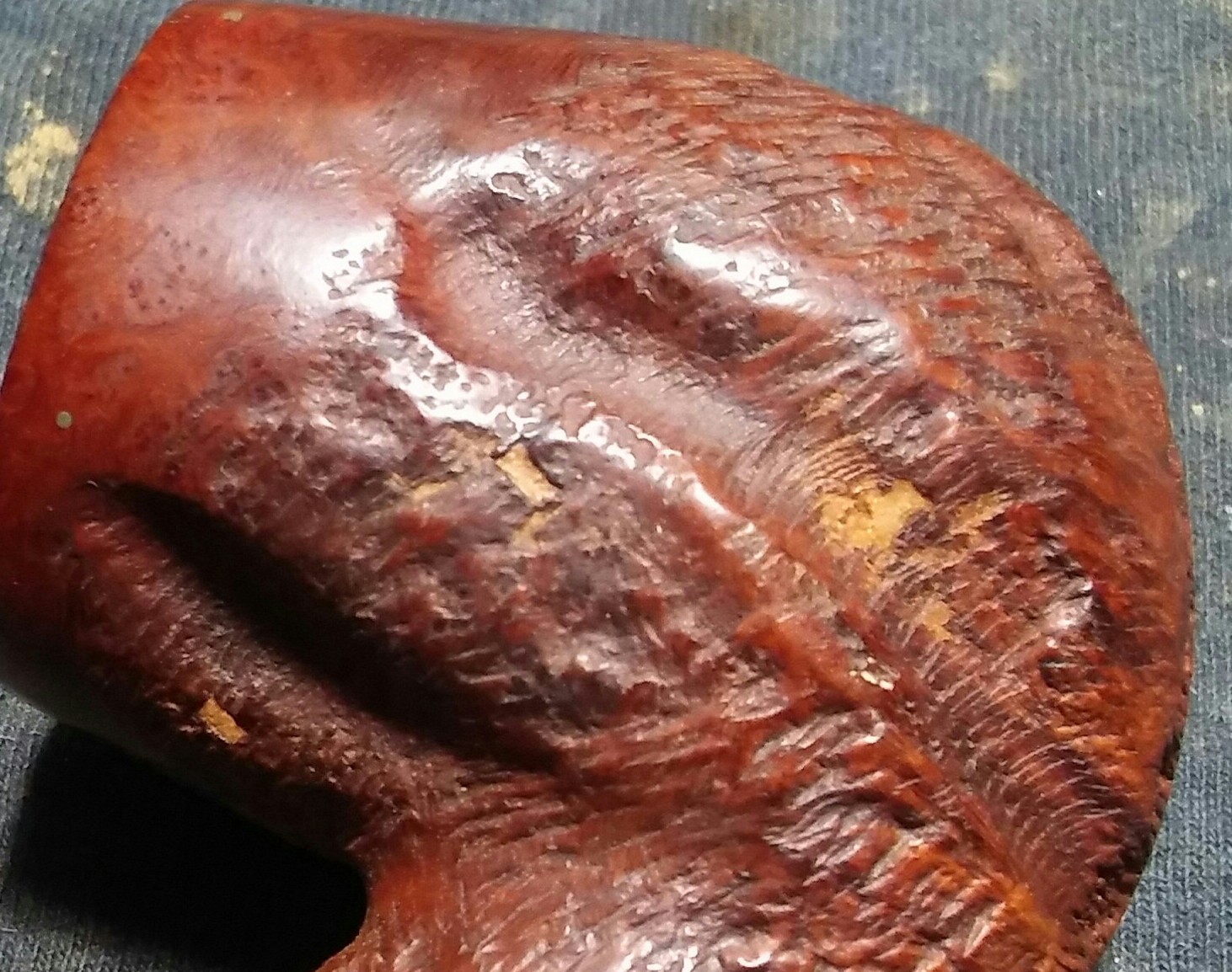
There were three spots of filler present that would have to go.

20160105_165224~2

I applied Method Wood For Good Polish to the filler and let it soften up for a few minutes.
20160105_165804~2~2

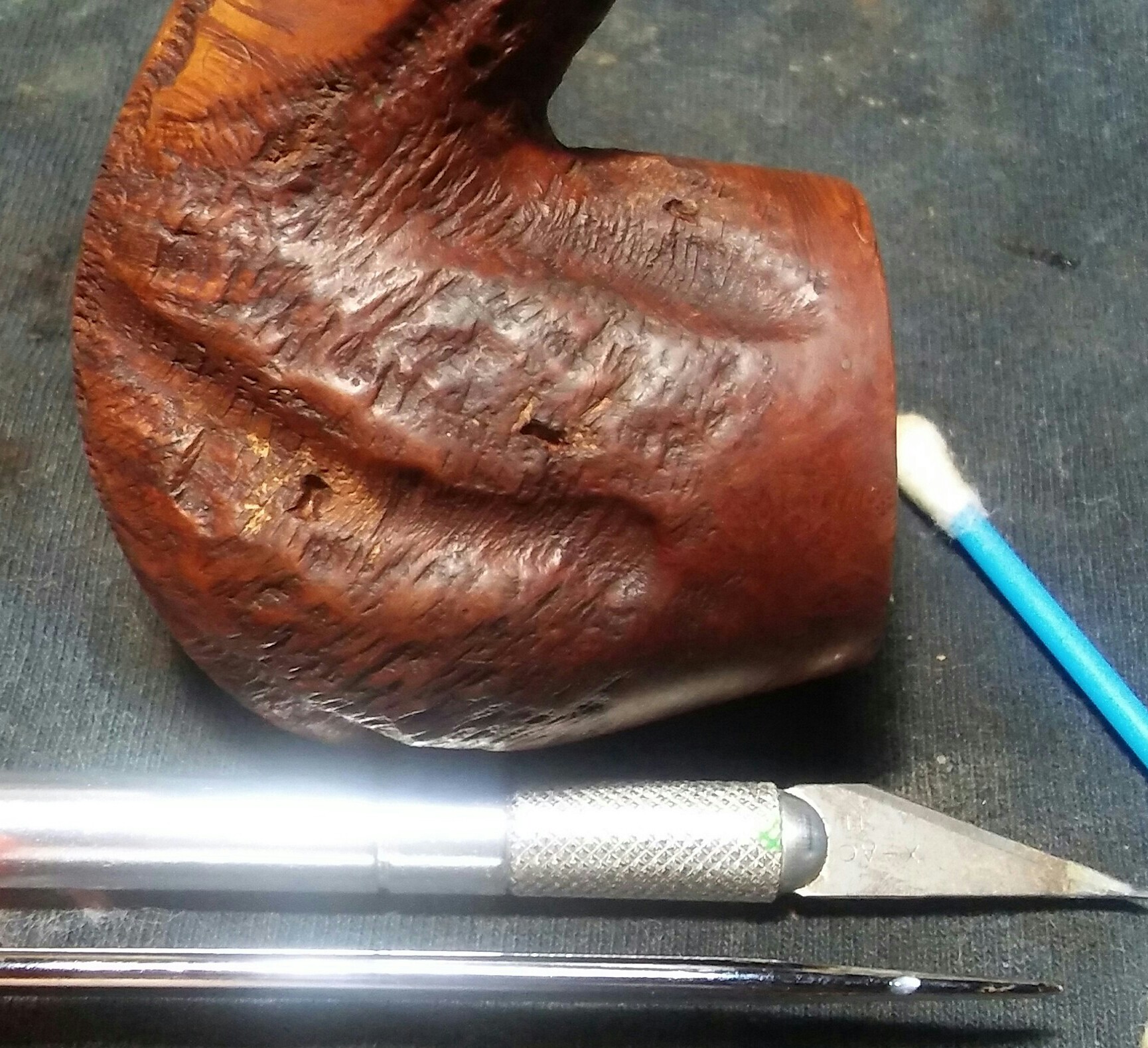
Using a pick and X-acto knife I removed the light colored filler.
20160105_195139~2

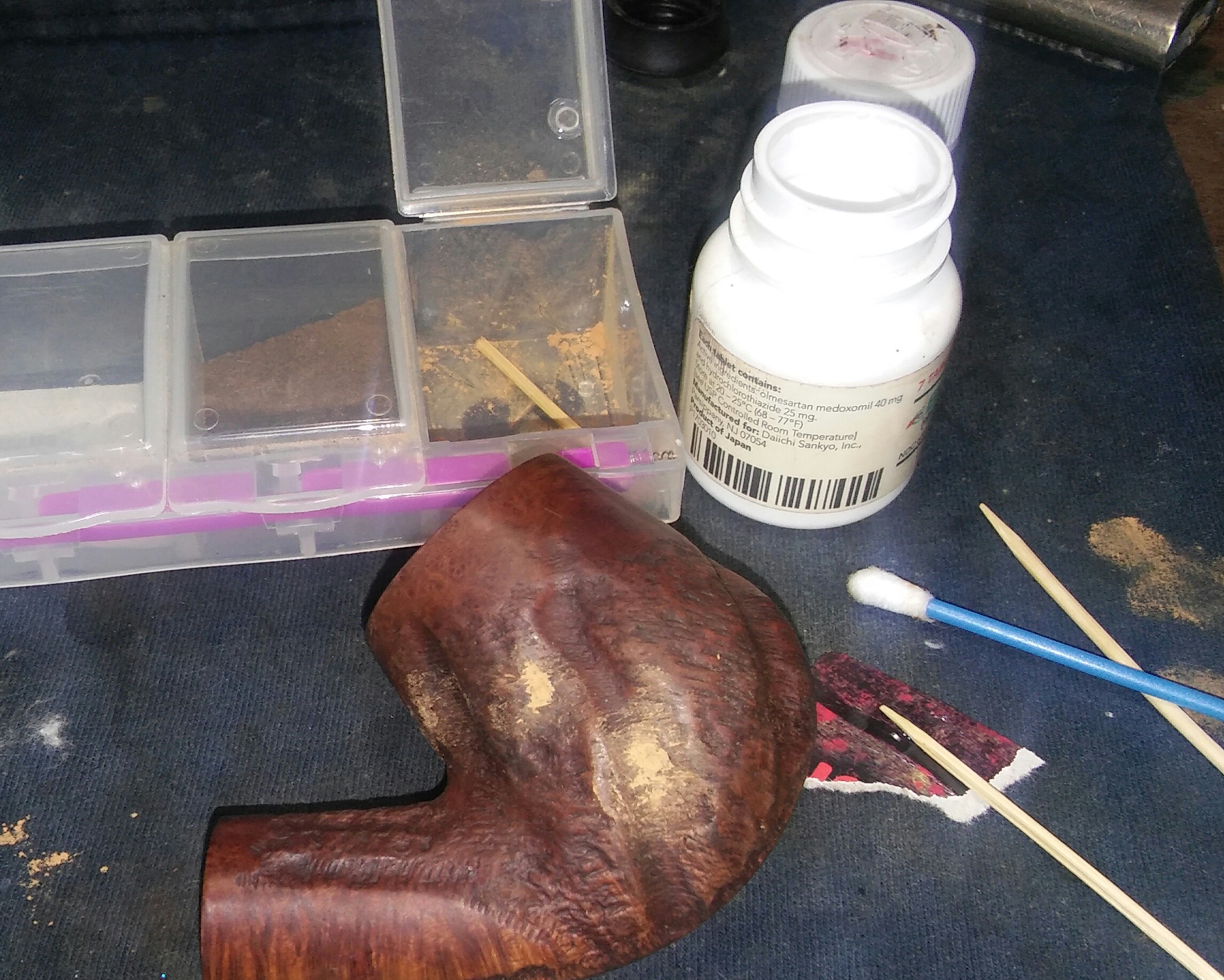
I refilled with briar dust and Gorilla Glue and left aside to dry.
20160105_200737~2

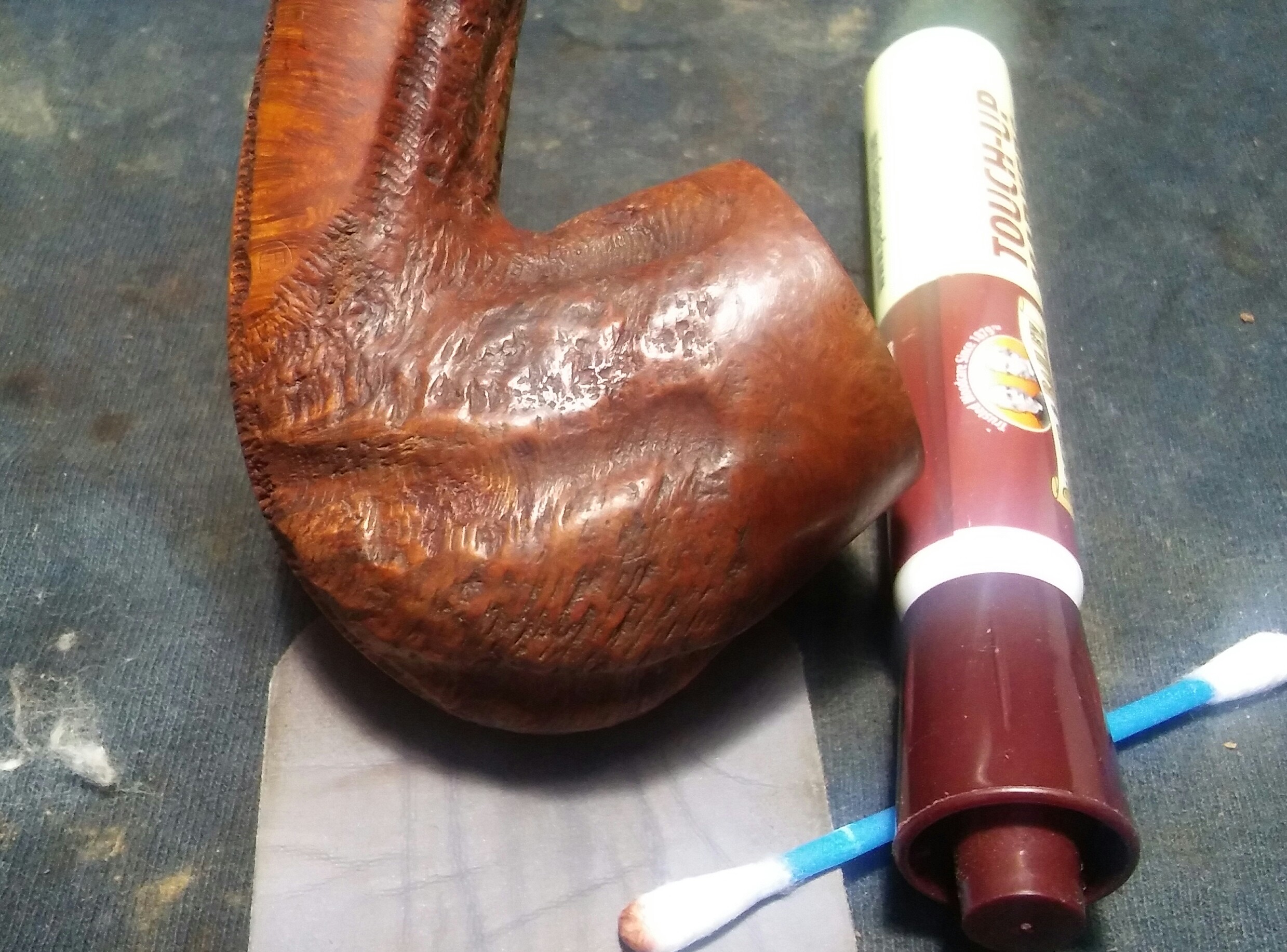
I removed the excess glue with worn miro-mesh, then stained the new fill with a touch up marker, lighting up the color to match with an alcohol dampened Q-tip.

PhotoGrid_1452116736757

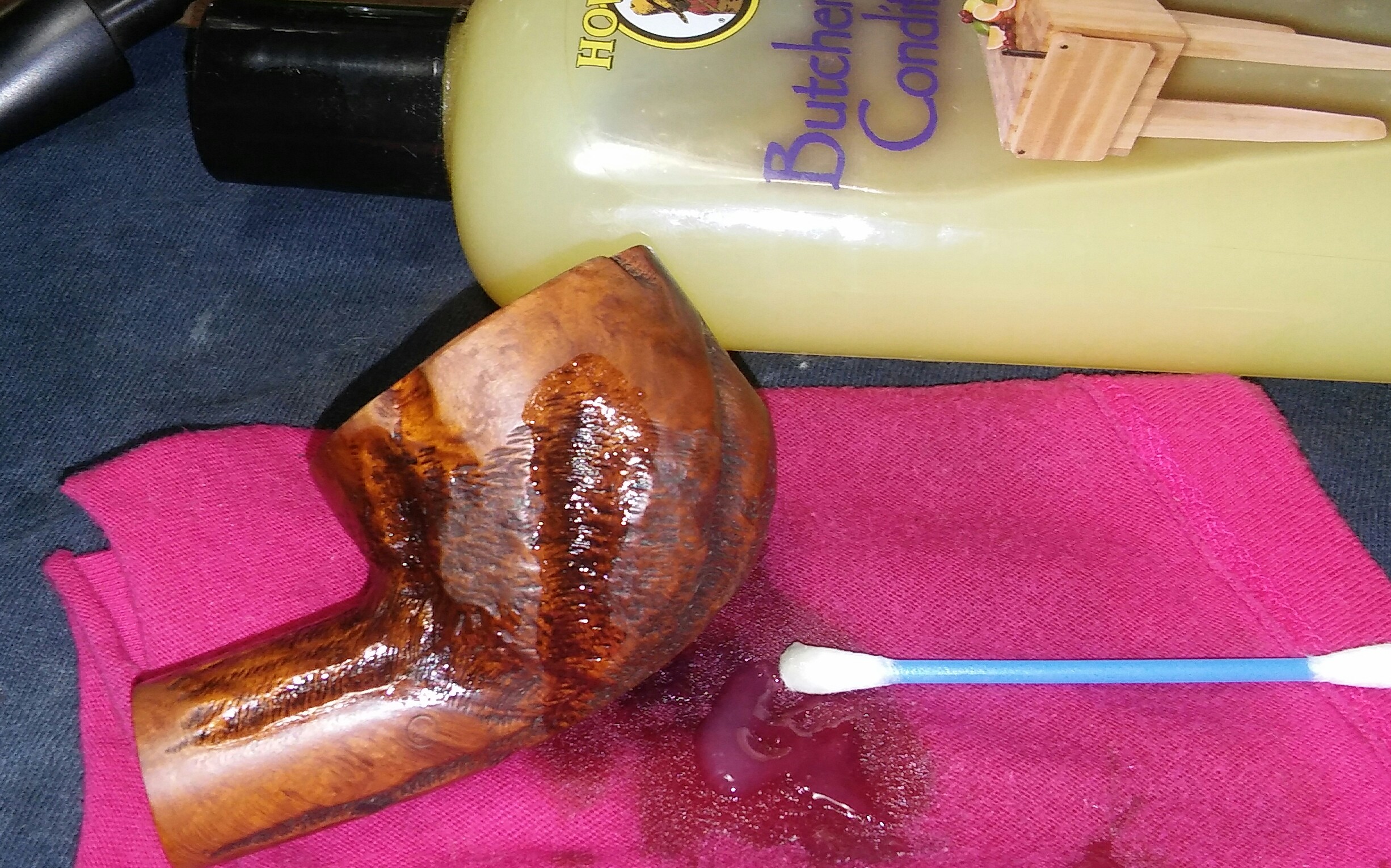
I now wiped down the stummel with Method polish and let dry. Next Howard’s butcher block conditioner, using a Q-tip I worked the Howard’s into the crags and then applied Howard’s to the whole stummel letting it penetrate for a few minutes, hand buffing the excess off with a clean rag. She was now ready for a final buff.

Complete
20160106_190947~220160106_191005~220160106_191025~220160106_191048~220160106_191108~220160106_191034~2

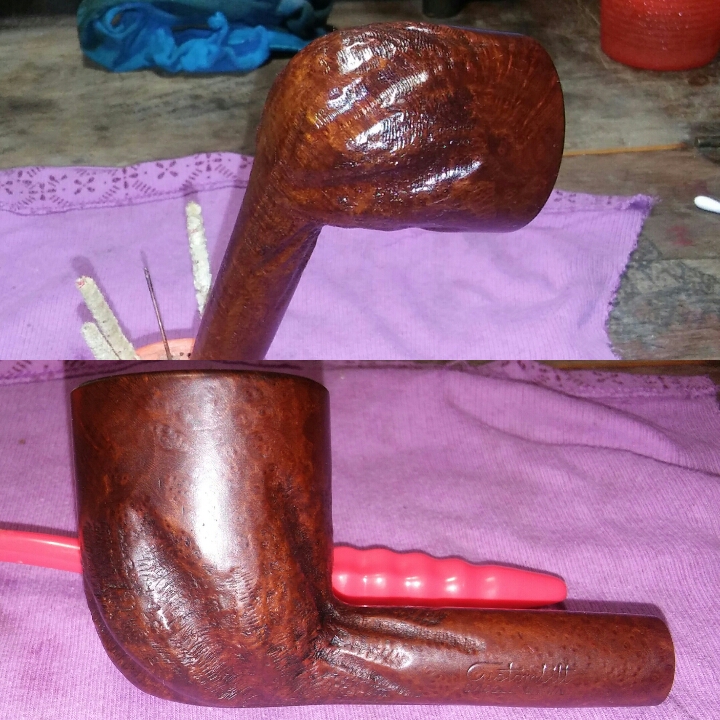
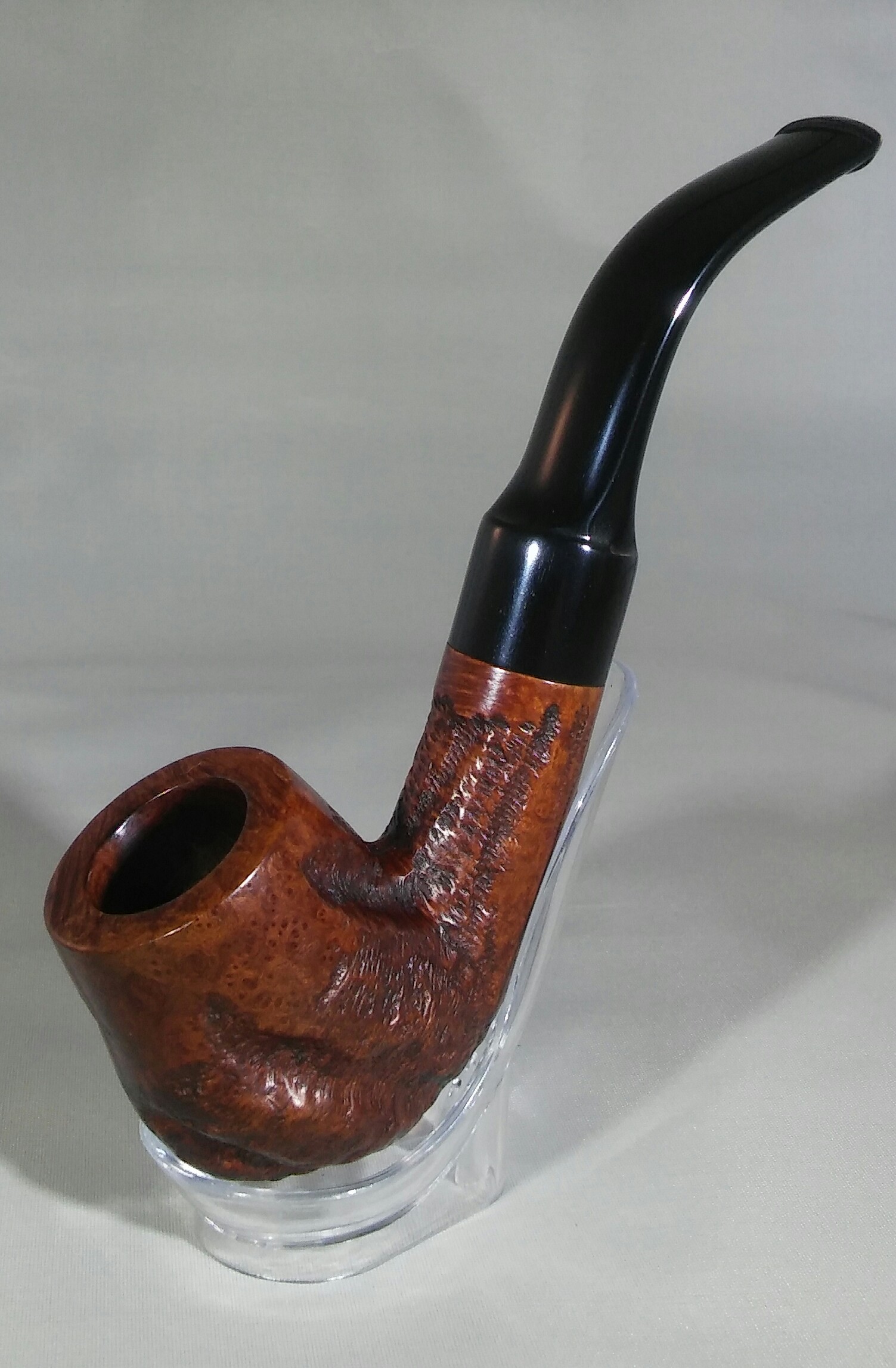
Finished her up on the wheel with white diamond, a few coats of carnauba and a microfiber hand buff.

20160106_191335~2

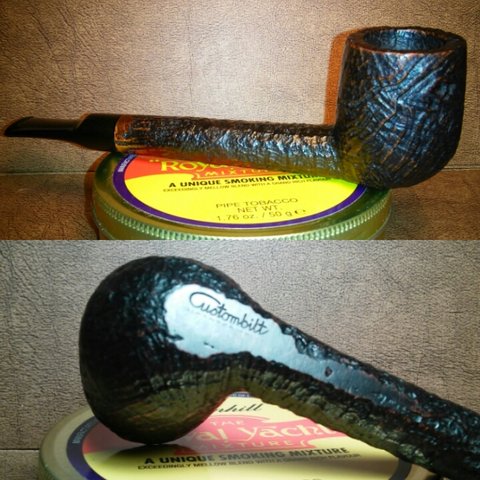
The Gang all together.

 Clint your generosity is greatly appreciated. The pipes are beautiful and right at home in my collection.

Custombilt Clean up (Rich era)

The scoundrel Pipes

Two down one to go it seems fitting to keep plugging away at the pipes I received from fellow blogger Pipe Scoundrel.

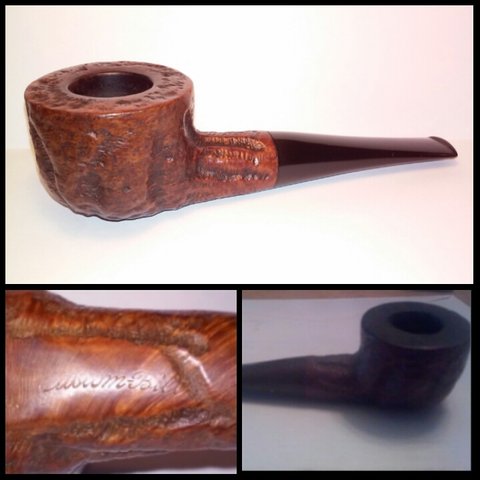
20160103_105200~2

Custombilt Eugene Rich Years.

1946-1952

My original impressions of Custombilt pipes was anything post Mincer was not worth my time or efforts but I’ve been wrong before. The change of hands did not necessarily mean a change in quality, yes the dash was eliminated and the rustication was not quiet as deep but big , thick and chunky they still are. I now have four in my ever-growing collection drilled perfect and not one ounce filler to be found. Eugene J Rich INC definitely did the Custombilt name justice.

Pipe As Received

PhotoGrid_1451839361020PhotoGrid_1451839409791PhotoGrid_1451839430908

The next was in beautiful used condition and unlike the first was lacking any paint which would make for an easier start. A Little rim tar&char , thin cake and light stem chatter.

PhotoGrid_1451944167633

I started with my Castleford reamer working from the smallest attachment to the largest that the chamber would accept, in this case it would accept the largest. I brought the chamber back to briar to be able to see the start of a burn out, I found only slight pitting on the inner wall on one side. After reaming I sanded the chamber with 400 grit paper until the pitting smoothed out. I could now work on the build up on the rim. I applied a generous amount of Method Good For Wood Polish with a Q-tip to the rim and left it aside to penetrate the tars.

PhotoGrid_1451926081325

The build up on the rim was quite thick towards the shank and would need more time to sit. I applied another helping of Method polish to the rim and left the stummel upside down on a makeup pad for 20 minutes. After sitting the 20 minutes the rest of the build up was easier to remove. I was now left with a little rim darkening.

20160104_104054~2

Using worn micro-mesh I was able to fade most of the darker spots.

PhotoGrid_1451925994052

With the chamber and rim free of crud I could now move on to the internals. I did a quick clean of the mortise and chamber with EverClear soaked Q-tips to loosen up the residual residue. Next I rolled two cotton balls, twisted them together to form one long swab and twisted it tightly into the mortise. With the swab inserted in the mortise I filled the chamber a quarter of the way with EverClear and allowed the swab to absorb the alcohol.

20160104_111442~2

Once the swab absorbed the EverClear I filled the chamber with two cotton balls and added EverClear to the chamber until the cotton balls are saturated. I left the stummel aside  now so the cotton balls can absorb the tars and any ghosting.

20160104_085100~2

With the stummel set aside I moved to the stem, first cleaning the externals with EverClear and makeup pads.

PhotoGrid_1451944296880

Now I applied non-bleach Soft Scrub to the stem with a children’s toothbrush and left it so the Soft Scrub could work its magic on the oxidation. I allow the Soft Scrub to turn from white to a brownish color before scrubbing vigorously with a rag. From the photo above you can see it removed 90% of the oxidation. I now used a damp Magic Eraser to remove the rest. The surface of the stem was left with a rough texture and would still need to be sanded. Before moving on I cleaned the internals of the stem with EverClear and stiff/soft pipe cleaners until the last pipe cleaner came as it went in.

20160104_132419~2

There were shallow tooth impressions at the bit/button area that raised a bit by heating the area with a Bic lighter (moving the flame at all times never leaving it in one spot too long). The stem was now ready for sanding.

20160104_144652~2

I sanded the stem first with 1000 grit wet sandpaper then 1800, 2000, 2400 wet moving on to the dry 3200-12000. Ready for the buffing wheel.

20160104_131222~2

Moving back to the stummel,  after sitting while working on the stem it had time for the EverClear and cotton balls to pull the tars and old tobacco out of the mortise and chamber. I gave it a good cleaning now with EverClear, Q-tips, cotton balls and stiff/soft pipe cleaners, cleaning until the last pipe cleaner came out as it went in.

PhotoGrid_1451944228522

I now cleaned the exterior of the stummel with Method Good For Wood Polish and allowed it to dry.

20160104_131806~2

With all my CustomBilts I add a little Howard’s butcher block conditioner just before the final buffing on the wheel. I used a Q-tip to get the Howard’s into the deeper crags

 PhotoGrid_1451944257622

I then apply Howard’s to the whole stummel and allow it to penetrate for a few minutes and hand buffing off the excess. She could now receive a final buffing.

Complete

20160104_160324~220160104_160337~2PhotoGrid_145194396807720160106_191528~220160106_191539~220160106_191552~220160104_160310~220160104_160148~220160104_160202~2

I finished her up on the wheel with white diamond, a few coats of carnauba and a microfiber hand buffing.

Another beautiful addition to my Custombilt collection and a pleasure to clean up.

Custombilt Saddle Grain

Now after two month’s of dealing with a medical annoyance doctor’s have put me on a cocktail of meds to control my chronic hives and angioedema. The swelling in my hands has finally subsided so I can now get back to my refurbishing projects.

20151218_124449~2

 Starting the New Year off right .The Custombilt pipes that I received in November from fellow blogger Clint of Pipe Scoundrel were all in pretty nice shape. First up a large Rich Era Custombilt saddle grain billiard, its the first saddle grain Custombilt in my collection. 


Pipe as received.

PhotoGrid_1450463757250PhotoGrid_1450463996402

Overall she’s in nice shape some tar build up around the rim , chunky brittle cake, some red and white paint embedded in the crags. The stem had a few impressions as well.

PhotoGrid_1451541940492

I started off with the stummel and set the stem aside to work on later. The chamber had a thick, uneven, crumbling cake and would have to go. Starting with the smallest attachment my Castleford reamer had to offer and working up to the largest that the chamber would except I removed the tired cake bring it back to briar. The chamber was free of any signs of a burn out. I finished up with 400 grit paper to smooth things out.

PhotoGrid_145154199064020160101_152536~2

My attention now turned to the rim. Caked with tar, paint and char. I applied a generous amount of Method wood for good polish to the rim and set aside to penetrate the built up. After allowing the polish to soften the build up I worked on the rim with a children’s tooth brush, makeup pads and Q-tips until the build up was removed. When I run into a tough build up I’ll leave the stummel upside down on a Method polish soaked makeup pad for 20 minutes.

20160101_160854~2

With the build up removed I could concentrat on the rim char. Using worn miro-mesh I was able to remove most of the rim darkening.

20160101_161827~2

There were a few dings in the rim after the tar and char was removed. I used a hot iron and damp rag to steam out the imperfections.

20160101_170349~2PhotoGrid_1451715765841

The internals needed a good cleaning, I ran it though a retort using EverClear. I used a mortise brush, shank brush, Q-tips, cotton balls and hard/soft pipe cleaners to remove the debris.

PhotoGrid_1451716123076PhotoGrid_1451716151540

Next the externals, I started with Method polish but would need something stronger to remove the red and white oil based paint and what I think is blacktop crack filler for driveways. I used EverClear and Q-tips to remove the gunk.

PhotoGrid_145171555132320160102_011731~2

There was one scratch on the outside of the bowl that would need filling. I cleaned the area of work with EverClear and a Q-tip, filled the imperfection with Gorilla Glue and briar dust and left to dry. After drying I removed the excess glue and dust with miro-mesh. I restained the area with touch markers and wiped away the excess with an alcohol dampened rag.

PhotoGrid_1451716181938

I now applied Howard’s butcher block conditioner with a rag and let it penetrate for 10 minutes , hand buffing off the excess with a clean rag.

20160101_163817~2PhotoGrid_1451758939146

With the stummel complete now on to the stem, starting first with non-bleach Soft Scrub to remove the oxidation. I applied a generous amount using a children’s toothbrush and left it aside to begin working. Once the Soft Scrub turns from white to a brownish color I begin to remove the oxidation with a rag and plenty of elbow grease.

PhotoGrid_1451715817648

The button/bit area of the stem had a few impressions that needed attention.

PhotoGrid_1451715949731

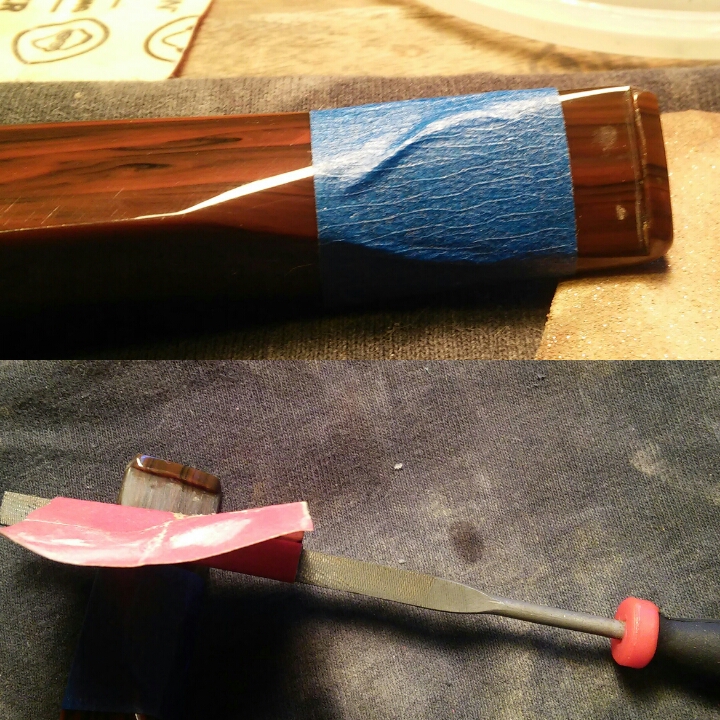
I first rough sanded the area to be repaired with 400 grit wet sandpaper and then wiped down the area with an alcohol dampened rag. I mixed thick black CA glue and activated charcoal power into a paste and applied it with a toothpick to the impressions and worn button, I taped off the button with painters tape so the repair would stay in one spot I allowed the paste to harden a bit before removing the tape and again hitting it with accelerator. I now left it to cure for a few hours.

PhotoGrid_1451716254744

After my internal cleaning of the mortise the tennon fit was left loose, this happens with many of my estates. I ues jewellers pliers to expand the tennon from the inside out by heating the tennon lightly with a bic lighter and inserting the tip of the pliers into the tennon and slowly expanding the tennon until a snug fit is achieved between mortise and tennon.

PhotoGrid_1451716030812

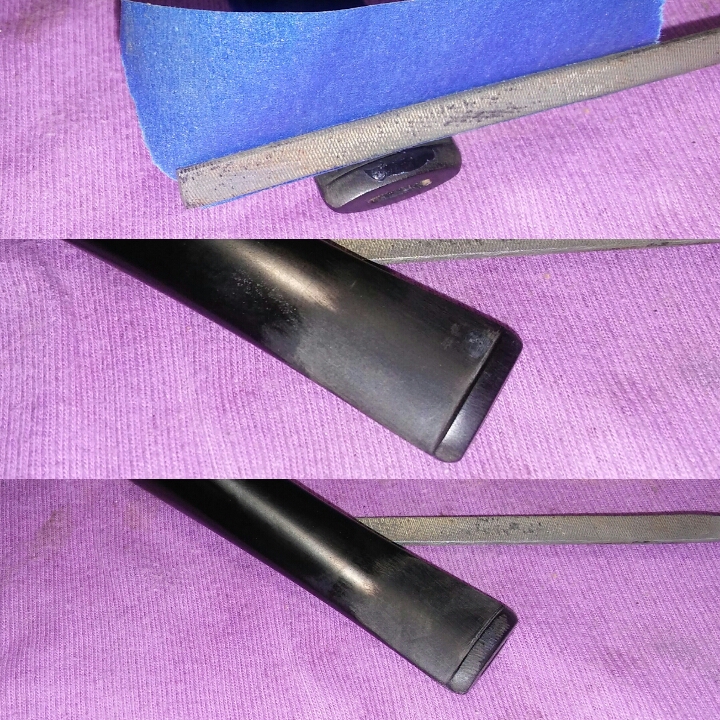
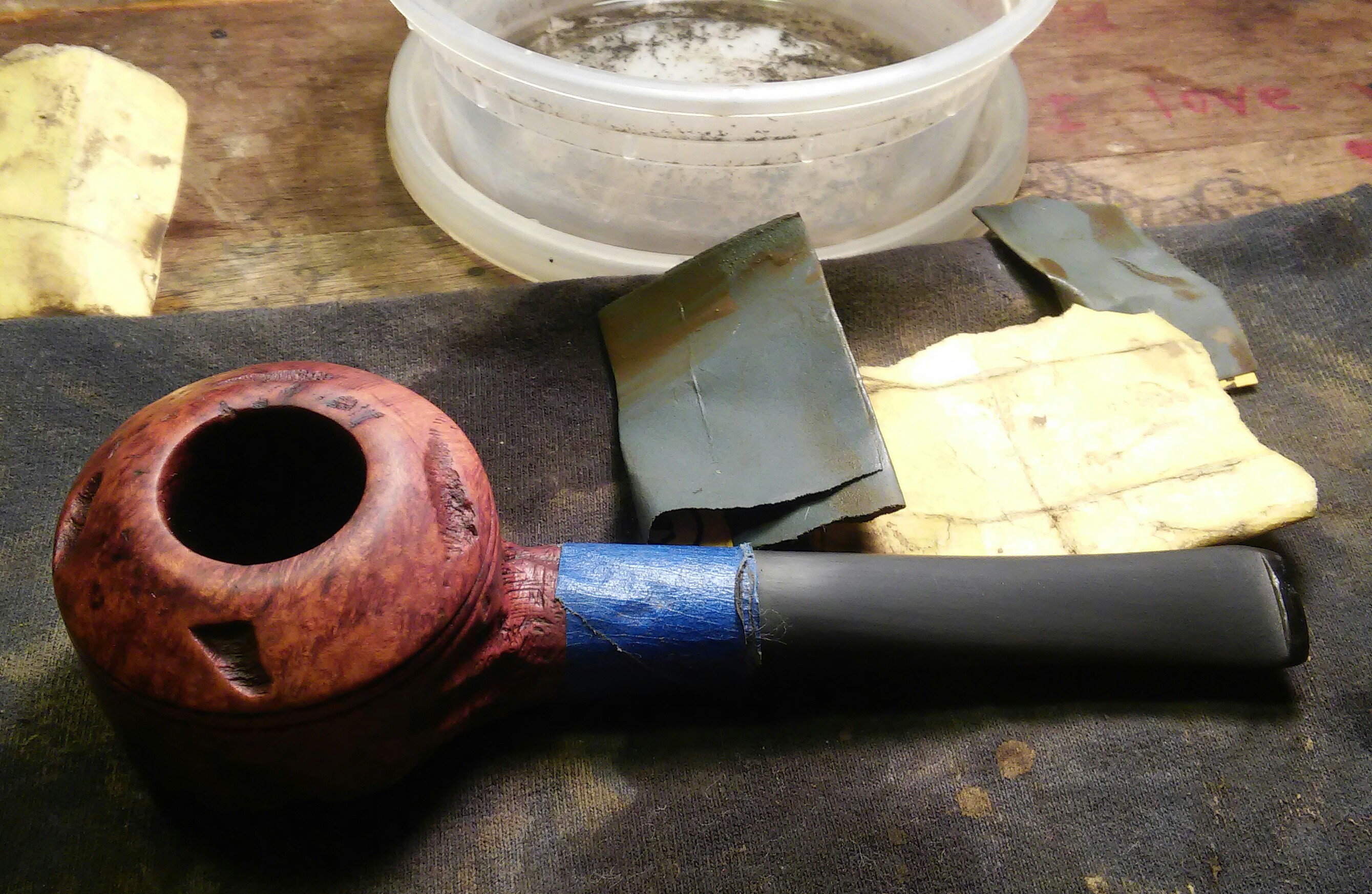
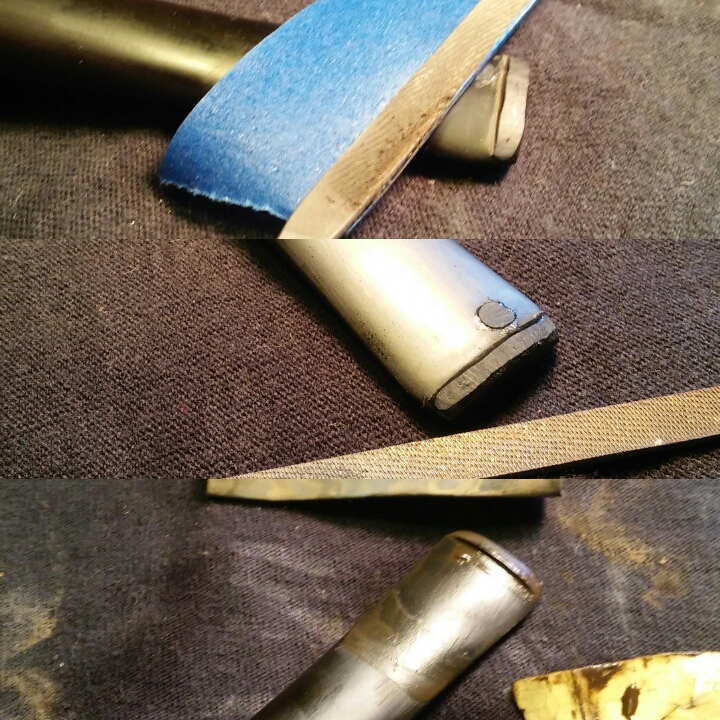
After allowing the repair to cure I could now shape the new button. Using needle files I removed the excess paste and new button began to form. I used blue painters tape to tape the under side of my needle file so I wouldn’t cut into the bit and would be able to get the file flush against the new button.

20160102_004026~2

After completing the repair I wet sanded the stem first with 1000,1800, 2000 grit sandpaper then the various gits of micro-mesh.

Complete

PhotoGrid_145178968006820160102213710~220160102213726_1~220160102213305~220160102213104~220160102213233~2PhotoGrid_1451789730428PhotoGrid_1451789710844

Finished up on the buffing wheel with white diamond, carnauba, and miro fiber hand buff.

This Custombilt was a true pleasure to clean up and add to my collection. Thanks Clint.
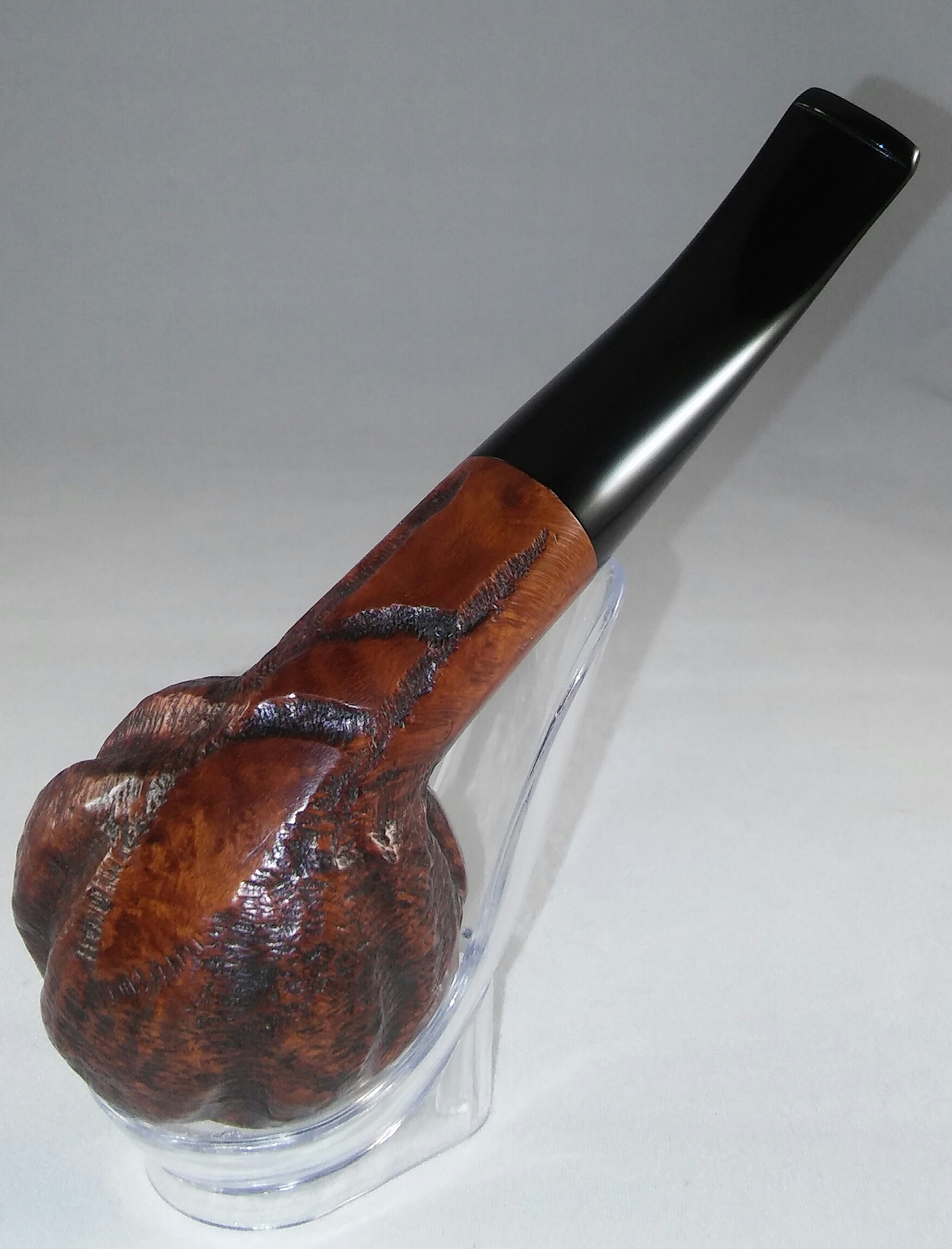
Ben wade selected grain #188

20151104_213218~2

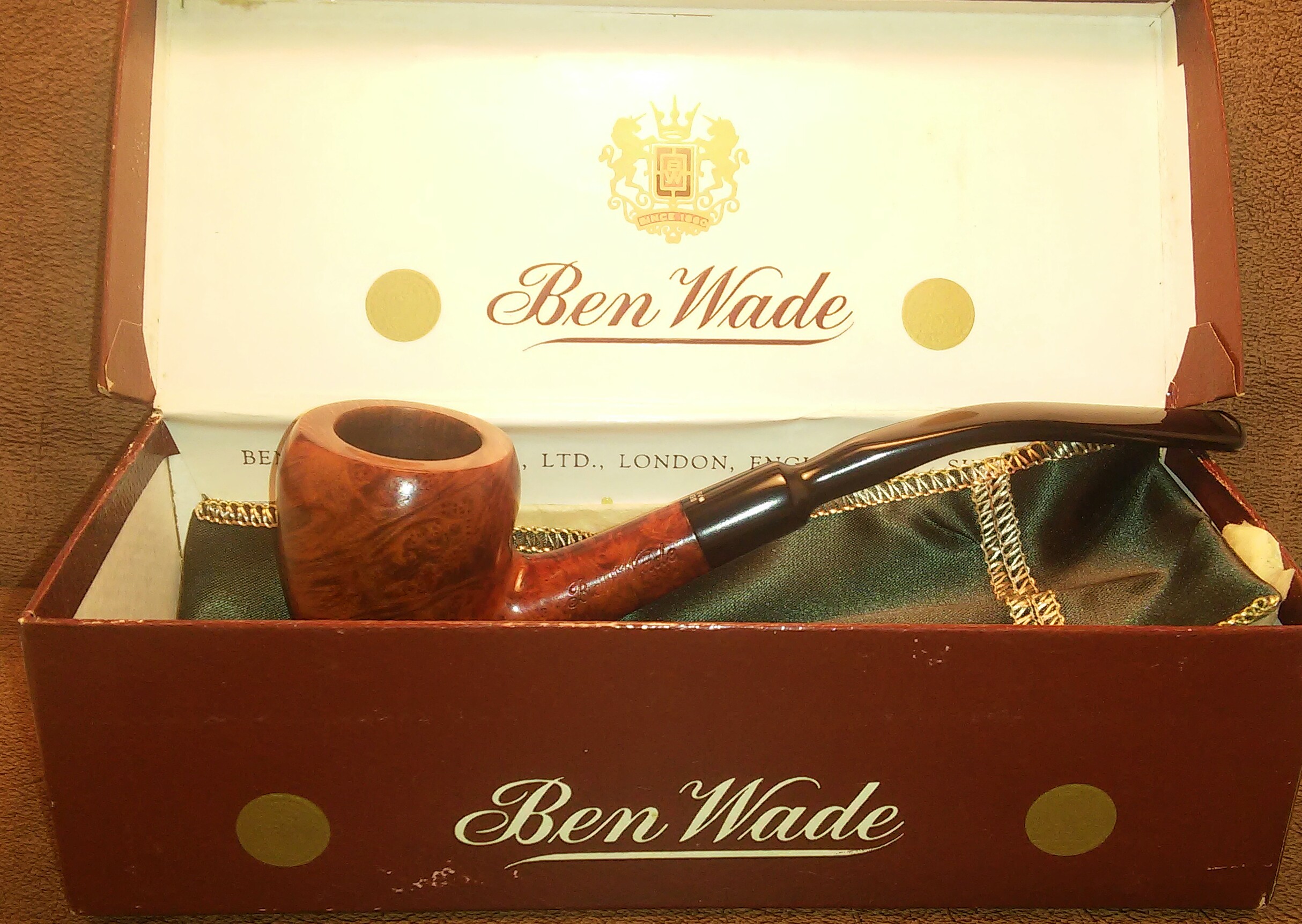
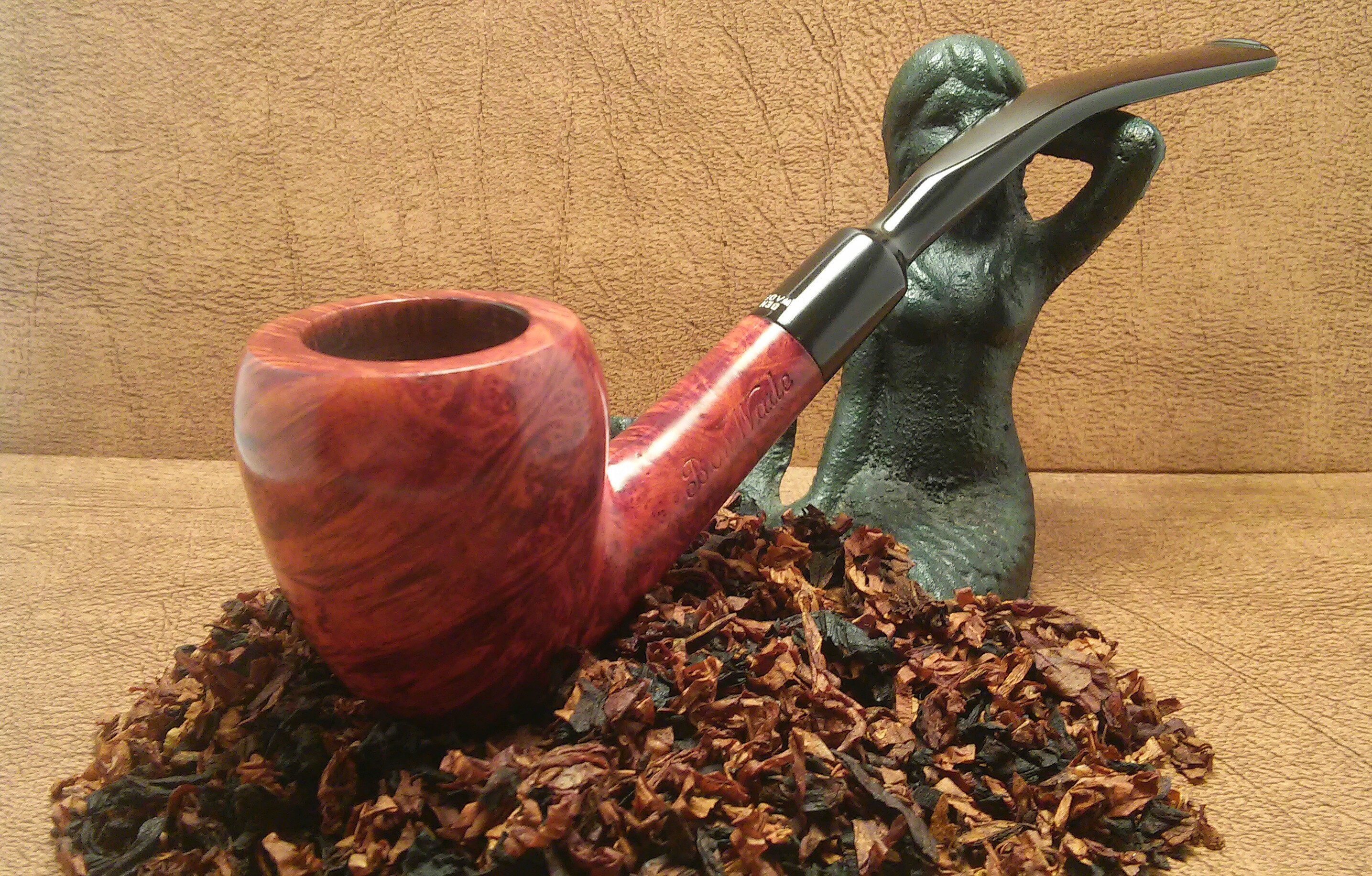
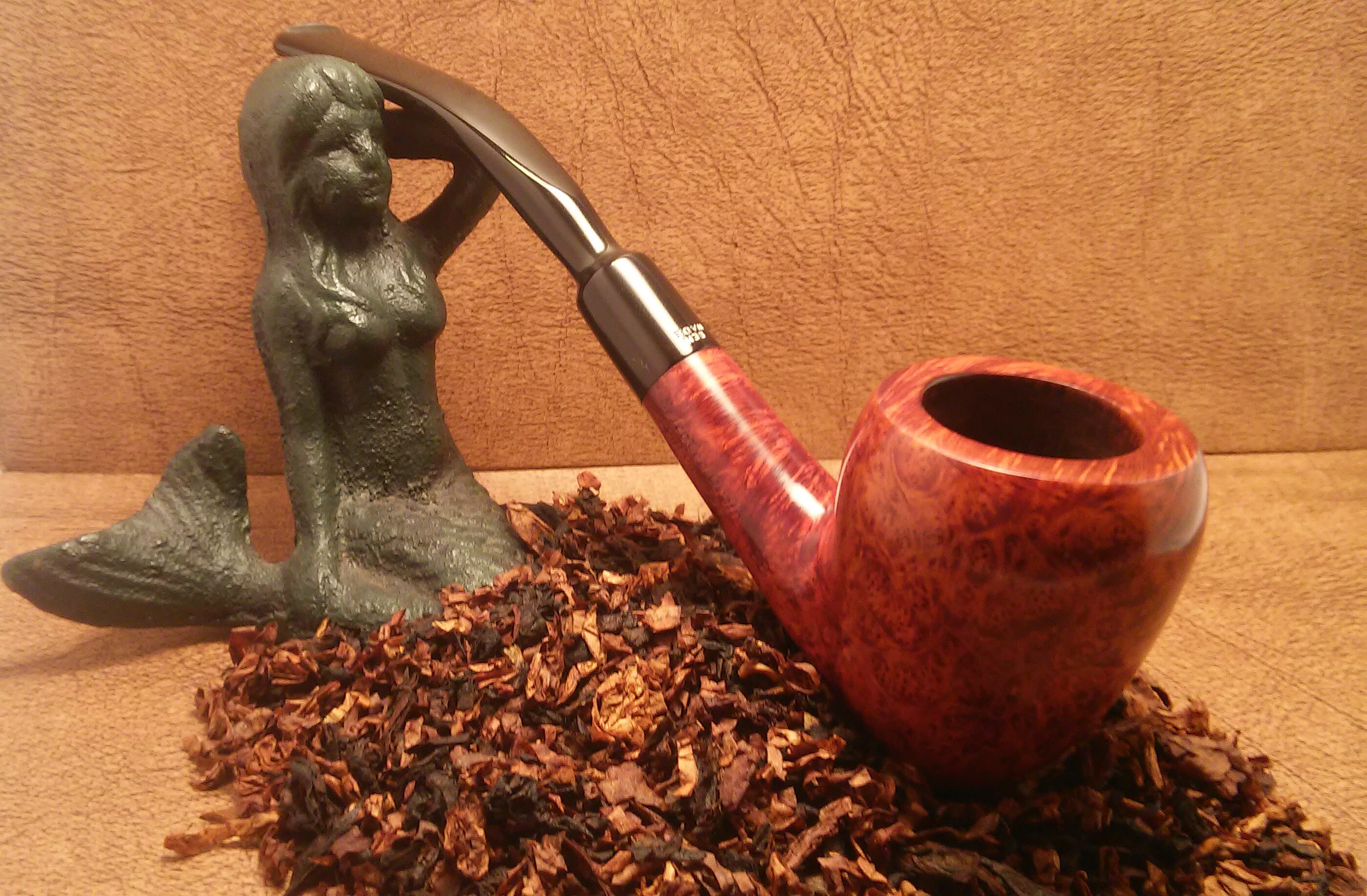
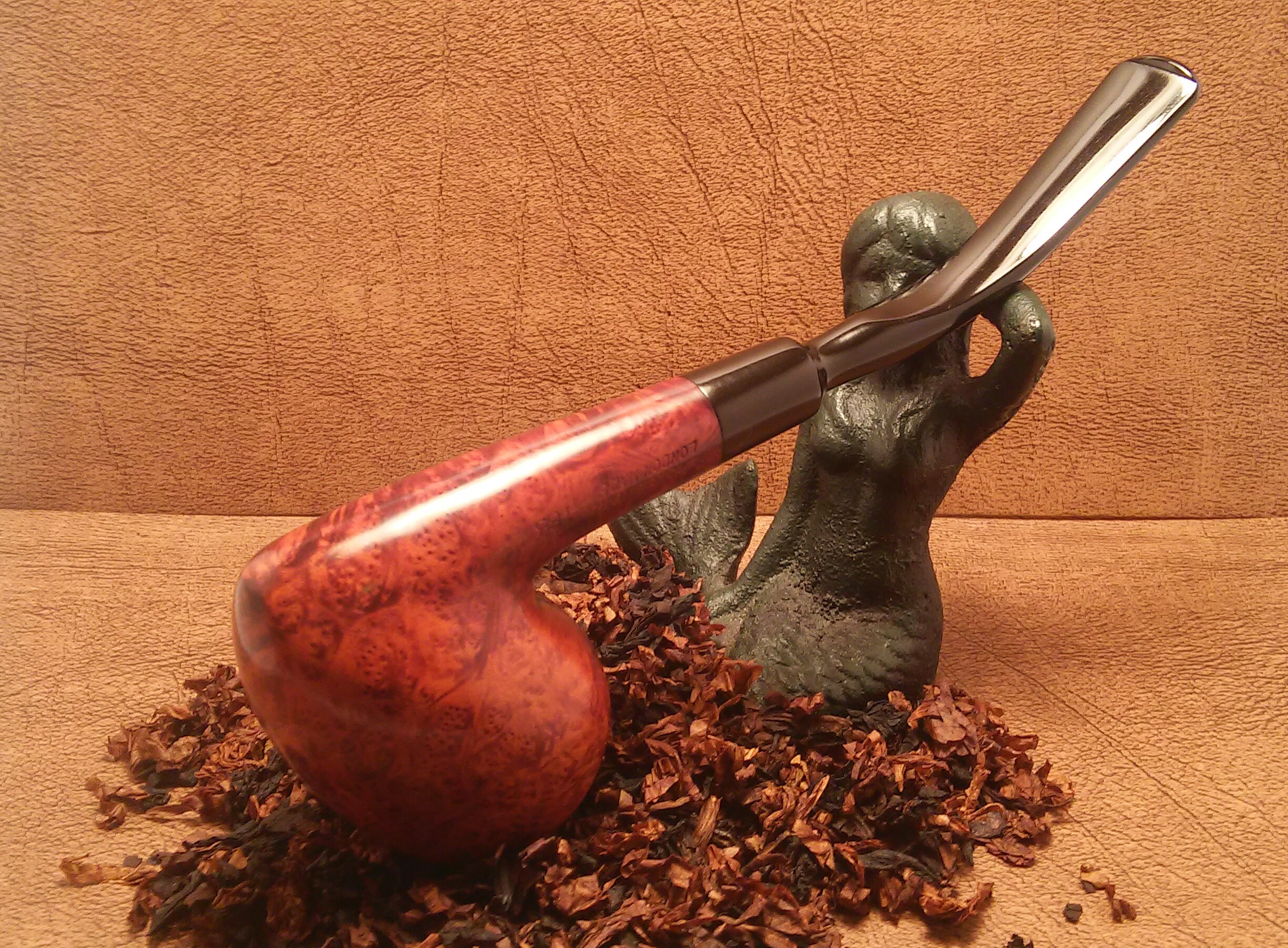
A few years ago I purchased a collection of pipes from a friend who’s father had passed. I had talked with him about cleaning up old pipes and he thought I would appreciate the collection. Back then I was more or less just getting my feet wet with the whole refurbishing thing and luckily I had put a few away for a later time. Recently I stumbled across the box I had stowed away. One of the few that caught my eye was a Ben Wade selected grain No. 188 London Made, it’s acorn shape and birds eye made it an easy pick. Most of the pipes in the collection were from the 70’s and 80’s era ,I believe this Wade falls somewhere in and about this area.

PhotoGrid_1446727942010PhotoGrid_1446691292817PhotoGrid_1446691271454PhotoGrid_1446691252197

 Overall she was in good condition. The chamber was pre-reamed ,its been packed away for so long I can’t remember if it was myself or the previous owner ,a scorched area on the rim ,light chatter/oxidation and would need a good buffing.

20151105_082504~2

The pipe had been reamed but left rough, I lightly sanded the chamber with 400 grit paper wrapped around a finger until smooth.

20151105_082922~220151105_091823~220151105_101542~2

Next I worked the scorched area on the rim, I applied Method wood for good polish to the rim and left it to soak for a few minutes. I worked the area with Q-tips scrubbing vigorously until the darkened area had faded. I finished up with a worn 3600 mesh pad. There was still a little discoloration left but the final buff would take care of this.

20151105_103309~2

I cleaned the internals with EverClear,Q-tips and soft pipe cleaners, working until till the pipe cleaners came out as they went in.

20151105_103230~2

I cleaned the internals and externals of the stem using EverClear,pipe cleaners and cotton balls. Working carefully around the stem logo, so not to accidentally remove it.

PhotoGrid_1446773081414PhotoGrid_1446773111688

There was light oxidation on the stem, I applied non-bleach Soft Scrub with a children’s toothbrush and let it sit for 10min. After sitting I scrubbed the stem vigorously with cotton balls and a rag until the oxidation was removed.

 PhotoGrid_1446773566400

With the oxidation removed I moved on to the chatter, most of the impressions were shallow. I wet sanded the bit area with 1000 grit paper and removed all but one of the tooth impressions.

20151105_111515~2

With the bit area already roughed up from my sanding it was ready for filler ,I mixed thick black CA glue and activated charcoal powder together with a toothpick to form a paste .

PhotoGrid_144677369347320151105_111734~2

I applied a small dot of the mixture to the impression and sprayed it with accelerator, I then immediately pushed the mixture into the indentation before it set to make sure it filled the impression completely. I left it overnight to cure.

20151105_103309~2~220151105_112113~220151106_210647~2

With the stem set aside I addressed the rim , my previous work removing  the scorched area left a small part of the rim lighter then the rest. I used touch up markers on the lightened area and left it to dry. After drying I wiped the excess with an EverClear damp rag.

20151105_120158~2

The next morning after the stem fill had time to set up I began working the area of the repair. I wrapped 1000 grit paper around a flat needle file and sanded the area flush.

20151105_132828~2

I tapped off the bit with painters tape so my sanding would remain in the area of the damage, the rest of the stem looked good and would not need as much work. I sanded the bit area with 1500-2400 wet and 3200-6000 dry.

20151105_181832~2

I removed the painters tape for last two micro mesh pads and sanded the entire stem with 8000 and 12000.

20151106_211222~220151107_232415~2~2

Before buffing the stem I wanted to touch up the stem logo. I uesd a whiteout pen to bringing back the Ben Wade, applying it over the name and using micro mesh to remove the excess.

20151108_164135~220151108_163711~320151108_163829~220151108_163940~220151108_163916~220151108_163717~220151108_163900~2

I finished with white diamond, a few coats of carnauba and a micro fiber hand buffing.

( EUGENE RICH ) Boxed Custombilt 1946-1952

20151030_223109~2

My wife and father through a joint effort picked this one up for me, it arrived today and I was blown away . I’ve been trying to get my hands on a boxed Custombilt for a few years but they were always just out of reach. This beautiful bulldog is a Eugene Rich era Custombilt very lightly smoked, amazing condition and it came with the original box, paperwork and guarantee. The box was a little rough around the edges not unlike the pipes themselves. This is my first Rich era Bilt and not an ounce of filler, I’m starting to think it’s time to broaden my horizons.

 This is more of a standard clean up then a restoration. I decided to share this clean up because every collector/pipe smoker has there white whale. Whether it be a priceless one of a kind or an inexpensive hard to find piece.

20151030_211521~2 20151030_211525~2 20151030_211515~2 20151030_211530~2 20151030_211535~2

Sometimes it’s the packaging that needs the work.  This is my first pipe box refurb. Using Q-tips, Method disinfectant and a rag I carefully removed the mold/mildew from the box and set it aside to dry.

20151030_223102~220151030_223136~2 20151030_223201~2 20151030_223212~2 20151030_223230~2 20151030_223239~2 20151030_205405~2 20151030_205508~220151030_205540~220151030_205424~220151030_205519~220151030_205607~2

The box is in pretty good shape for almost 70 years old.

( Pipe As Received)

20151031_222352~2 PhotoGrid_1446345411004PhotoGrid_1446423022819 PhotoGrid_144634538649420151031_222424~2

The pipe was in wonderful condition the mildew that had engulfed the box did not affect the pipe itself. Light chatter, little to no cake and the mortise was spotless. The nomenclature was well stamped , crisp and clear. On the right side of the shank there’s a circle stamped, I was unaware that these stamped shapes were used past Mincers era 1946. There is also the presence of a bowl coating, the first I’ve seen in a Custombilt .

 PhotoGrid_1446381168423

I started with the bowl, cleaning the chamber and mortise with Q-tips, soft pipe cleaners and EverClear. It would not need a ream as I believe it was only smoked once or twice at most. The stem needed a quick once over, I wiped down the stems exterior with EverClear and a cotton ball and cleaned the internals with an EverClear soaked soft pipe cleaner.

PhotoGrid_1446381133655

The rim and shank needed a little attention. The rim had a small scorch mark and the shank an ink spot. I applied a small amount of Method wood for good polish to the rim and shank and allowed it to soak in for a few minutes, using Q-tips I worked the rim and ink spot.

20151031_232132~2~220151031_232211~2

I was able to completely remove the scorched area and fade the ink spot on the shank. My use of Howard’s conditioner and final buff would hide this spot completely.

PhotoGrid_1446406109625

Using a Bic lighter I carefully heated the area of the chatter to raise the impressions. (Moving the flame rapidly so not to burn the stem)  I would repeat this process in intervals until all the impressions had risen.

PhotoGrid_1446406132477

There was a little oxidation present and would still need micro mesh to smooth out the area but the button impressions had risen back to its original shape.( I neglected to take a photo of the oxidation removal ) I applied a generous amount of non-bleach Soft Scrub and scrubbed the stem vigorously with a rag until the oxidation was removed.

20151101_185231~2

I ran the stem through the various grits of micro mesh. 1500-2400 wet and 3200-12000 dry.

20151102_092051~2

I now applied a little Howard’s butcher block conditioner to the bowl with a rag, I let it soak a few minutes and removed the excess with a clean rag.

20151102_093010~220151102_094400~220151102_094159~220151102_094302~220151102_094318~220151102_094345~220151102_094332~2

I finished up with white diamond, carnauba and a micro fiber hand buff.

20151102_093356~2

Not one of my toughest refurbs but definitely one of my favorites.


Mr.Dobbs takes a vacation

Mincers scraps

Scrap briar or not I still enjoy the look of Mr.Dobbs pipes. Deeply carved and chunky. There’s no mistaking who made this line of pipes.

( As Received)

20151027_213950~2 PhotoGrid_1445998969386 PhotoGrid_144599886087620151027_225428~2PhotoGrid_1445998757445

Well loved Mr.Dobbs has been sitting in a box for some time now. Made in the 1950s using scrap briar and sold at reasonable price for the average joe, it has all the look and feel of a Custombilt with the exception of the briar quality. There were many imperfections most notably the top of the bowl. It had a thick cake, worn button and what I think is paint or maybe spackle spread across the exterior of the pipe. I received this pipe in a lot a few months ago among other Custombilt lines . 

20151028_092951~220151028_093307~220151028_093347~2

I began with the chamber and my Castleford reamer, starting with the smallest and working up to the largest. Finishing with 400 grit paper wrapped around a finger.

20151028_093632~2 20151028_100707~2 20151028_110350~2 20151028_112717~2

With the chamber reamed I moved to the rim. The rim was heavily caked with spots of paint mixed in. I applied Method wood for good polish to the rim and left it aside to soak. After soaking for 20 min I used a toothbrush to break up some of the residue, I would have to repeat this process a few times and move to Q-tips, make-up pads and a pick to complete it. At this time I cleaned the exterior of the pipe as well with the wood polish,toothbrush and make-up  pads. I used a pick to clean the paint and debris out of the carving of the bowl.

PhotoGrid_1446122660848

The right side of the bowl and bulldog ring had spots where someone may have smacked the bowl against a hard surface to empty the chamber. I first attempted steaming out some of the dents. With no luck, I instead filled in the indentations with thick superglue and briar dust. I sanded the area with micro mesh until the repair was even.

20151029_072003~2

The chamber looked as if someone may have used a pocket knife in the past to remove the cake from it the edges were gouged . Using 220, 400 and 1000 grit paper around a finger I worked carefully at the top of the chamber to remove the gouging,

 20151028_141038~220151028_141013~2

The mortis and draft were heavily caked with tars and old tobacco it would need to be cleared before going any further. I un-rolled cotton balls and twisted them together to form a long swab. Using the swab I turned it tightly into the mortise and then filled the chamber with a little EverClear and waited for the alcohol to be absorbed. Letting it soak for a bit, I removed the swab and cleaned the mortise / draft with stiff pipe cleaners and shank brush until the draft was clear.

20151028_144352~2 20151028_150026~220151028_152717~2

With the draft cleared it could now receive a retort . I cleaned the internals one last time after the retort with Q-tips, cotton swabs and stiff / soft pipe cleaners.

20151028_164236~2

 With the bowl ready for a buff I moved to the stem, starting with non-bleach Soft Scrub . I scrubbed the stem vigorously with cotton balls and a rag until the oxidation was removed.

20151028_172224~2PhotoGrid_1446074222268

I tapped off the shank so I wouldn’t disturb the finnish with my sanding . Starting with a 400 grit wet sand, I sanded the bit/ lip area to remove some of the tooth impressions and to rough up the surface so the CA glue repair would have a good hold . I then wet sanded the entire stem with 1000 grit paper and then wiped down the stem with alcohol . I would repair the worn button first by first tapping off the area of the repair. I mixed thick black CA glue and activated charcoal powder into a paste and applied it to the button spreading it evenly across the surface. I let it setup for a few minutes, then I removed the painters tape and sprayed the repair with accelerator.

PhotoGrid_1446074189832

I now filled in one stubborn impression on the bit with the paste and sprayed it with accelerator . I left it overnight to cure.

PhotoGrid_1446137530017

The following day after curing overnight I began forming the new button, using needle files and 400 grit sandpaper. I tapped off the bottom side of my needle file so I could get the file  flush against the new button. I then sanded the stem with 1000 grit sandpaper to remove the file marks.

20151029_103953~2~2 20151029_111652~2

I worked though the various micro mesh pads.

20151029_114004~2 20151029_114213~2

 Next I gave the bowl a quick sand with worn micro mesh to bring out the final shine. I applied a little Howard’s butcher block conditioner with a rag working it into the nooks and crannies and letting it soak for a few minutes, removing the excess with a clean rag.

20151029_125638~2 PhotoGrid_1446139360148 PhotoGrid_1446139294248

Final buff with white diamond, carnauba and a micro fiber hand buffing.

Peterson Irish Harp B.5

20150904_110911_zpsotamwek9-1

The pipes my wife picked up with the exception of the Savinelli, were in great shape. The Peterson’s- two were lightly smoked and one un-smoked. The Harp B.5 is the next to my desktop.

(The pipe as received)

PhotoGrid_1445654191596 PhotoGrid_1445654133375 PhotoGrid_1445653989042PhotoGrid_1445906195492

2007 Peterson Irish Harp B.5

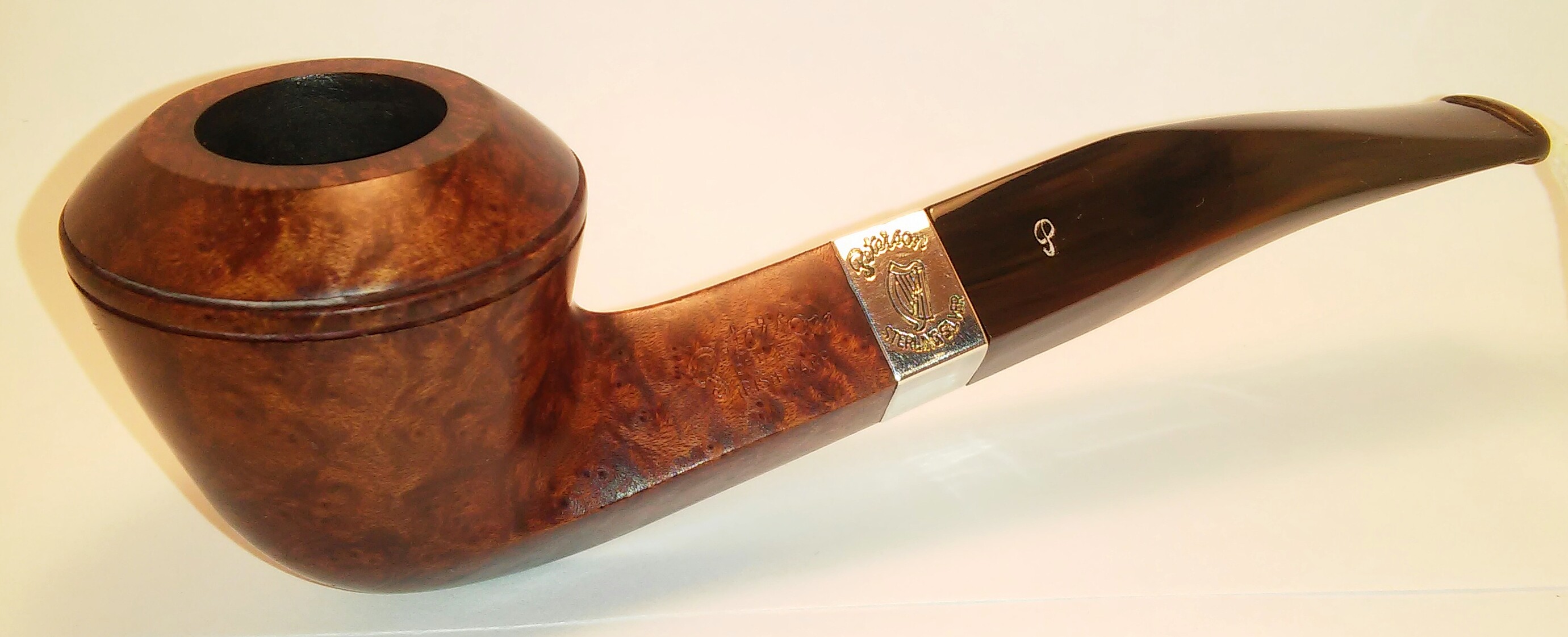
From what I could find via web/collector sites I believe this Pete is from 2007. ( please correct me if this info is wrong) With the addition of three more Peterson’s it has brought my collection to seven. The B.5 is one of many I’ve had my eye on, the smooth bulldog shape and fishtail stem made this comfortable not only in hand but also clenched in jaw.  Lightly smoked and in decent condition just a few problem areas. A couple of tooth impressions, a scratch on the bowl and a burn on the rim that was deeper then first thought. 

PhotoGrid_1445908287603

When I first received the pipe the silver band was tarnished, this was my wife’s department. She used her silver jewelry cleaning trick, cigarette ash, a little saliva and rubbed in with a fingertip, then wiping with a damp rag.

20151025_221929~2 20151025_222429~2

For a newer and lightly smoked pipe I was surprised to see the bowls finnish was very worn in certain areas. With some pipes in the past the worn finnish was a result of a hot bowl from rapid puffing, it would have to be re-stained. I started with Murphy’s oil soap and moved on to acetone to remove the rest of the finnish. I was happy to see I had not uncovered any filler.

20151026_112756~220151026_113356

 The burn on the rim seemed it was just surface deep and could be easily removed with little work but it had gone deeper then I originally thought. I taped 1000 grit sandpaper paper to my desktop and began slowly taking layers off until the burn was almost gone, I didn’t want to remove too much and change the shape of the pipe. What remained of the burn hopefully would blend with the new stain.

PhotoGrid_144595304901020151026_110847~220151026_112142~2

 The scratch at the top of the bowl luckily did not affect the bulldog ring around the bowl. I started with a heated butter knife and a damp rag to steam some of the indentation that came along with the scratch. After the steam had raised some of the indentation I used worn micro mesh pads to remove the rest of the scratch.

PhotoGrid_1445954745859 PhotoGrid_1445954811685

Using un-rolled cotton balls I formed one long twisted cotton swab. I use this swab to clean the mortise by turning it tightly into it. Once tightly inserted into the mortise I fill the chamber with a little EverClear and allow the swab to absorb the alcohol. Once absorb I filled the chamber with two cotton balls, soaked them with EverClear and set it aside to soak. As it soaked it began to pull out the tars

20151027_103936~2

With the bowl set aside I began work on the stem first by cleaning the internals with EverClear, shank brush and pipe cleaners and worked until the pipe cleaners came as they went in. Then the externals I worked carefully around the P on the stem so it would not accidentally be removed by the alcohol.

PhotoGrid_1445957720500

I started with the button, sanding the area with a 1500 micro mesh pad and then wiping down with EverClear. I mixed a paste of CA glue and activated charcoal powder to apply to the worn button. I used less activated charcoal powder then normally because of the cumberland stem, I didn’t want one big dark spot. I applied little dots of the paste with a toothpick and then sprayed it with accelerator and left it to dry.

PhotoGrid_1445957602791

I tapped off the stem with painters tape so my work on the bit/lip area would remain in one spot, the rest of the stem was in good condition there was no need to make more work for myself. I wrapped 400 grit paper around a flat needle file and wet sanded the area of the impressions.

PhotoGrid_1445957761146

After the 400 grit wet sand there was still one stubborn impression present, I filled the impression with a dot of the paste and sprayed it with accelerator.  I then moved to the various mico mesh pads to smooth over the stem and button.

PhotoGrid_1445957799054PhotoGrid_1445957869447

It wasn’t perfect but better then before. This stem was a little more difficult, as I began removing the tooth impressions I uncovered bubbles within the stem that would also have to be filled.

 PhotoGrid_1445956129650

After sitting for a few hours I removed the cotton balls/swab and proceeded to clean the internals with EverClear, Q-tips, swabs and pipe cleaners until the pipe cleaners came out as they went in.

20151026_120110~2

While working on the pipe over a two day period I realized I was quite happy with the way the pipe had colored from handling it, I decided to try and match the rim to the bowl coloring. There was still light stain left on the pipe after the acetone wipe down, the acetone seemed to remove a reddish top coat leaving the darker walnut finnish underneath.

20151027_134933~2PhotoGrid_1445969181197

I used touch up stain markers to match the rim to the bowl, I applied several coats and hit it with a Bic lighter to set the stain, wiping away the excess with an alcohol dampened rag until I had a close match.

20151027_143453~2 20151027_143554~2

Buffing with white diamond, carnauba and a micro fiber hand buffing  .

20151027_142925~2 20151027_142938~2 20151027_143006~2 20151027_142750~2 20151027_142851~2 20151027_142911~2 20151027_142901~2

Custombilt Compilation

I’m starting to realize the photos of my process on many of the pipes I’ve redone in the past are lost. Luckily I have before and after photos, please bare with me as new pipes are redone I will add more detailed photos of my process. I decided to put together a compilation of some of my favorites.


20151009_1027472_zpsuvvs9drj~2

Custom-bilt pipes there will be quite a few of these. I’m a collector and I haven’t seen an end in sight. Each one has it’s own personality As Individual As A Thumbprint stands true. The few below were redone in the past year.  My process has remained the same for that time, I followed the same process as in my previous posts.

20151025_122929~2 20151025_112240~2~2

(1939 brochure)

20151025_123435~2

Images & information courtesy of Bill Ungers As Individual As A Thumbprint-The Custombilt Pipe Story.

~~~~~~~~~~~~~~~~~~~~~~~~~~~~~~~~~~

20150501_112045_zpszhnfky8g~2 20150501_112005_zpsxasdh2wi~2 PhotoGrid_1430935869731_zps1gymblhs20150506_1414002_zpsrn9kgjfl~2PhotoGrid_1430935937335_zpsawasawyt

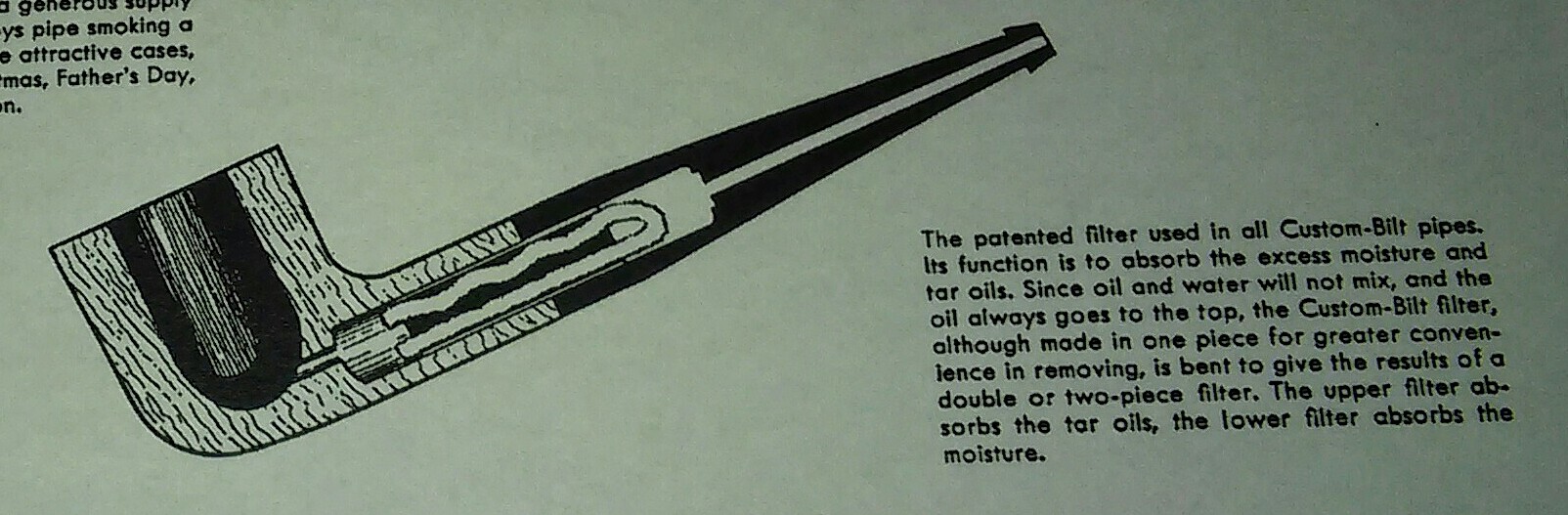
First up a Custom-Bilt patiented filter system billiard from what I’ve read it was made between 1935 to around 1941. A very large, long and partically rusticated pipe .I have to two in my collection one redone and one in the to do box.

——————————————————–

PhotoGrid_1431692470042_zps8ak4qdkh 20150515_0801382_zpstdyouklc20150515_0816432_zpshlggkuzm

Next up another Custom-Bilt filtered pipe. In my first post I went through my process of cleaning a similar pipe that also had it’s rubber filter insert. I could not find an exact year or much else on these. Between 1941-1946 ? Something had nested in the stem, luckily it had moved out prior to my receiving it. One of the smallest bilts I own.

——————————————————–

PhotoGrid_1427902122727_zpsvhpon1hb PhotoGrid_14291934845692_zpsc2tpy438

The first Custom-Bilt I purchased around three years ago. The bottom right photo was from the auction. Still one of my favorites.
——————————————————–

Screenshot_2015-10-25-12-34-54~2

 Typically I go after older Custom-Bilt pipes but there was something different about this one. The Canadian shape and shell finish was eye catching . It’s my one and only Canadian style pipe.

20150824_1556152_zpsfrfmnycb 20150824_1555512_zpsucrctg8v PhotoGrid_1440446617707_zpsn2nwk1me

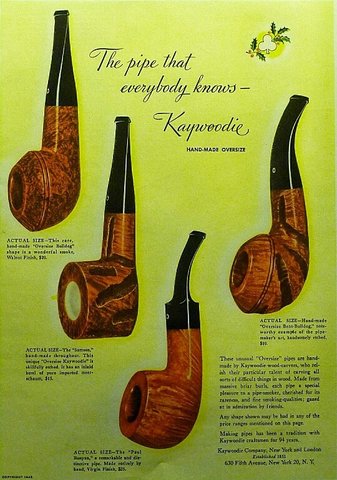
Kaywoodie Handmade Oversized Pipes

Screenshot_2015-07-10-10-41-452_zpsw2hs3uvb

The ad above I believe is from the late 40’s early 50’s from what I could find I think this is where my pair falls.

Some of my first estates were Kaywoodies. Living in New York most of my life I loved reading of there history and the successful building of a brand everyone knows. The only thing I couldn’t get past was how small there pipes were. I have a few in my collection from the 30’s and 40’s that make my wife laugh when I smoke them. I’m a pretty hefty guy so in turn I would need to find a hefty Kaywoodie.

Six months ago I found my chance with the Kaywoodie Handmade Oversized line. They are big and beautiful pieces of Briar reminiscent of my first love Custom-bilt. I originally posted this refurb on Pipes Magazine with the help of forum members I was able to put these beauties back in service.

The pipes as received.

20150703_1505252_zpsdj56qhrp PhotoGrid_1436408039906_zpsirnylkbu

The first well loved pipe.

PhotoGrid_14361042224522_zpsnk0gqama

And the second equally loved pipe.

The second pipe I could not find a profile shot, I also did not take pictures of my process but I remember it like it was yesterday .Each one was well used and apparently never cleaned. I started by removing the cake with my Castleford reamer starting with smallest and ending with the largest,  keeping it centered at all times. Then sanding the chamber with 400 grit sandpaper, in this case the previous owner’s lack of cleaning actually preserved the chamber it looked almost new after removing the cake. The rim was heavily caked I applied a very generous amount of Method wood for good polish with Q-tips and worked it in with a children’s toothbrush I would have to repeat this multiple times before the tars were completely removed. There was also white paint imbedded in the deep grooves of one of the pipes. I used the polish on these areas as well applying it to the paint and leaving it to soften it up. After it softened I was able to remove the paint with a toothbrush and dental pick. I also cleaned the exterior with the polish at this time.

  PhotoGrid_1436107465709_zpsj6ber2vn

I cleaned the internals with EverClear,shank brush, Q-tips and stiff bristle pipe cleaners ending with unrolled twisted cotton balls in the mortise. I added a little EverClear to the chamber to be absorbed by the cotton,once absorb I filled the chamber with three cotton balls, EverClear and left it to soak.

PhotoGrid_1436408039906_zpsirnylkbu~2 PhotoGrid_14361042224522_zpsnk0gqama~2

This is where things got interesting. With the bowl set aside I began work on the stems, cleaning the internals/ externals with EverClear this is when the smell hit me.  It was like nothing I had smelled before or since and my wife was not pleased (my work area is in our bedroom).

20150705_104145_zpsqoncxbu5

This was my wife’s answer to the problem. You gotta love her.

I turned to Pipes Magazine forum members for help they said it was sulfur I was smelling a handful of suggestions were posted oxyclean, Soft Scrub, vinegar & baking soda, soaking in alcohol, multiple retorts  and replacement, tried them all to no avail and replacement in my mind was not an option. I decided while my wife was at work I would continue cleaning the stems scrubbing first with Soft Scrub removing the oxidation and then wet sanding with 1000,1500,2000 and 2400. At this time two forum members suggested a soak in bleach I was apprehensive at first as I have never used bleach before but they assured me no damage would be done. So with a little Vaseline over the logo just in case I processed to soak the stems in a 4 to 1 mix of bleach and water, at first I thought it did the trick but the scent would re-emerge as soon as I began  sanding. After numerous intervals of soaking and sanding over a three day period the smell finally began to dissipate and now that a few months have passed the scent is completely gone.

PhotoGrid_1436107417143_zpsu1ksiudx

I was able to save the original finish and would not have to re-stain. I figured they closely resembled my CustomBilts so I applied a little Howard’s butcher block conditioner and set them aside for a few minutes to soak it up and then hand buffing off the excess.  They were now ready for the buffer.

(Shiny & New)

20150707_2051442_zps966enqbwPhotoGrid_1436317433224_zpshbduwjnuPhotoGrid_1436317477480_zps3vscos7q

(Pipe 1)

20150713_1901392_zpsjmzq4rrfPhotoGrid_1436828905450_zpsbf6vajfq

(Pipe 2)

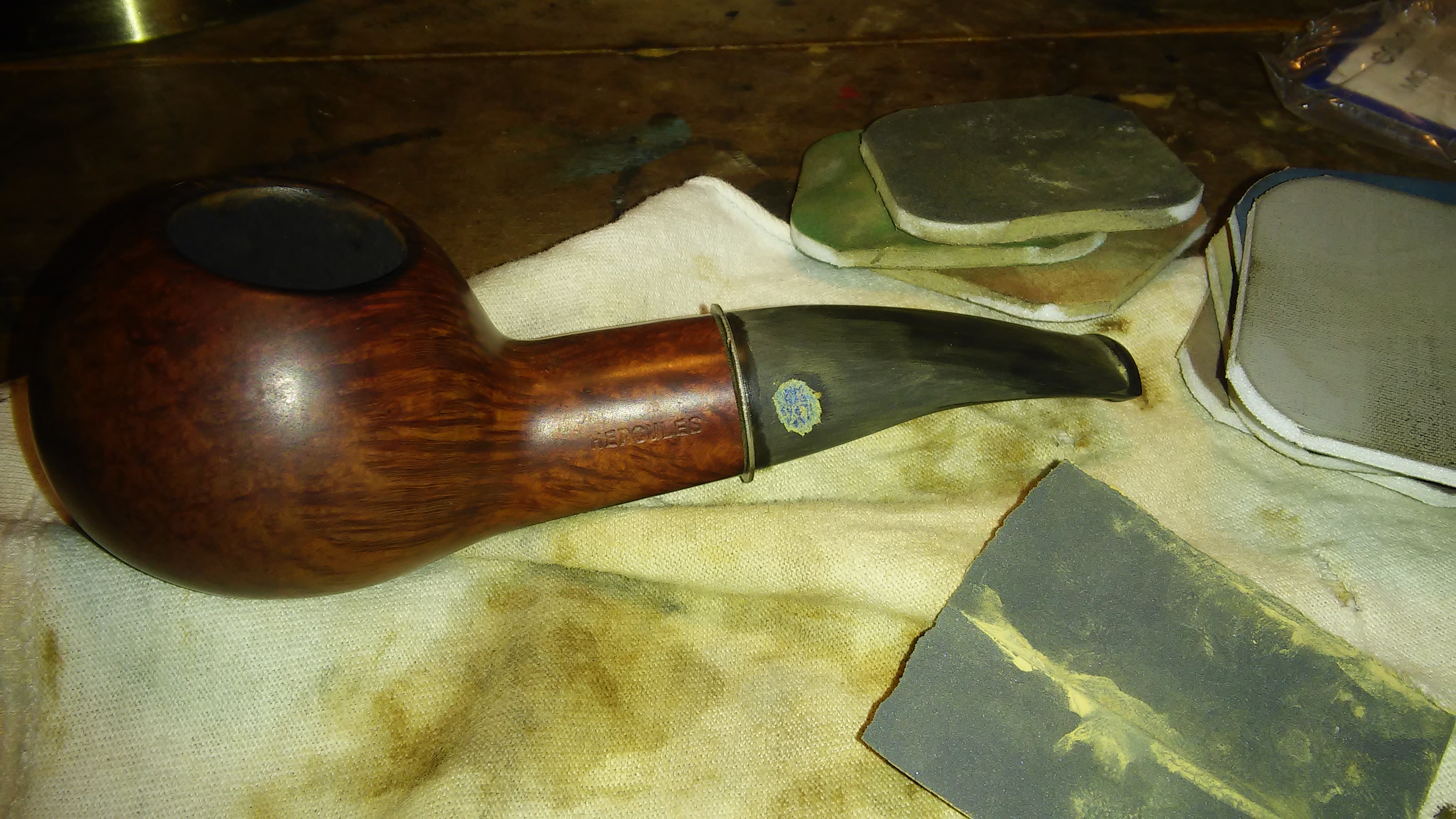
Savinelli Hercules 320 EX

Screenshot_2015-10-22-18-29-46~220150904_110911_zpsotamwek9-1

About a month ago my wife surprised me with a haul of five that I could have never pulled off. She is an incredible woman and apparently has a better eye then myself.  This was the worst of the lot.

20150911_205203

The pipe upon receiving, a Savinelli Hercules 320 EX. She was big and beautiful.

20150911_205240PhotoGrid_1445555032134

She was in decent shape a little cake, rim char,the button was worn and the biggest problem was the stem logo, it was beyond saving very worn.

20150911_21074320150911_21120520150911_213405

I started with my Castleford Reamer working from the smallest to the largest attachment and in this case the largest was too small. I moved to 250 grit sandpaper so I could take it back to the briar and finished it off with 400 grit paper.

20150911_213720

 Next the build up on the rim, I applied Method wood for good polish and let it soak in for 10 min . After the 10 min I worked at the area with a children’s toothbrush to break up the tars. 

20150911_220214

I was able to remove the build up but there was still char present . In fear of changing the shape of the bowl I decided to work at it slightly with micro mesh pads to lighten it as much as possible.

 20150911_222414

The internals were pretty clean when I received the pipe, I cleaned the mortise and chamber with EverClear, Q-tips, hard/soft pipe cleaners and a shank brush.

20150911_22263220150911_223026

I un-rolled two cotton balls then twisted them together, I then turned them tightly into the mortise . I filled the chamber with a little EverClear and waited for the swab to absorb the alcohol. I then placed two cotton balls in the chamber soaked them with EverClear and set the bowl aside to absorb what I missed with my previous cleaning.

PhotoGrid_1445562677221

Next I moved to the stem . I applied non-bleach Soft Scrub with a children’s toothbrush and worked it into the oxidation. After leaving it for 15 min I used a rag and Magic Eraser and scrubbed until the oxidation was removed.
20150912_221531~2

With the oxidation removed I could now address the button.

PhotoGrid_1445563747692

I roughed up the area of the button with 400 grit sandpaper and then cleaned the stem with alcohol. I mixed a paste of thick black CA glue and activated charcoal powder and applied it to the button with a toothpick spreading it evenly across the surface. Happy with the shape I sprayed it with accelerator.

PhotoGrid_1445563796751

 With the paste hardened I could form the new button. Using needle files and sandpaper the new button took shape. It was now ready for the final sanding.

20150912_15465020150918_211315

I let the bowl soak for a few hours after removing the cotton balls I could see the chamber was worn. I’ve seen a fellow Pipes Magazine forum member make a bowl coating and thought this was a good time try it. I applied a layer of honey to the chamber then filled it with activated charcoal I let it sit for 15 min then dumped the excess  and I then left it for a week.

20150922_181313~2

After a week the coating hardened.

20150922_13085520150922_181313

After the bowl coating cured I could begin work on the stem. I tapped off what was left of the logo and then began sanding with 1000 grit sandpaper then working through the various grits of micro mesh pads to bring back the shine. Now onto the buffer.

Here she is.

 PhotoGrid_1443106117716_zpsbnmehqhz

Finished her up with white diamond, a few coats of carnauba and a micro fiber hand buffing.